Researchers from Edinburgh Heriot-Watt University have created a device powered by "simple"
The technology of the device is described in the magazine Opticsexpress. This is a three-element diode-pumped titanium-sapphire laser equipped with a Kerr lens. It uses the Kerr effect, that is, the change in the refraction of an optical material depending on the applied voltage, to generate signals of different frequencies.
The laser emits light consisting of thousands of regulararranged frequency lines, known as a frequency comb. In the same way that a ruler is used to accurately measure distances, a comb is a "ruler of wavelengths". With its help, astronomers can measure the exact difference in wavelengths of light coming from distant objects, the authors explain.
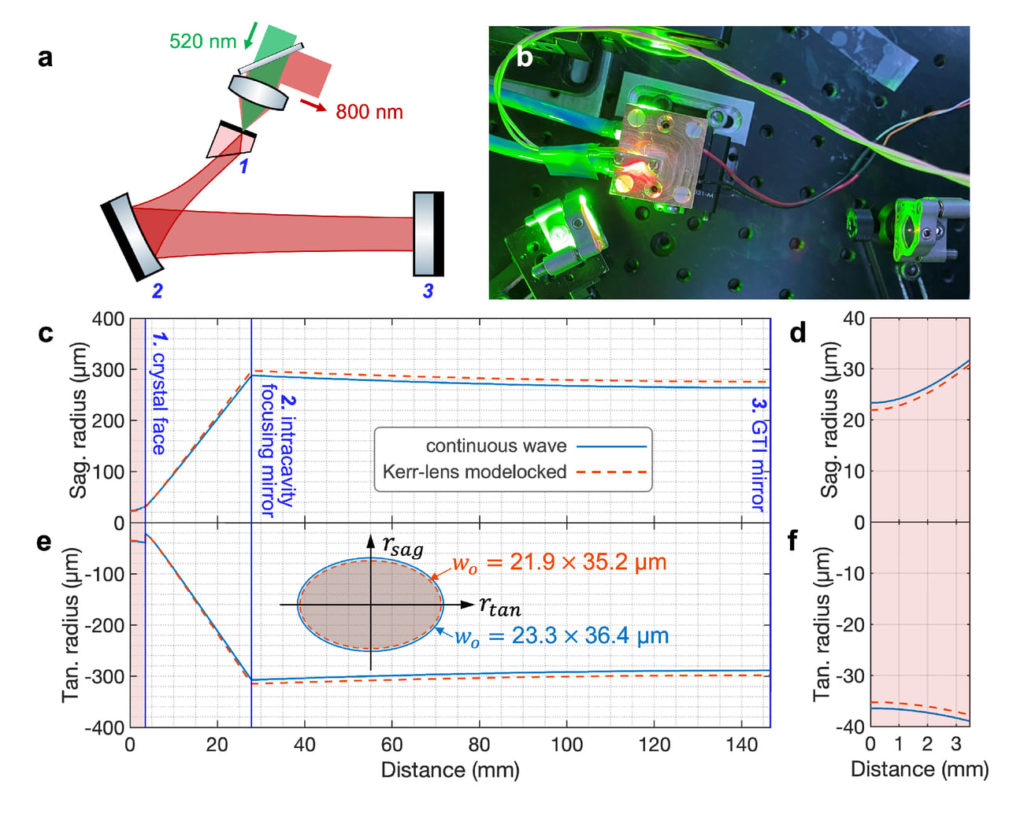 Scheme (a) and parameters of the laser installation (c-e), a working laser (b). Image: Hanna Ostapenko et al., Optics Express
The uniqueness of the development lies in the fact that itcan run on a simple laser diode, consuming about the same amount of power as a regular iPhone, the scientists add. At the same time, the device itself consists of a small number of components and generates ultra-fast pulses immediately after switching on.
Astrophysics using space telescopeshave identified thousands of stars that may have exoplanets, but the latter's size and lack of self-radiation makes the search difficult. To confirm the presence of a planet, scientists use ground-based telescopes that look for tiny fluctuations in starlight.
The new device could become a cheap and affordable basis for deploying a whole network of telescopes that will continuously monitor certain areas of the sky.
Read more:
Starlink signal hacked to be used as an alternative to GPS
NASA revealed the origin of Haumea - the most mysterious planet in the solar system
Physicists Break Standard Quantum Limit With 'Quantum Horror'