The foundation of the universe
What powers do you know? Gravity, thread tension, spring compression, body collisions,
It is worth considering that today the existence of four fundamental interactions (not counting the Higgs field) is reliably known:
Gravity - gravitational interaction
Gravity is the attraction between twoobjects that have mass or energy. Everyone has observed this fundamental influence and thanks to it a person can sit, stand or lie down. The gravitational force manifests itself in the fall of a stone from a cliff; the movement of the planet around the star; sea tides, for which the Moon is responsible. Gravity is the most intuitive and familiar of the fundamental forces, yet it is not the easiest to explain.
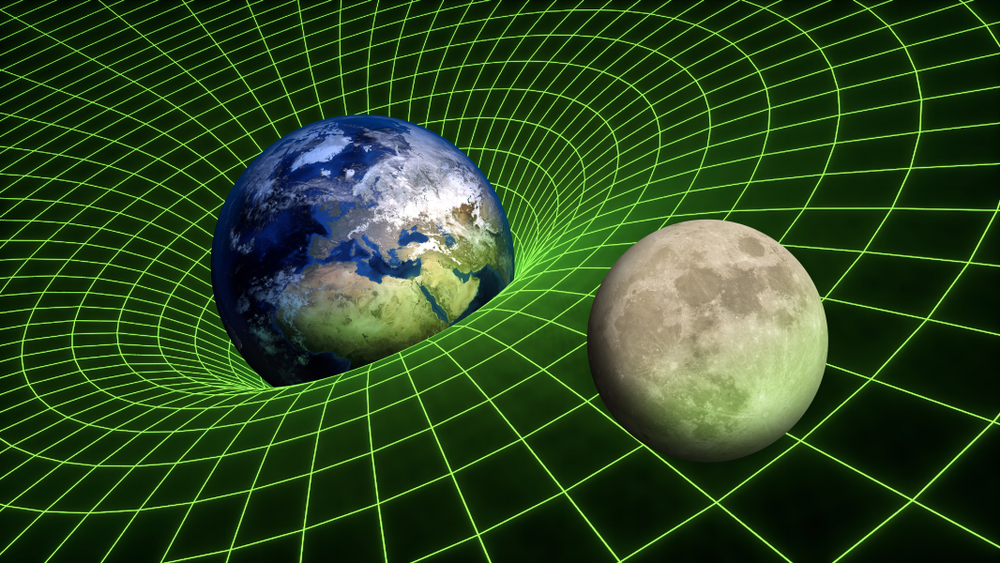
Isaac Newton was the first to propose the ideagravity, supposedly inspired by an apple falling from a tree. He described it as a literal attraction between two objects. Centuries later, Albert Einstein proposed in his general theory of relativity (GR) that gravity is not an attraction or a force. Instead, it is a consequence of objects bending spacetime. A large object works with space-time in much the same way as a large ball placed in the middle of a sheet of paper affects that material, deforming it and causing other, smaller objects on the sheet to fall towards the middle.
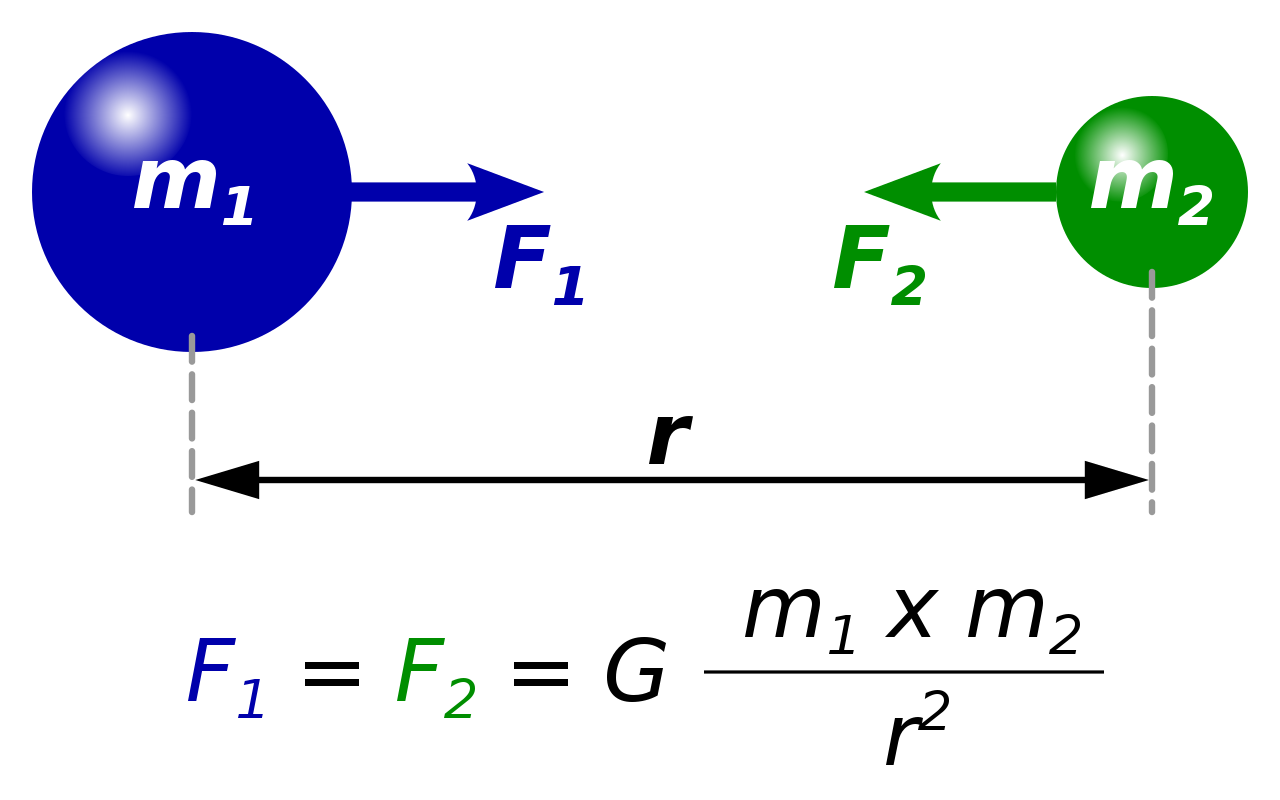 The law of universal gravitation
Although gravity holds the planets together,stars, solar systems and even galaxies, it turns out to be the weakest of the fundamental forces, especially at the molecular and atomic levels. Think about it this way: how hard is it to get the ball off the ground? Or raise your leg? Or jump? All these actions counteract the gravity of the entire Earth. And at the molecular and atomic levels, gravity has almost no effect on other fundamental forces.
Weak force and particle decay
The weak force, or weak nuclear force,is responsible for the decay of particles. This is the literal transformation of one type of subatomic particle into another. For example, a neutrino deviating from a neutron can turn a neutron into a proton, and a neutrino into an electron.
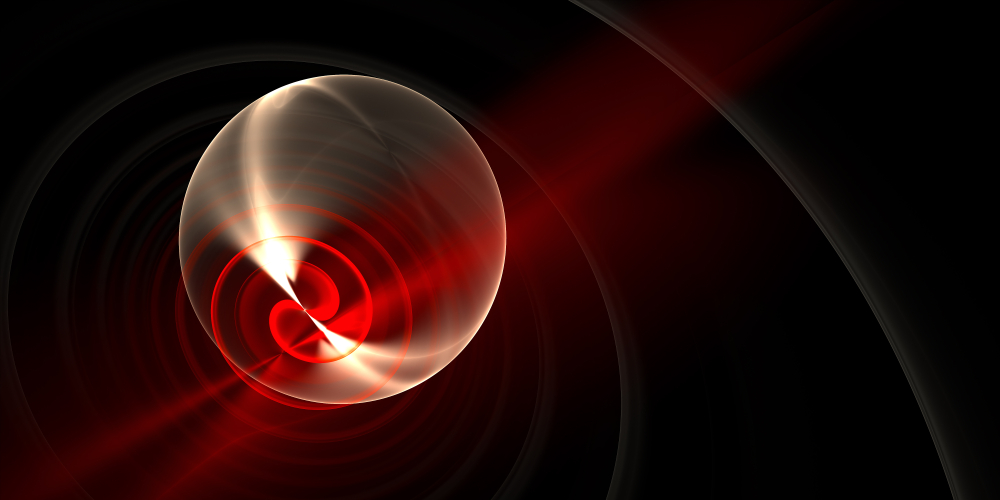
Physicists describe this interaction through an exchangebosons. These force-carrying particles, namely some of their types, are responsible for the weak force, electromagnetic force and strong force. In the weak force, the bosons are charged particles called W and Z bosons. When subatomic particles—protons, neutrons and electrons—are within 10 to 18 meters (0.1% of a proton's diameter) of each other, they can exchange these bosons. As a result, subatomic particles break up into new particles.
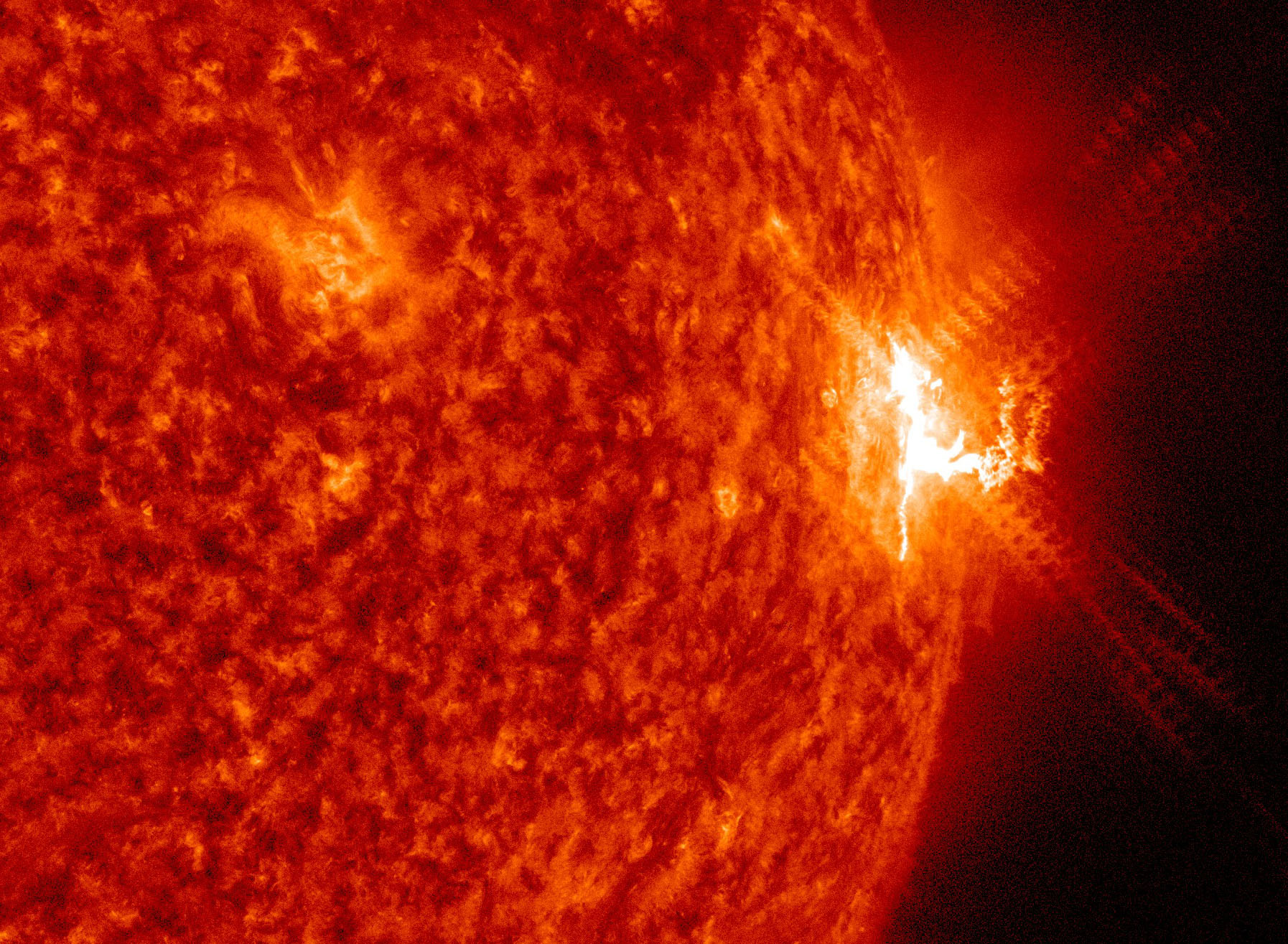
Weak coupling is critical fornuclear fusion reactions. They are what powers the Sun and produces the energy needed for most forms of life here on Earth. By the way, this is why archaeologists use carbon-14 to determine the age of ancient bones, wood and other previously living artifacts. Carbon-14 has six protons and eight neutrons. One of these neutrons decays into a proton to form nitrogen-14, which has seven protons and seven neutrons. This decay occurs at a predictable rate, which allows scientists to determine the age of artifacts.
Electromagnetic force
Electromagnetic force (Lorentz force) actsbetween charged particles - negatively charged electrons and positively charged protons. Opposite charges attract each other, while identical charges repel. The more charge, the more power. And like gravity, this force can be felt.
As the name suggests, electromagnetic forceconsists of two parts: electrical force and magnetic force. At first, physicists described these forces separately from each other, but later realized that they are components of one.
The electrical component acts betweencharged particles, regardless of whether they are moving or not, creating a field. With it, charges can influence each other. But, as soon as they start moving, these charged particles also exhibit the second component - magnetic force. When they move, they create a magnetic field around them. Therefore, when electrons penetrate the wire to, for example, charge a computer or phone or turn on a TV, the wire becomes magnetic.
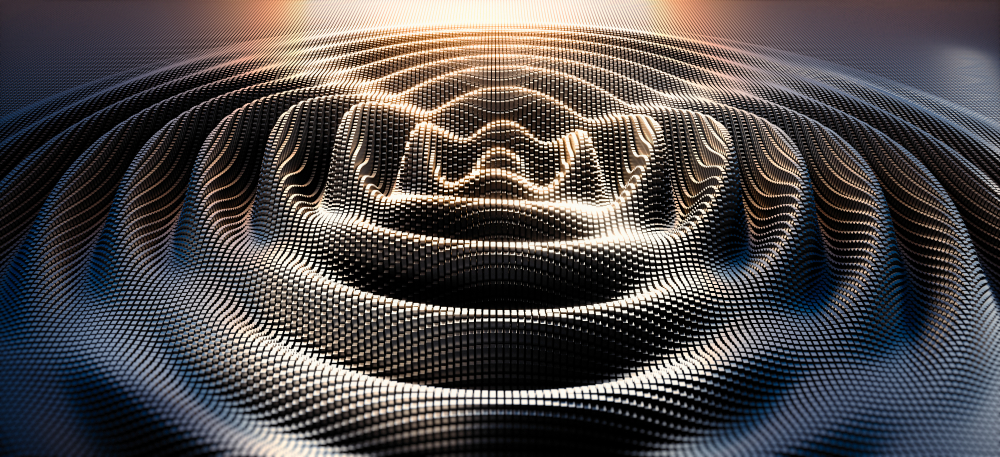
Electromagnetic forces are transmitted betweencharged particles through the exchange of massless, force-bearing bosons - photons, which are also particles of light. However, photons carrying force are another manifestation of them. According to the University of Tennessee at Knoxville, they are virtual and undetectable, although, technically, they are the same particles as the real and detectable version of photons.
Electromagnetic force is responsible for someof the most common phenomena: friction, elasticity, normal force, and the force holding solids together in a given shape. She is even responsible for the resistance that birds and airplanes face, for example. This is due to the interaction of charged (or neutral) particles with each other. For example, the normal force that holds a book on a table (instead of gravity pulling the book to the ground) is a consequence of the electrons in the table's atoms repelling the electrons in the book's atoms.
Strong Force - Trillions Trillions Trillions Stronger Than Gravity
Strong nuclear force, or strong nuclearinteraction is the most powerful of the four fundamental forces of nature. According to HyperPhysics, this is 6 thousand trillion trillion trillion (that's 39 zeros after 6) times stronger than gravity. This is because it ties fundamental particles of matter together to form larger particles. It holds together the quarks that make up protons and neutrons, and part of the strong force also holds together the protons and neutrons of the atomic nucleus.
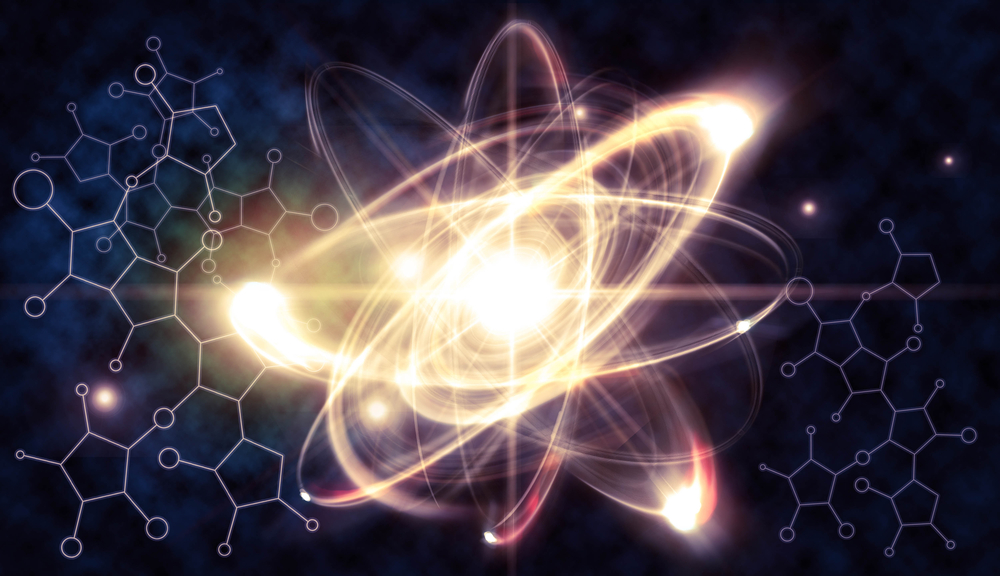
Like a weak force, a stronginteraction only works when the subatomic particles are very close to each other. They should be somewhere within 10-15 meters of each other (roughly within the diameter of a proton).
However, the strong interaction can be called"strange". The fact is that, unlike other fundamental forces, it becomes weaker as subatomic particles approach each other. As the Fermilab researchers write, the strong interaction reaches its maximum “strength” when the particles are as far apart as possible. Once within range, massless charged bosons—gluons—transmit the strong force between quarks and keep them “glued together.” A tiny fraction of the strong force—the residual strong force—acts between protons and neutrons. Protons in the nucleus repel each other due to their similar charge, but a residual strong force can overcome this process. This is why particles remain bound together in the nucleus of an atom.
The Great Unification and Theory of Everything
The unresolved issue of fourfundamental forces is whether they are truly a manifestation of the one great force in the universe. If this is the case, each of them should be able to merge with the others, and there is already evidence that they can.
Physicists Sheldon Glashow and Steven Weinberg ofHarvard University with Abdus Salam of Imperial College London received the Nobel Prize in Physics in 1979 for combining electromagnetic force with weak force to form the concept of electroweak force. Physicists working on the creation of the theory of the Grand Unification seek to combine the electroweak interaction with the strong one to define the electron-nuclear one. It was previously predicted by models, but has not yet been observed. The final piece of the puzzle would require combining gravity with electron-nuclear force to develop a theory of everything - the foundation that could explain the entire universe.
However, physicists found it rather difficult to combinemicroscopic world with macroscopic. On a large and especially astronomical scale, gravity dominates and is best described by Einstein's general theory of relativity. But at the molecular, atomic, or subatomic level, quantum mechanics best describes the natural world. And, until now, no one has come up with a good way to bring these two worlds together.
Read more
The first accurate map of the world was created. What's wrong with everyone else?
Uranus has received the status of the strangest planet in the solar system. Why?
NASA told how they will deliver samples of Mars to Earth
Higgs field provides spontaneous violationsymmetry of electroweak interactions due to the breaking of vacuum symmetry, named after the developer of its theory, British physicist Peter Higgs. The quantum of this field is the Higgs particle (the Higgs boson).
W- and Z-bosons - fundamental particles,carriers of weak interaction. Their discovery is considered one of the major successes of the Standard Model of particle physics. The W-particle is named after the first letter of the interaction name - weak interaction
Carbon-14 is a radioactive nuclide of the chemical element carbon with atomic number 6 and mass number 14.
Nitrogen isotopes are varieties of chemical atomselement nitrogen, having different content of neutrons in the nucleus. Natural nitrogen consists of two stable isotopes ¹⁴N and ¹⁵N with atomic concentrations of 0.99636 and 0.00364, respectively.
A neutral particle is an elementary particle, nothaving an electric charge. Neutral particles include, for example, a photon, a neutron, a neutrino. Neutral particles can, however, have a magnetic moment and electric moments of higher multipolarity, for example, a quadrupole moment.
The force of a normal reaction is a force acting onthe body from the side of the support and directed perpendicular to the contact surface. Distributed over the area of the contact zone. To be taken into account when analyzing the dynamics of body movement. Figures in the Amonton-Coulomb law.