What kind of weapon is this and why is there a magazine in the back? What are its pros and cons? This is the weapon of the future, or vice versa,
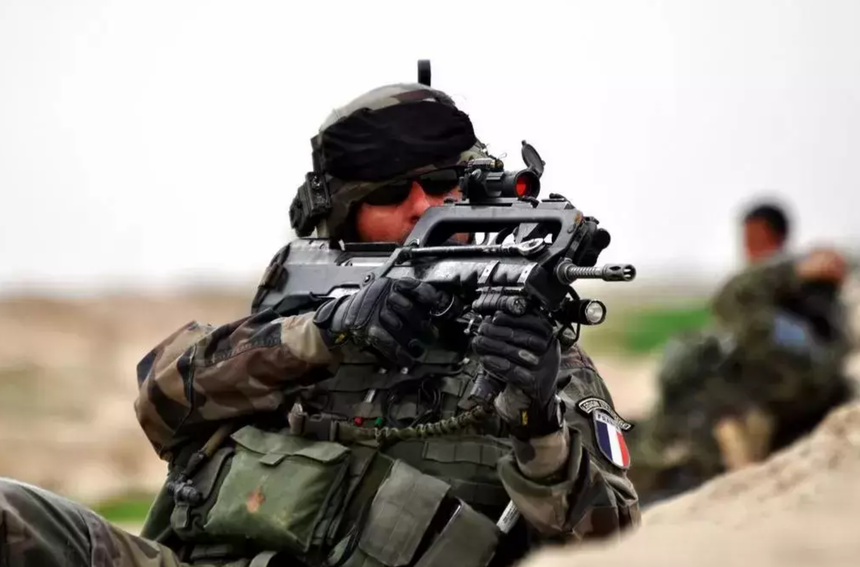
Table of contents
- Bullpapas are older than you think
- Sturmgever made a fuss
- EM-2
- FAMAS and Steyr
- Bullpup walks the world
- Bullpup sunset
- Total
Most of us have seen weapons like thislayouts in computer games or movie action movies. And for sure, many could assume that this, apparently, was some kind of flight of thought of the creators - until some time it was difficult to imagine that such a strange weapon existed in reality, it was too radically different from both the AK and the M-16, to the appearance of which everyone is more or less used to it.
But, nevertheless, rifles of this typemany armies of the world are armed, and massively. And in the 1990s and 2000s, perhaps half of the advanced countries created, produced and purchased small arms in the bullpup layout for service. At some point, it seemed that automatic rifles of the classical layout would become a thing of the past, and even Kalashnikov would have to “bulpap”, otherwise the boys would laugh.
In addition to machine guns, this layout created sniper rifles, submachine guns, just machine guns.
Today, the attitude towards bullpup is more complicated, histhe prospects are increasingly vague, many countries that had rifle systems of this type have abandoned them or are planning to do so. Today we will tell you how the history of weapons of this type began, and what they eventually came to.
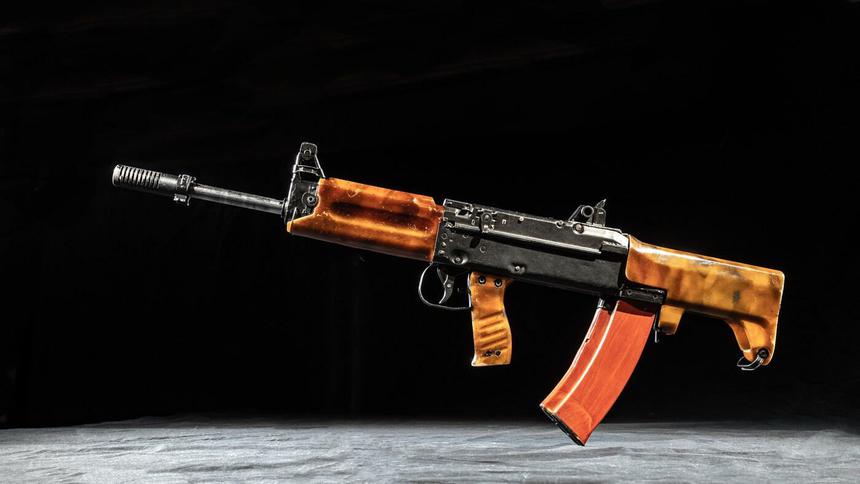
Stechkin TKB-0146 - variations on the theme of bullpups were accompanied by the entire Soviet period
Kalashnikov media
The very name bullpup is controversial, but usuallyIt is customary to refer to the English expression bullpup, which was called bulldog puppies - small, snub-nosed, but very vicious. In the arms world, this was at first called short "pocket" revolvers and pistols.
Bullpapas are older than you think
The Jews are to blame for everything, this time the Slavs, soKazimierz Yanushevsky, a native of Poland, and also Soviet designers Korovin and Korobov (now undeservedly left in the shadow of Kalashnikov), as well as Czechs Vaclav and Immanuel Kholek, were responsible for the birth of the first working models. Although gun historians have been mining patents for weapons with "rear" ammunition since the mid-1800s.
Let's start in order.
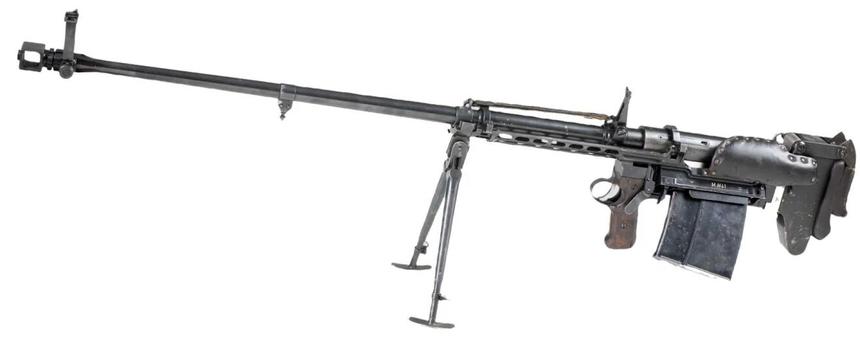
Czechs in Brno invented the first mass-produced weapon inbullpup scheme - the PzB M.SS.41 anti-tank rifle, which at that moment went to equip the Wehrmacht. Why an anti-tank rifle? The answer is simple - these weapons require a long barrel length: the longer the better. While the bullet is in the barrel, it picks up speed, which means penetration is higher. All anti-tank guns suffered from one problem - they are very long and uncomfortable. And to increase the length of the barrel to infinity is stupid and impossible.
PzB M.SS.41
Therefore, Kholeki, as it should be talentedinventors, began to look for a way out in a creative approach ... and found it. The M.SS.41 was 30 cm shorter than the German anti-tank rifle with an equal barrel length, and was almost half as long as the Soviet PTRS, while the Soviet rifle had a barrel length only 25 cm longer (although the Wehrmacht barrels had a rifle caliber, against twice more in PTRS).
PT gun in caliber 7,92 was so-so, especiallyagainst new Soviet tanks. But the Germans found a new use for it - it was the M.SS.41, equipped with an optical sight, that became the first long-range sniper rifle. As a result, the scheme very quickly got into the development of small arms designers.
Sturmgever made a fuss
STG-44
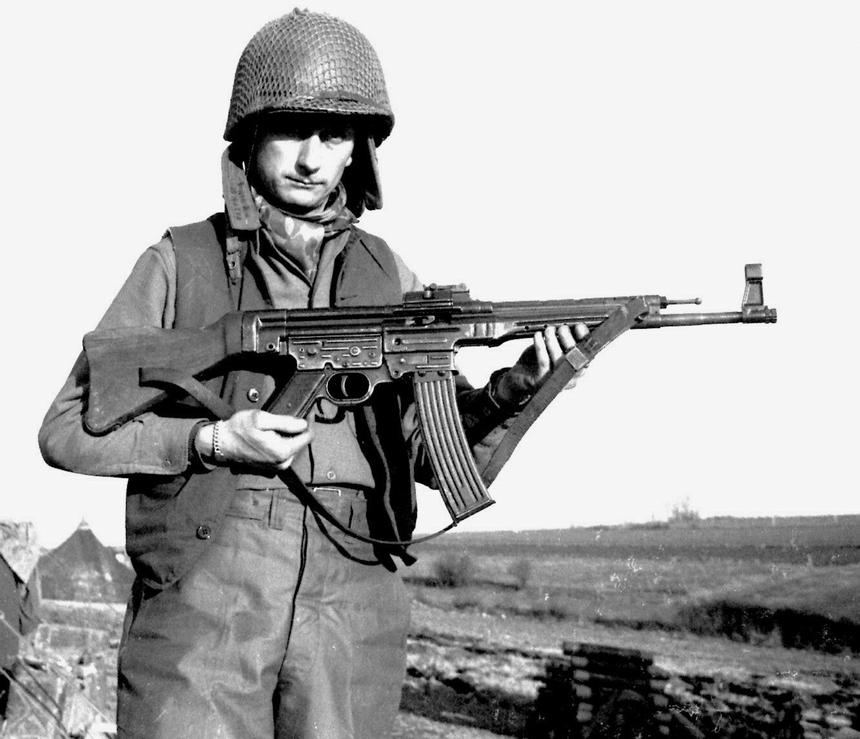
With the advent of the STG-44 or Sturmgever, gunsmithsfound a middle ground between machine guns and submachine guns, so many countries began to create their own versions. The most daring designers at the same time, at the end and after the war, began to churn out projects with “rear ammunition” - the automatic mode of the first-generation assault rifles was lame with low accuracy.
The Germans themselves rarely used the Sturmgever inautomatic mode, preferring quick single shots - in auto mode, the rifle was strongly taken to the side, and at long distances above 200 meters it was unlikely to get anywhere in a burst. The designers saw a way out in lengthening the barrel, but they were held back by the requirements of the military - the weapon should not interfere with the landing from the armored personnel carrier, and it also had to be such that it was convenient to use it in urban combat and when storming trenches. In general, they demanded: "Shorter than nerds, make it shorter."
In 1945, the first automatic machine in the scheme was bornbullpup for equipping the Soviet army, designed by Korovin. But the complicated locking system of the barrel (skewed down), which required a lot of milling (and therefore increased the cost of production) and the not very reliable fuse system, were not liked by the customers. The bullpup TKB-408 Korobov was also sent there in 1946 (he himself deserves a separate article), for almost the same reasons, and in the end they settled on Kalashnikov ... and then you yourself know.
Read also
 12
12
TKB-408 Korobov 1946
Photo: Kalashnikov Media
EM-2
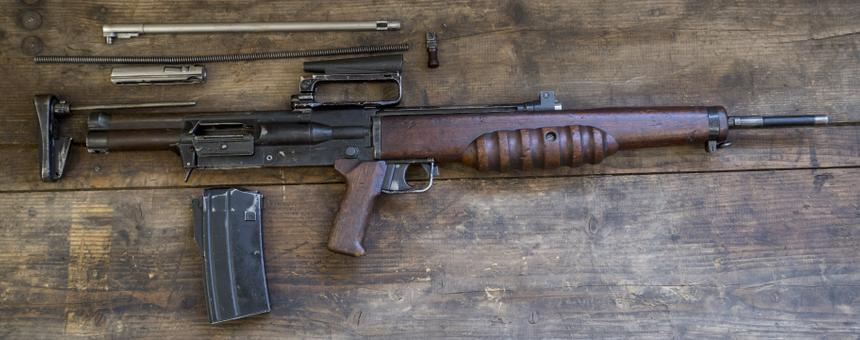
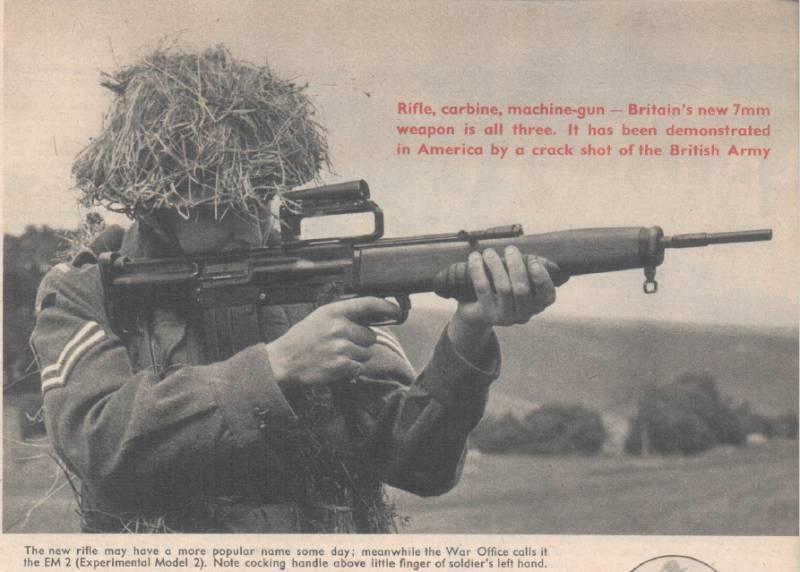
Much more loyal to the perspective layoutreacted in the UK. The Polish engineer Kazimierz Januszewski (under the pseudonym Stefan Janson) who escaped from both the Nazis and the "Soviet" headed the division of compatriot developers at the Enfield-Lock Royal Arms Factory. There they entered into a fight with another group of designers, who essentially copied the Sturmgever under the new experimental cartridge .280 (7x49 mm).
From the new weapon they demanded to replace the PP at onceSten, and a Lee-Enfield rifle, and automatic fire had to be combined with good accuracy at medium distances, and at the same time in a very compact design. And the Poles implemented their EM-2, which, with a length of 889 mm, had a barrel length of 623 mm. For comparison: the length of the barrel in the Sturmgever is 419 mm, and in the AK-74 it is 415 mm, with a total length of 940 mm.
In addition, the rifle was equipped with an opticalsight, and this is in 1951! A simple rifleman-infantryman was able to conduct accurate fire at distances that were beyond the limits for AKs of those years (at that time, infantry in the USSR was armed with AKs in half with SKS due to the poor accuracy of the former). The United States and Churchill spoiled all the raspberries - the birth of NATO and new standards forced them to switch to the 7.62x51 cartridge. The EM-2 system would have to be redone almost from scratch, so they decided to simply copy the Belgian FN FAL in the British version of the L1A1, and forgot about the bullpup for 30 years.
FAMAS and Steyr
A new round of interest in bullpup arose at the end60s - early 70s. NATO is adopting a low-impulse 5.56x45 mm cartridge, which gave reason to return to the blueprints for a new weapon with new capabilities.
This was especially true for the French, whofaced a series of colonial wars, where in the hands of soldiers there were weapons that were barely relevant even during the Second World War, but the natives quite often had more advancedAKor their Chinese copies. Despite the fact that France left the NATO military organization in 1966, the cartridge came in handy.
Review from the main promoter of FAMAS
FAMAS F1— was striking in its unusualness, but there were reasons for this, since the French fought many colonial wars and valued the compactness of weapons. 757 mm with a barrel length of 488 mm, compared to 990 mm forM-16and a barrel length of 508 mm. Due to the peculiarity of the carrying handle, the machine gun received the nickname “horn” (cleron - le Clairon).
Despite the intricate layout, the Famas received a wide body kit, and this same layout did not in any way affect its “tactics”. The grenade launcher was quietly attachedM203, optics, collimators, night sights. The first combat use led to modernization into a seriesFAMAS G1AndG2- shortened versions for special forces appeared, the changed pitch of the rifling made it possible to use not only American cartridgesM193, but also BelgianSS109with a heavier bullet, and magazines expanded from 25 rounds to 30.
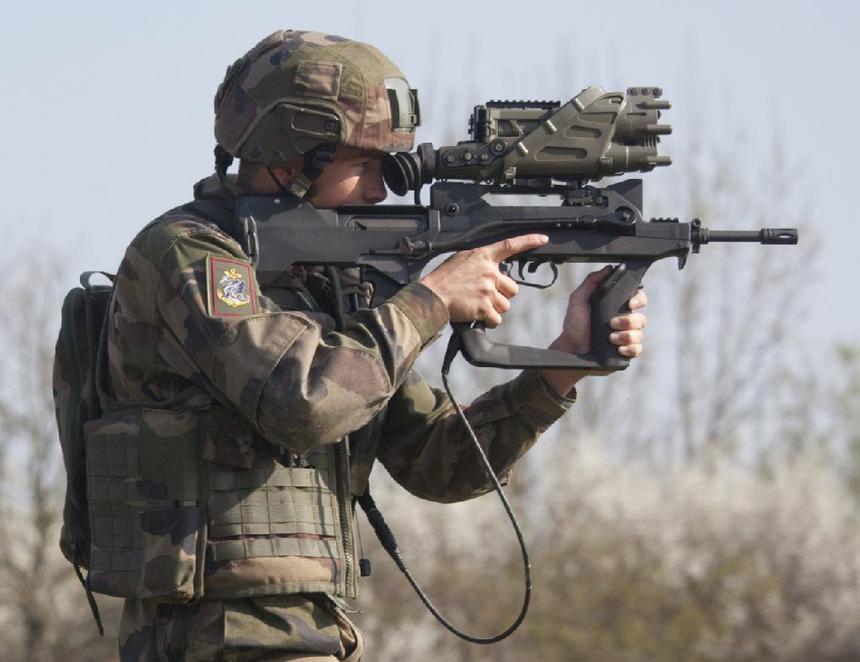
FAMAS as part of the Felin equipment complex
Around the same time, the Austrians created, perhaps, the most legendary model in the bullpup layout -Steyr AUG. "Bullpup" was not his onlya chip, it is also the first modular machine gun - the receiver, trigger mechanism (USM), stock-butt, bolt carrier and receiver were separate modules.
Modularity simplified disassembly and maintenancethe complex design of the machine gun, while allowing the platform to be upgraded into both a Marksman rifle (barrel extension) and a light machine gun (extended magazines for 42 rounds). Over time, they abandoned the integrated sight, which made it possible to use the widest range of NATO sights.
Legendary "Stair" added its exportpotential - if FAMAS remained a purely French trunk, then more than 30 countries bought the Austrian. He was especially valued by the police special forces, various groups in the fight against drug lords and in the landings. Units that work either in an urbanized environment (Varlamov applauds this proposal), or vice versa - in dense wild thickets and thickets.
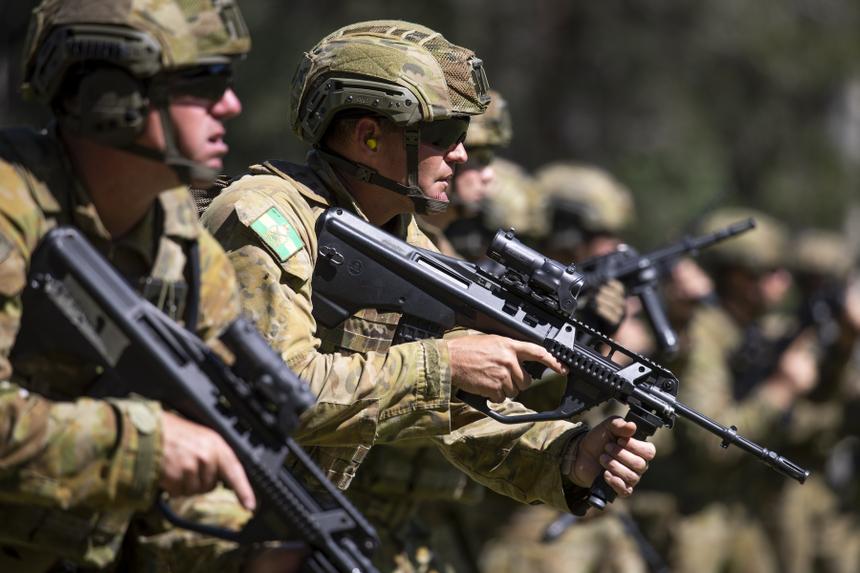
F88 Australian version of Steyr for the local army. The case when you can really get confused between Austria and Australia
Bullpup walks the world
In the 1980s and further 1990s, 2000s, more and more people switched to bullpups. The British with theirL85, Belgians withFN-F2000, Israelis withTAR-21Tavor, finally, the Chinese and theirQBZ-95. The Americans, Germans (FRG), Russians and Italians continued to hold on to the conservative layout.
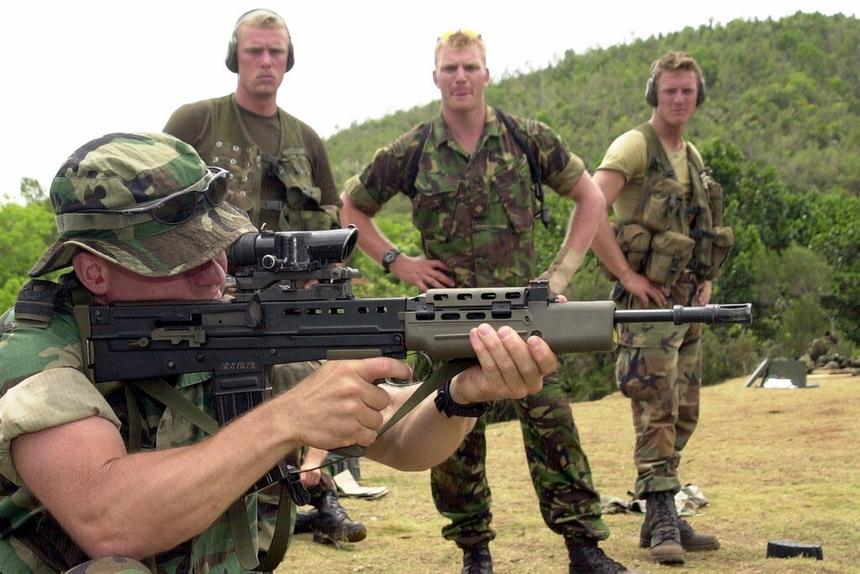
British Army L85
Why did bullpups suddenly begin to supplant the classic layout? A few reasons:
-
Compactness- the most obvious.With a similar barrel length, the weapon is shorter, which is convenient for urban combat, the jungle and when landing in difficult conditions. Compact weapons are more convenient to carry in cramped combat vehicles. Armies have become professional, and the military has become more capricious in its choice of weapons.
-
The displacement of the bolt group towards the shooter's shoulder has a positive effect on accuracy, sincemuch less “tossing” of weapons when firing.
-
Comfortableshooting and reloadinginside combat vehicles.
-
Convenientmass distributionwhen using additional equipment– does not outweigh or overwhelm anything.
FAMAS until recently was the main symbol of not only the French army, but also the legendary Foreign Legion
Bullpup has become especially popular in the format of automatic sniper rifles, as well as long-range ones, for heavy calibers. Here it is worth highlighting the domestic KSVK and the American Barrett rifles.
The Russian Federation was fond of its so-called assaultcomplexes - as a rule, on the nodes and elements of the AK. This includes the OTs-14 Thunderstorm, and the more original ShAK-12 for special operations forces. And the bullpup version of the SVD, which became the SVU, has a relatively wide series and is represented in the troops.
At the same time, bullpup is sometimes referred to not just“rear loading” behind the trigger handle, but also more cunning ... made schemes. For example, the German G11 Rifles with caseless cartridges, or the Belgian FN P90 submachine guns, where the ammunition comes from an enlarged magazine on top of the receiver.
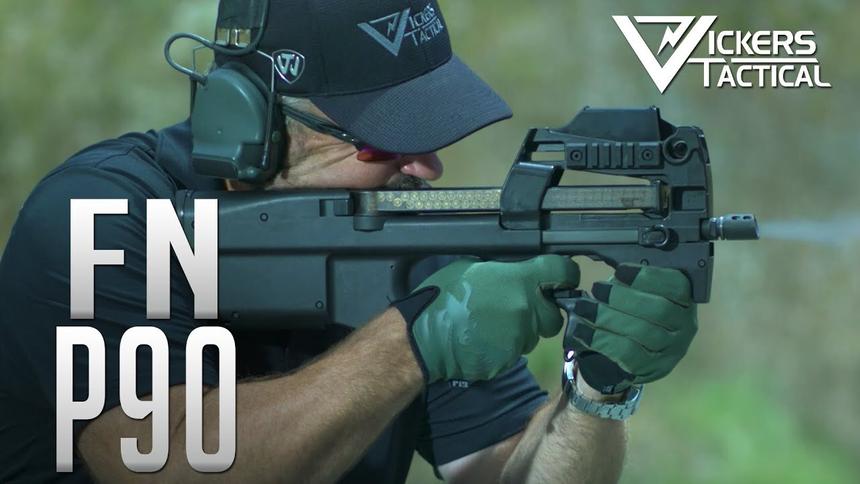
Bullpup sunset
In a barrel of honey there is not even a spoon, but a whole ladle of tar. This layout has a lot of shortcomings, and they started talking about themselves from the very first years of operation:
-
Bolt group at the shoulder -much more noise impact on hearing, traumatic. Extraction of sleeves at the very nose, which complicates the use of left-handers.
-
Too high position of sights. Coupled with the magazine mount, the weapon is not very convenient to use in the prone position.
-
An abundance of elements made of polyamides, fiberglass and other materials.Much more complex turning and milling work, instead of cheap stamping.
-
The overall complexity of the design - as a rule,long descent.
SameFAMAS F1cost twice as muchM-16A1, which buried export prospectsFrench. At first, the increase in the cost of weapons was perceived as normal, because countries were moving from draft armies to contract ones, so it is logical that a compact but professional army uses more expensive equipment and weapons.
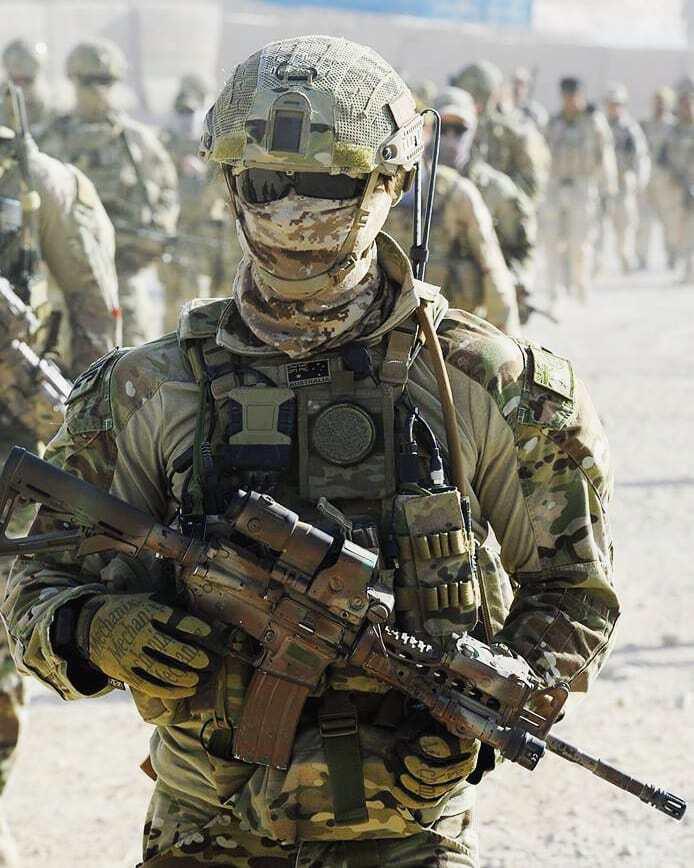
Australian special forces soldier
But it is impossible to completely push the price into the far corner, because the weapons of the classical layout also did not stand still:
-
Empty butt canmake telescopic andadjust to a fighter of any build, height and arm length. The bullpup butts contain elements of the bolt group and gas venting mechanism, in fact, the bullpup butt is a thin end wall of the receiver.
-
Bullpup is obviously more complex and capricious design. Machines are more sensitive to blockages and soot. The abundance of parts and overall complexity make it difficult to quickly and easily disassemble and maintain in the field.
-
Improvement of carbinesand ammunition,made it possible to createthe same M4, and later HK-416with accuracy acceptable for professionals. At the same time, the possibility of fitting weapons outweigh the "pluses" of bullpups.
-
The classic layout of modular rifles is highly reliable and reliable.Reducing the mass of the tactical body kit removed early problems with the "overweight" of the weapon.
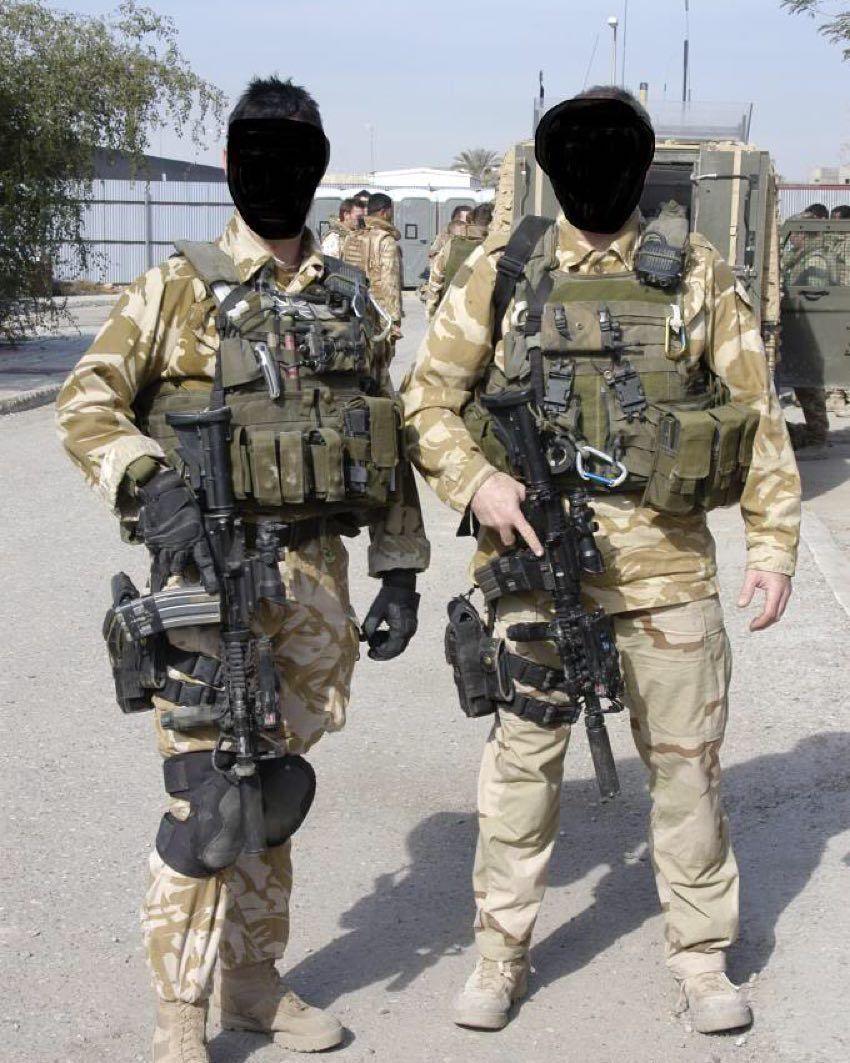
British SAS
That is, it turns out that the bullpup, whichwas positioned as a promising weapon of the future for professionals, but upon the advent of this very future, these same professionals began to reject it! British and French “specialists” often preferred carbinesHeckler&Koch, or, as a last resort, the notorious M4 and others based on the sameAR-15. And FAMAS and L85 increasingly became the weapon of "simple infantry", or for parades, or just all sorts of demonstration photos.
Therefore, since 2016, the French have abandoned their FAMAS in favor of the German HK-416.
Total
As practice has shown, the first assault riflesand were born as bull dads, that is, this is not a flight of fancy of European (mad with fat) designers in the 1970s, but a practical necessity, known even to Soviet designers at the end of World War II. At that time, it was possible to create an automatic machine for an intermediate cartridge with acceptable accuracy only according to this scheme.
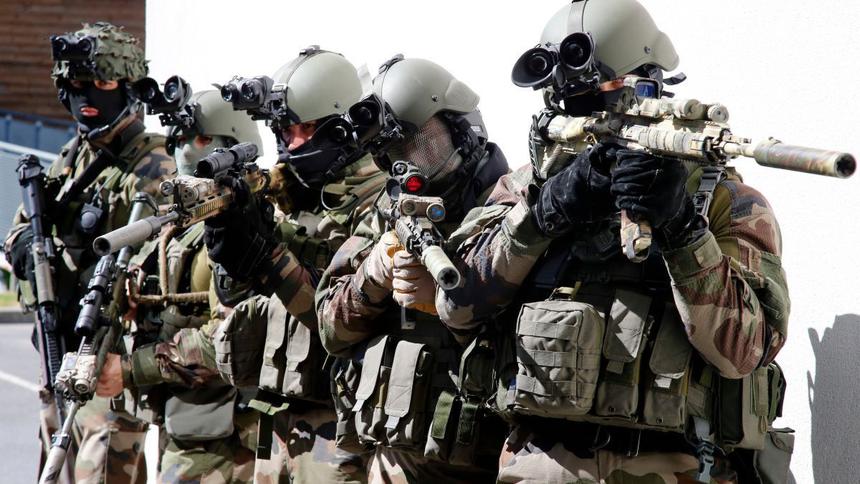
French special forces today
But since NATO initially abandonedintermediate cartridge, these projects were buried, and resurrected again when low-pulse 5.56x45 cartridges appeared. The USSR very quickly abandoned the bullpup due to the complexity and high cost of such an arrangement for the mass draft army, although before the AK, the designers offered exactly the bullpup.
Today, one can judge rather a decrease in excitementaround this scheme than about abandoning it completely. The same Steyr AUG remains quite a reliable and comfortable machine, although it cost some complication of the design. Today, both entire armies of the world and individual special forces themselves determine which scheme suits them best based on their needs and capabilities, often combining both bullpup and classic rifles.