Why deliver soil from Mars to Earth
Currently, only two methods of research are available to scientists
Another option is to study Martian meteorites that fall to Earth.In this case, scientists are faced with the possible contamination of the rock by terrestrial organisms and its sintering as a result of entering the atmosphere.
Also establish how the breed ended up onMars - whether it was formed on the planet or represents fragments of objects from the belt of asteroids that have visited the Red Planet, it was not possible.
Therefore, scientists want to pick up the soil from Mars anddeliver to Earth to study it as much as necessary - and without any restrictions. The experience of the Apollo missions, which delivered a total of more than 100 kg of lunar soil to the Earth, shows that laboratory analysis of samples can tell more about the history and current conditions on the planet than research vehicles directly on space objects.
What kind of plan can be more detailed?
The Perseverance rover is the first stage in the processreturning a sample from Mars. If it launches as planned in the coming months, it will land in the Jezero Crater in February next year. The area contains an old river delta that may contain signs of ancient Martian life.
The Mars 2020 Perseverance Rover mission should belaunched in July 2020. It is assumed that the descent module with Mars rovers will land on the planet in the summer of 2021. The landing site will be the Jezero Crater. The research vehicle will need to take soil samples in the vicinity of the landing sites to determine whether conditions for microbial life existed on Mars.
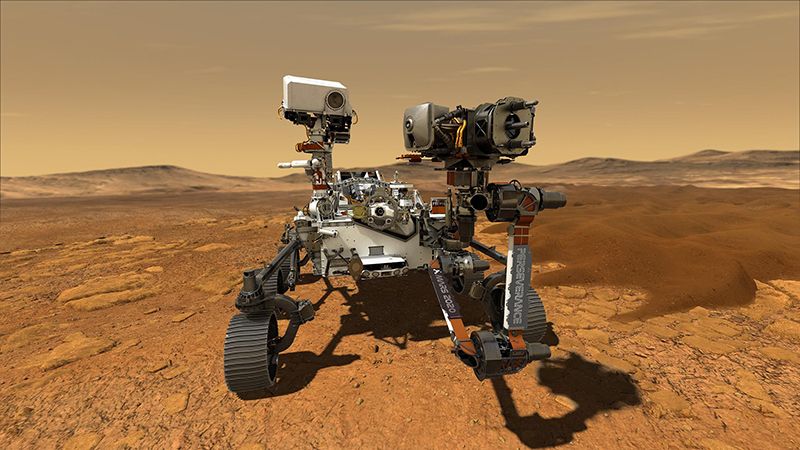
As you move along the crater, the rover will collect 30samples of geological samples from the delta of an ancient river with a total mass of about 500 g. Samples will be placed in cylindrical containers, sealed and left in a special place on the surface of the planet.
After this, the first Mars rover will continue itsmission, and the Sample Fetch Rover developed by ESA will take over. Its launch from Earth on another spacecraft is scheduled for 2026, and it will arrive on Mars in early 2028. The device will reach the storage point for containers with soil, put them in a common container the size of a soccer ball, and deliver them to the launch point.
Then the most difficult part of the mission begins - the rover will have to load containers into the luggage compartment of a small rocket called Mars SSS, which will deliver samples to the orbit of the Red Planet.
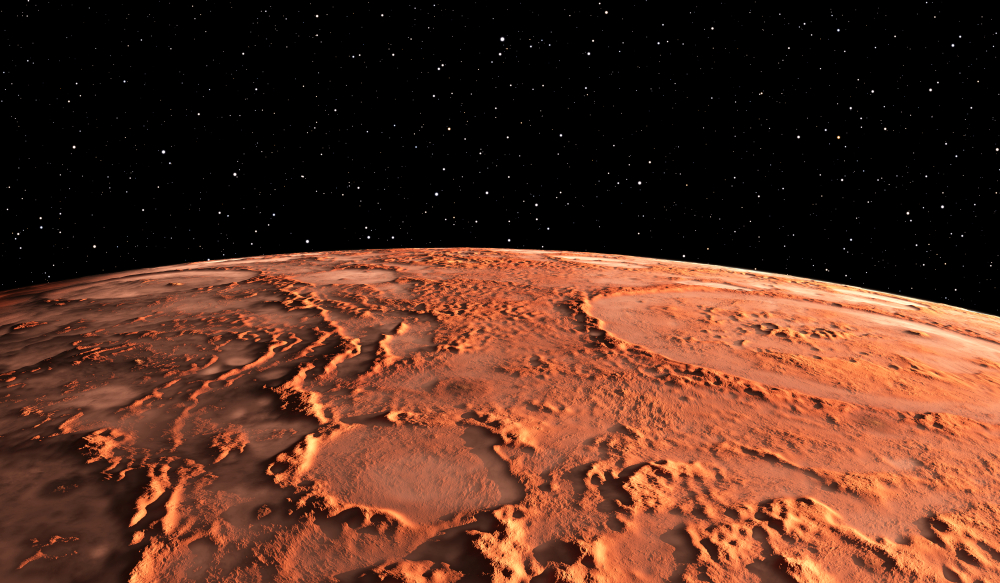
A spaceship will be waiting for her there:it will synchronize its orbit with the orbit of the Mars SSS, pick it up and deliver it, along with soil samples, to Earth by 2031 - if, of course, all stages go according to plan. The landing is planned at a military training ground in Utah.
What is the complexity of the mission?
First of all, it is worth noting that NASA and ESA call the plan preliminary and draw attention to the fact that it can undergo many improvements. This does not negate the fact that there are many questions about the mission.
The biggest problem is that beforeso far no one has launched spacecraft from the surface of Mars and sent more than two ships to the orbit of the planet. “This is by no means an easy task. But we will try to make it as simple as possible, ”said Jim Watzin, head of NASA's Mars exploration program.
In addition, ESA, which is developing the deviceSample Fetch Rover, so far no experience sending rover to Mars. The European Space Agency, together with Roscosmos, was supposed to launch its first rover in 2020, but the mission was postponed due to a new type of coronavirus pandemic.
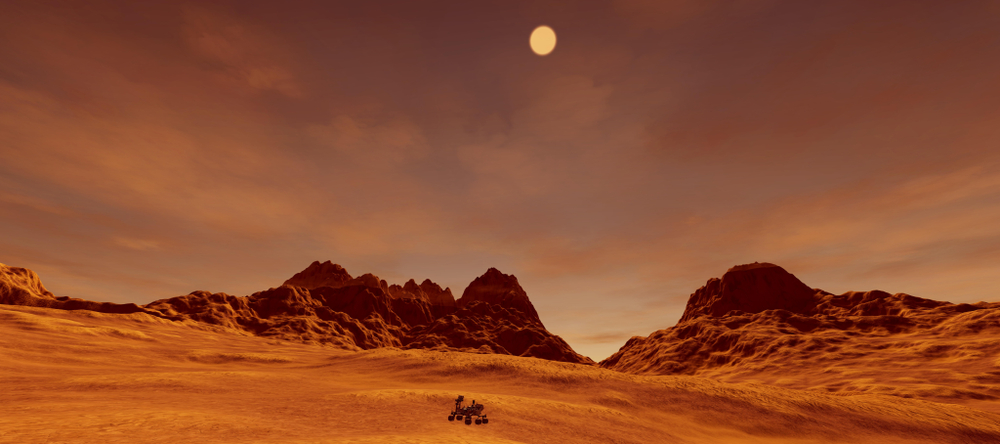
However, the authors of the project note thatlanding the second rover after Perseverance in Jezero Crater should be quite simple - the first rover will have enough time to study the landscape and choose the optimal place to land the second vehicle.
If everything goes according to schedule, the spaceshipto return samples will reach Mars in 2028. The Sample Fetch Rover will do its job of collecting and loading containers during one season, when there are no dust storms on Mars and temperatures do not drop too low. And the samples will leave Mars in 2029 and reach Earth in 2031.