Researchers from the University of Hong Kong and Lawrence National Laboratory have developed soft
In his work, published in the journal ACSNano, scientists have combined all-fluid 3D printing techniques with water-based two-phase assemblies (ATPS). This technology is used to print artificial structures that mimic biological systems.
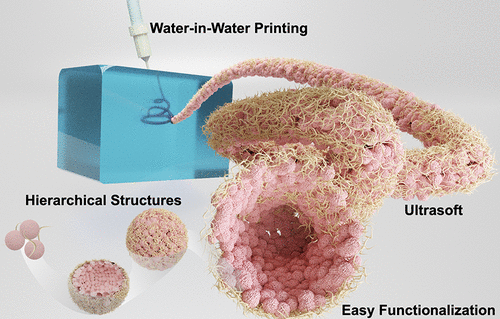 water robots. Image: Shipei Zhu et al, ACS Nano
Researchers explain what they usewater-based two-phase systems for printing with the help of magnetic nanoparticles of water-in-water structures, which, through self-assembly, form soft robots. Their size can vary from nanoscopic to microscopic. And magnetic properties allow you to control the robot using an external field.
The first prototypes presented in the article are verysimple. For example, they can grab and move objects. But in the future, the same process could be used to create more complex structures capable of solving difficult problems, the researchers note. The robots described in the publication were assembled in water. This means that they can work in a liquid medium and can also be adapted to specific tasks using water-soluble compounds.
Aquarobot control. Video: Shipei Zhu et al, ACS Nano
In the future, water robots may openexciting possibilities for numerous real life biomedical and environmental applications, the authors add. For example, they can be used to deliver drugs to specific locations within the human body, to biologically engineer human tissue, and to artificially perform the functions of certain biological systems.
Read more:
Record coronal mass ejection at Betelgeuse is 400 billion times larger than the sun
Megalodon ate an animal the size of a killer whale at a time
Everest found traces of DNA that should not be there