There are still Ryzen 1000 – 3000 series processors on sale, but the 4000 and 5000 models are still relevant. There are
AMD Ryzen 5 4600G - for the novice esportsman
Reasons to buy:6 cores and 12 threads, powerful iGPU Vega 7, FidelityFX Super Resolution upscaling.
Reasons not to buy:If you immediately have a discrete video card.
</ img>
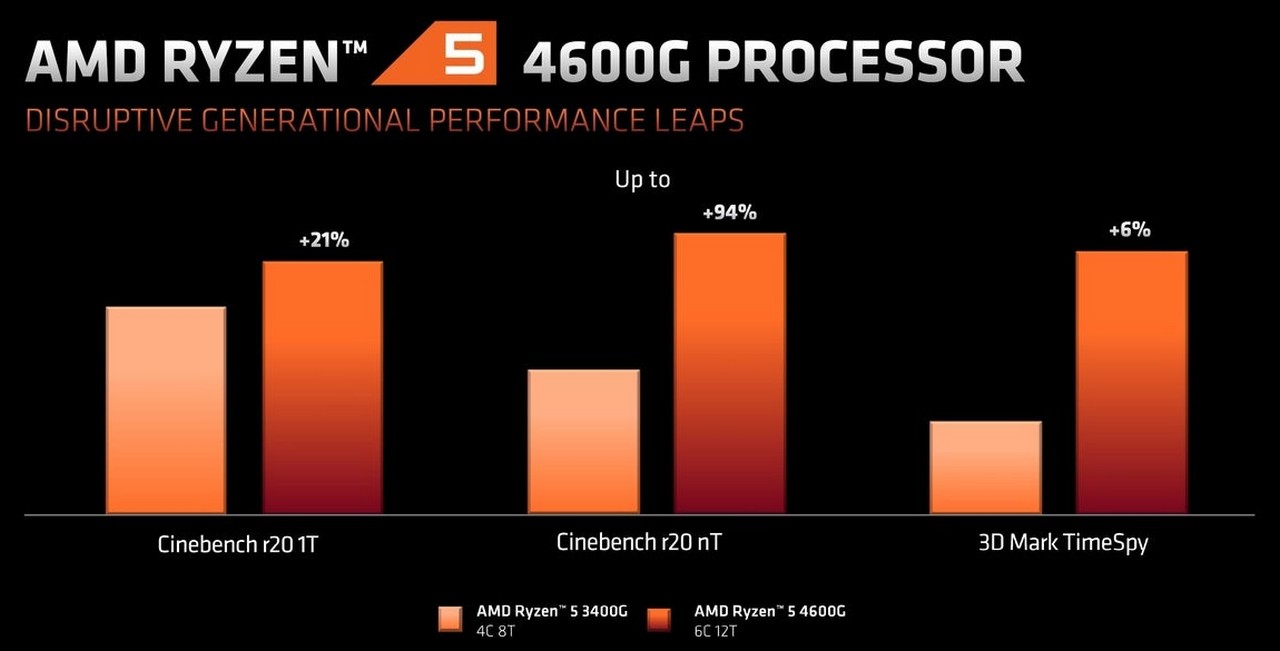
AMD Ryzen 5 4600G - comparatively inexpensivean entry-level gaming or, more precisely, an eSports processor. It is a self-sufficient solution, because in addition to 6 cores of the Zen 2 architecture and 12 SMT threads, it also has an integrated Radeon Vega 7 graphics accelerator. This is one of the most powerful iGPUs on the market and will remain so even after the release of Ryzen 7000 processors with only four clusters of graphics micro-cores , albeit the new architecture RDNA 2.
Whereas the 4600G has as many as seven clustersGCN 5 architecture microkernels. With dual-channel high-frequency RAM, Vega 7 is able to run almost any modern game in native 720p resolution at least at low settings and stable 30+ FPS. The only exception is the extremely demanding Cyberpunk 2077, but FidelityFX Super Resolution smart upscaling technology helps with it. In addition to games, Vega 7 can hardware-mount video with H264 and H265 codecs, as well as play VP9.
AMD Ryzen 5 5500 - for the budget-conscious gamer
Reasons to buy:Progressive Zen 3 architecture, 6 cores and 12 threads, memory up to 4266 MHz.
Reasons not to buy:Narrow PCIe 3.0 x8 video card bus.

</ img>
AMD Ryzen 5 5500 - perhaps this particular processornow it is the best partner for the popular Radeon RX 6600 video card. Unlike the budget 6500 XT with a narrow PCIe 4.0 x4 bus, it already has an x8 bus. Therefore, the Ryzen 5 5500 PCIe 3.0 x8 bus will not be a bottleneck for the RX 6600. The 5500 has several advantages over the 4500 at once: firstly, it is the progressive architecture of Zen 3, which is about 15% faster than Zen 2.
Secondly, the Ryzen 5 5500 has dual-channel cachethe third level is 8 + 8 MB (16 MB in total), while the 4500 has only a single-channel 8 MB. Thirdly, it is a lower operating temperature: up to 90 degrees Celsius versus 95 degrees Celsius for the Ryzen 5 4500. Precision Boost smart auto-overclocking technology adjusts the frequency on the fly under single and multi-threaded loads. To squeeze the maximum performance depending on the cooling system: boxed mini-cooler, tower supercooler or dropsy. Also pleased with the overclocking of memory - up to 4266 MHz, and in synchronous mode.
AMD Ryzen 5 5600 - both play and work
Reasons to buy:PCIe 4.0 bus for video card and SSD, 6 cores and 12 threads, Zen 3 architecture.
Reasons not to buy:If you absolutely need an iGPU.
</ img>
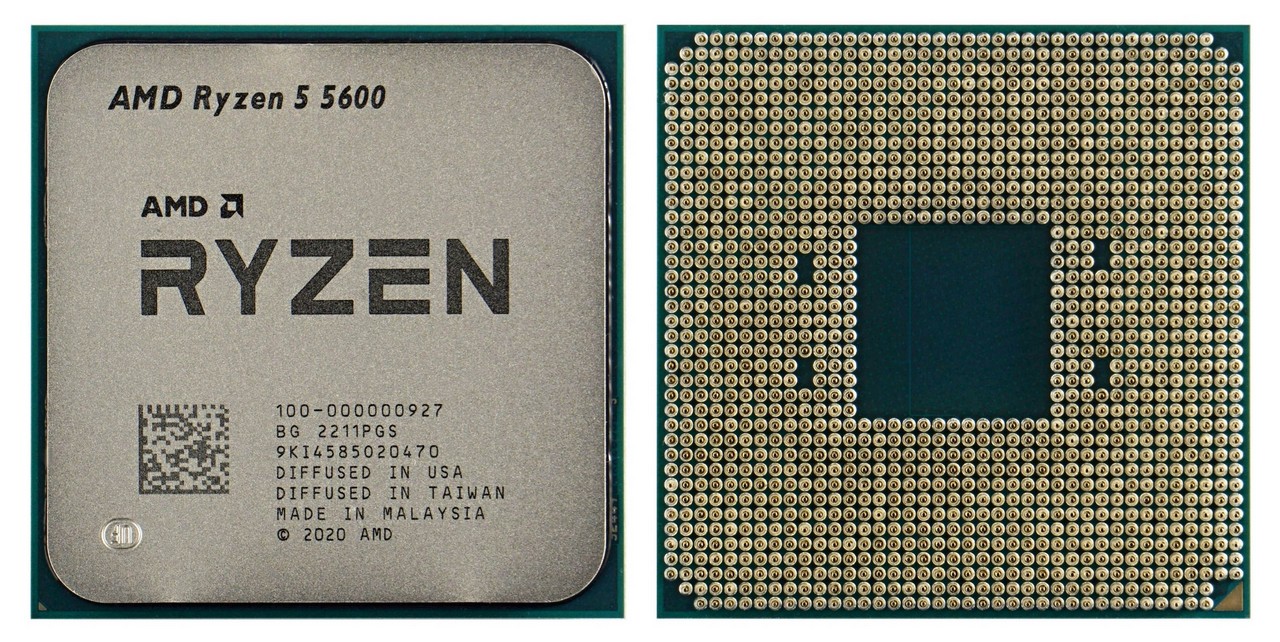
AMD Ryzen 5 5600 is undoubtedly the mostuniversal processor on the market at the moment. It has 6 Zen 3 cores and 12 virtual threads, and also supports the PCIe 4.0 bus. Thanks to this, it is able to pull out almost any, if not flagship, then pre-flagship video card, for sure - up to and including the RX 6850 XT. The frequency is only a little lower than that of the 5600X, but the price is noticeably lower. The advantage is the single-chip structure, while the older Ryzens lose some speed when exchanging data between two CCX chiplets.
The base frequency for the Ryzen 5 5600 is 3.5 GHz, and auto overclocking on a single core - 4.4 GHz. Most of the time, with a gaming load, the CPU runs at a frequency of exactly 4 GHz. But by simple manipulations with the BIOS settings menu, the frequency for all cores can be increased to a maximum of 4.4 GHz. Power consumption and heat dissipation will increase from 65 to about 100 watts, but any motherboard with VRM heatsinks and even a three-tube tower cooler can handle this.
AMD Ryzen 7 5800X3D - Counter-Strike Champion
Reasons to buy:The highest FPS in games, a capacious 3D cache of 96 MB, 8 cores and 16 threads.
Reasons not to buy:RAM is only up to 3800 MHz.
</ img>
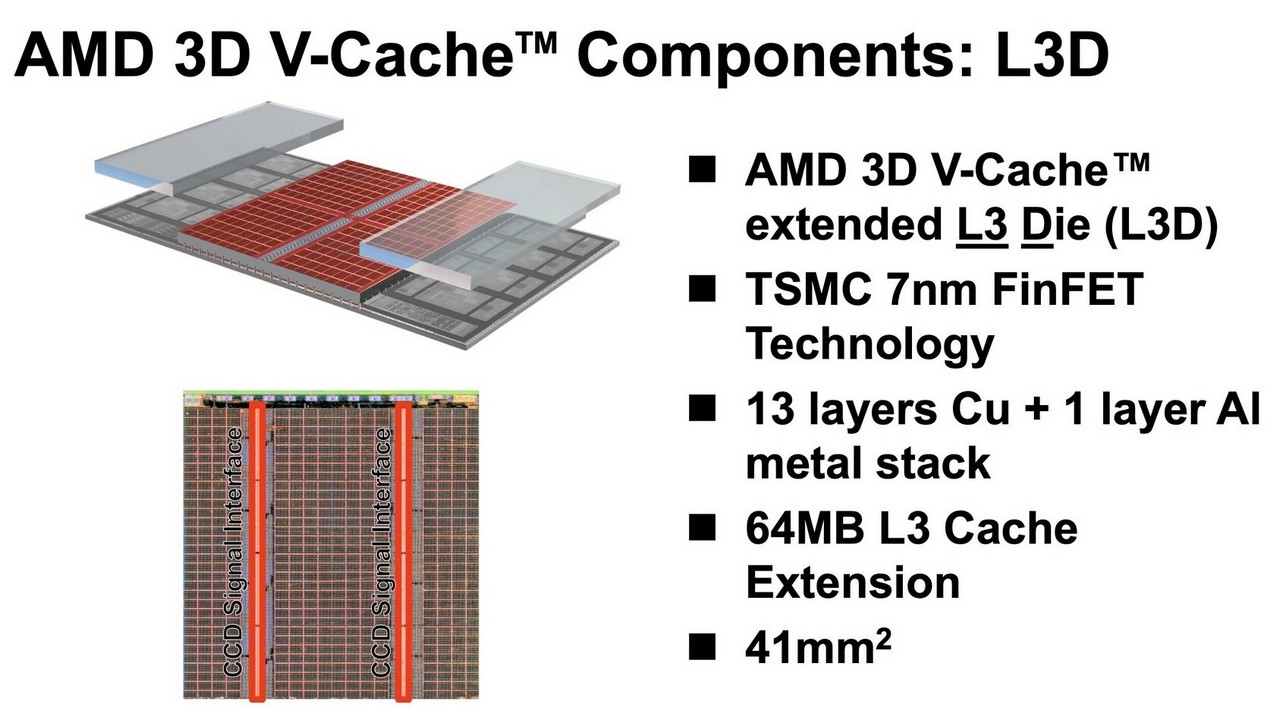
AMD Ryzen 7 5800X3D is the fastest gamingprocessor on the market, which is achieved by a huge 96 MB L3 cache soldered on top of the main chip. A particularly strong advantage in Counter-Strike Global Offensive (500 FPS versus 400 for the closest pursuer) and Total War. The latter is equally demanding in terms of performance per core and multithreading, because it draws a large number of ancient warriors on the map, each with a unique face and chain mail.
In other games that depend more on the video card,than the processor, the 5800X3D has a smaller advantage, but it still exists. You can blame it only for the relatively low memory frequency - only 3800 MHz. Further, the RAM switches to asynchronous mode: the throughput improves, but the delays, on the contrary, worsen. However, the large 3D cache idea has proved so successful that AMD is rumored to soon equip other existing 5000-series processors, as well as the upcoming 7000 series, with it.
AMD Ryzen 9 5950X - for professional work
Reasons to buy:The most multi-core consumer processor, the best choice for video editing, modeling, drawing and virtual machines.
Reasons not to buy:Overkill for gaming.
</ img>
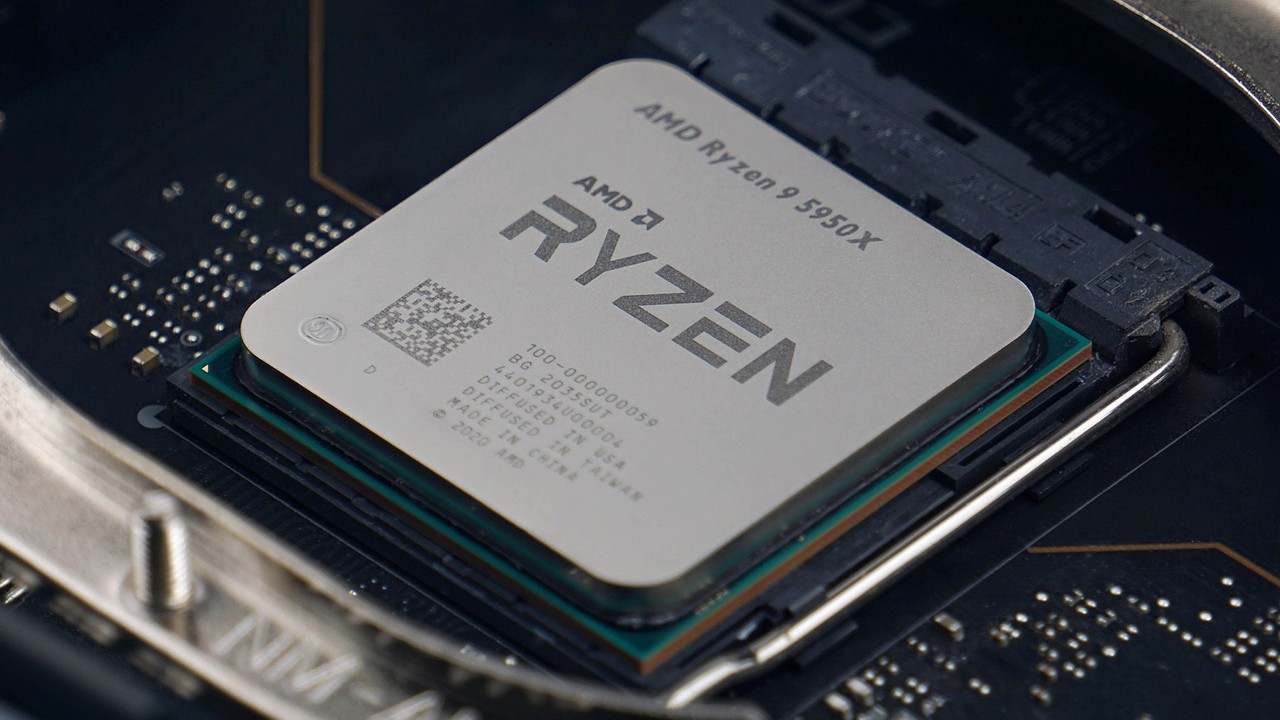
AMD Ryzen 9 5950X is the flagship processor forconsumer socket AM4 with 16 cores and 32 threads, respectively. Only highly specialized AMD Threadripper (32 - 64) for workstations and EPYC (64 - 128) for servers can boast of a large number. but those and others have different sockets. For games, the 5950X is clearly overkill: they are simply not able to load such a large number of cores. It's quite another thing for professional production applications, which parallelize much better.
Even 4K video editing, which is supposed tomainly on the video card (Radeon Media Encoder and OpenCL technologies), it needs a powerful processor to apply color filters and other post-effects. And 3D modeling and CAD drawing are accelerated in proportion to the number of cores. Another area of application for multi-core CPUs is virtual machines, that is, several software computers running on one physical one. You can run a dozen of them on the 5950X.
Thank you
The author thanks ASBIS, the official distributor of AMD processors, for their help in preparing the article.