“Our system helps you use 30% less fuel”
— Tell us about the three areas of your work —
- I would call it a single product with a gradualusing functionality as it develops. The main product for us is unmanned control of freight transport. No one is doing it well yet. Attempts to do something similar have long been announced on the market, for example, in KAMAZ, but so far only we have a certified working solution.
In the presence of infrastructure and regulation, manycould plow the tracks on drones. We often hear such statements. But the question is what to do in the current situation? Our idea is that there is no need to blame everything on the regulator and wait for something. You can earn and benefit the market right now.
 Igor Kaloshin
This is how products and separate functionality appear.The first commercial product that we showed to the market is a driver assistant. That is, the driver sees a monitor in front of him, which prompts: you need to accelerate or slow down. This is necessary in order to save fuel. We did this with the help of a 3D virtual rail that the car follows like a thread.
What is unique about this technology?
- The key point is that it is three-dimensional andtakes into account the terrain. With reference to the location of the car and taking into account the weight of the car, the pressure on the axles, it is possible to give recommendations on driving style. This way you can save 20-30% of fuel costs. I have not seen solutions that give such an effect on the market. Someone wraps the whole car with sensors and gets 2-3% savings.
40% of transport costs go to fuel ifwe save 30% of this amount, then the net addition of marginality is 10%. This means that the company can earn here and now, benefit customers. And there is a problem with the lack of experienced drivers, and our technology turns it into an operator, now the behavior of the car will be regulated professionally.
The first level of the system is the monitors, whichprompt to press the gas or brake. The driver needs to constantly monitor him and act in accordance with the recommendations, which is not very convenient. The next version is a full-fledged driver assistance system. It replaces cruise control and controls fuel consumption.
This system has the possibility of participation of the operator- a person sees an obstacle, slows down, and as soon as he passes it, the car accelerates again. Here is a similar user experience, but you only adjust the fuel consumption - for example, I want 22 liters per 100 km. And the operator sits, holds the steering wheel, he does not press the gas pedal. At any moment he can apply the brakes. This energy-efficient cruise control has become a flagship product.
— How do you sell your product, given that in Russia companies care less about the harm to the environment and fuel economy?
- That's right, in Europe they are reacting, but in Russia so fardo not react. And the problem is not how the environment is perceived, but there is resistance on the part of drivers, management personnel within transport companies. Indeed, with such systems it is more difficult to cheat, cheat or drain fuel. If the company is headed by an owner who strives for efficiency, this is our client.
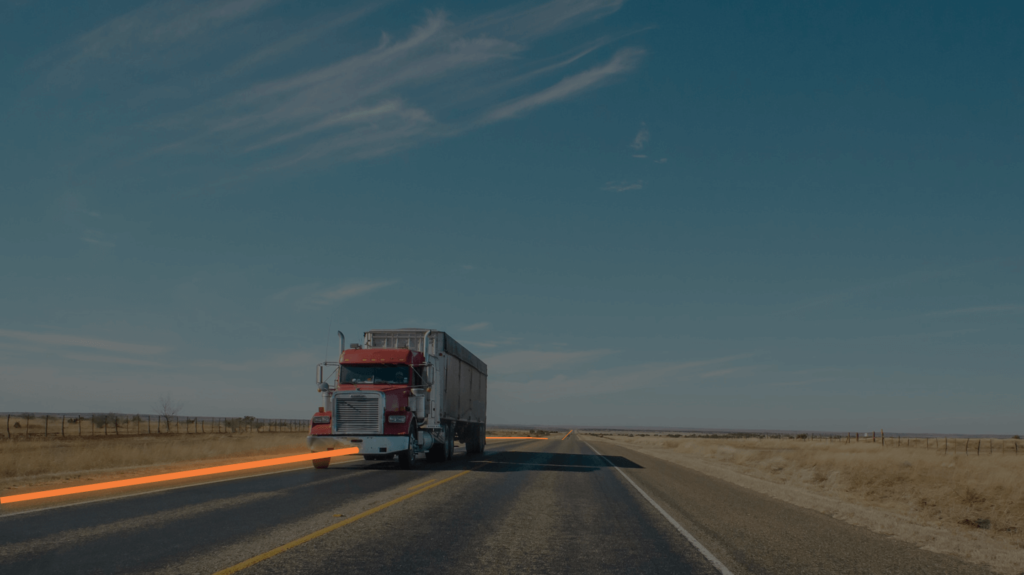 With this system, trucks drive on a virtual rail
How does your technology help drivers get more rest?
— If we release the driver from the elementconstant tension, it spends less energy. Therefore, the level of driver fatigue naturally decreases. Perhaps, if such systems are implemented more widely, drivers will be given more quotas for the amount of time they can spend behind the wheel.
“We have already taken the pedal from the drivers. Now we can take the steering wheel too.”
- How did such systems develop in general? Where else are they used?
– There are several types of tracking oldtechnologies that remember where the car was driving, remember the parameters and draw conclusions based on them. Then there were systems for assessing driving skills for comparison with reference driving and adjusting driver behavior. This is already a rather ancient system, but somewhere it is just beginning to be installed. And the third stage is an active system with high-precision mapping and issuing recommendations to drivers or the car is lucky on its own based on the calculation that has already been made.
Such systems have recently been installed onhigh-class cars - top-end versions of Mercedes or Volvo. This space is inaccessible even for the owners of such machines, this is a separate paid option. And Energotrak plays right here - in the field of truck management based on high-precision cartography. This is not an attempt to catch up with these cars, but part of the drone technology that can be applied today.
— That is, the regulation does not yet allow the use of drones, but have you decided to use at least part of the technology?
- Not really.Now all over the world you cannot release a car without a pilot; the operator is obliged to control the car. Then the question arises - what does this operator do? And if he doesn’t press the pedals or turn the steering wheel, then this is already unmanned control. Now, with the help of effective cruise control, we have taken the pedal away from the driver. Now we can pick up the steering wheel, technology allows it, they were tested with a commercial shipment on the route Moscow - St. Petersburg. And the operators barely touched the steering wheel or pedals. They achieved a very good result in energy efficiency - 20 liters per 100 km.
This is what we can do now inthe field of unmanned control within the regulatory framework. And when unmanned corridors appear, we will be the first to travel along them. Why? Because rails are high-precision cartography, no one in Russia has it. We have digitized 38,000 km of roads, right up to the border with China. To do this, you need to physically drive along the roads several times.
How far behind technology is regulation?
- The readiness of the infrastructure is not Russian,but a worldwide problem. To allow unmanned vehicles, it is necessary to remove vehicles with people from the roads. Being together because of the imperfection of technology will be difficult. Therefore, they are discussing separate transport corridors that can operate on the highway. And in the city it will be more difficult to implement them. No matter how well the neuron is trained, it will be possible to release them only in 5-10 years. Highways M-11 and M-12, M-4 and go in this direction.
— What are the key features of your development for you? What clients are you targeting?
— Our task is to ensure that the carwalked correctly along the route and carried loads efficiently. We are focused on transport companies, and reliability and efficiency of delivery are important to them. At the same time, every few seconds all telemetry is sent from the car; we collect large data from which we can predict what anomalies are occurring with the car. The car started to consume more fuel - what happened? Maybe the driver took control, problems appeared with the units, the car, or the household transit wheel. We read such signals and send them to the company. And their analysts must extract the correct meanings from this array.
 “Our task is to make sure that the car moves along the track correctly and carries loads efficiently”
How advanced are these companies? Are they interested in such technologies?
— Judging by the number of contracts thatconcluded with transport companies - the interest on their part is huge. And we have contracts with all transport companies, agreements of intent have been signed with others. But there is also an entrepreneurial question - are they willing to pay for this little box? From interest to commercial implementation is quite a long way. And on cruise control, the situation is much better and the process is faster.
“Our technology can also be used for air transport”
— What companies are you targeting?
— If abroad, the most striking example is activelydeveloping company - TuSimple. But the key difference between competitors is that they use computer vision to assess the surrounding area and transmit commands to the car. These technologies are quite expensive; lidars, radars and cameras can cost several hundred thousand dollars per vehicle. And they still have limitations - they don't work well in rain or fog.
And we have a virtual rail tied to satellitestations, and the internal system, which takes into account a huge number of parameters through sensors, allows you to blindly move from one object to another. It allows you to drive a car in any weather. And the car can even drive long enough without a satellite signal: enter the Lefortovo tunnel and exit it with a backlash of 40 cm. This is a huge advantage over competitors.
— Can you install the system on any truck?
— Yes, for all modern vehicles up to5–7 years in depth. These are all Scania, KAMAZ, Mercedes, we have about seventeen brands. First we need to connect to the machine, take all the codes from it and they are ready to be connected.
 “If we free the driver from the element of constant tension, then he spends less energy”
— Are you engaged in air and underwater technologies?
- So far, only ground.But the benefits of this technology, unlike competitors that use computer vision technologies, with relatively little development, it can also be used for air transport. A virtual rail is also being built there, laid at a higher altitude in the air corridors.
There, too, there is a surface relief and you needtake into account that vehicles and aircraft do not intersect. There are three coordinates that are not tied to the ground, they can describe the ground, but they can also be above the ground.
- What are you focusing on right now?
— The first direction is energy efficientcruise control, it is ready for use, there may be minor improvements for service requests. Therefore, we want to introduce as many devices as possible into existing trucks.
We also want to strengthen the program of the nationaloperator on unmanned corridors. Here we understand that we are the only ones, probably, or at least a few, who can make a tangible contribution to the development of this direction. Because there are ready-made, certified trucks and already working technology.
Read more:
NASA revealed the origin of Haumea - the most mysterious planet in the solar system
The "dark matter" of the genome hid cancer treatment: what scientists found there
Five million years of death: why the "Great Dying" really took so long