Nine months of combat will exhaust even the most resilient soldiers, but why is no one talking about technology?
Discuss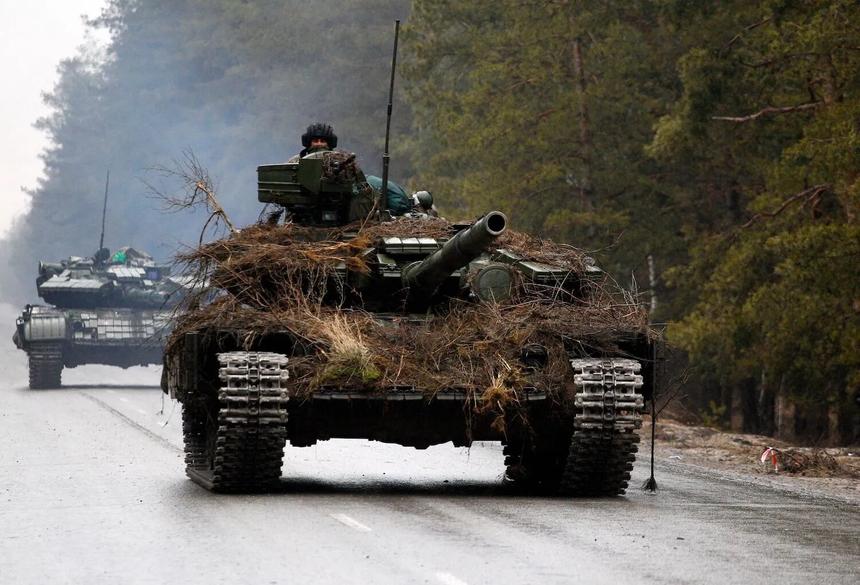
Table of contents
- Even iron gets tired
- What's wrong with supplies to Ukraine?
- Prospects
Well, for a long time we did not delve into the actual.NWO turns into a routine - no negotiations, no progress at the front. The Armed Forces of Ukraine started the autumn campaign quite cheerfully, but now there is almost nothing left of it. The front is stagnating and even the most patriotic "experts" on both sides are afraid to touch the topic of forecasts with a three-meter stick.
Why does everything turn out the way it does?political point of view you will be told in any sources of information. And today we will talk about technical aspects, because we have our own answer to this question.
Even iron gets tired
Obviously, both sides are unable to attack. There are many reasons for this, and they are not only losses.
Most amateurs who like to measure their ratings by quantity, kilometers and millimeters do not take into account such a factor as wear and tear. For example:
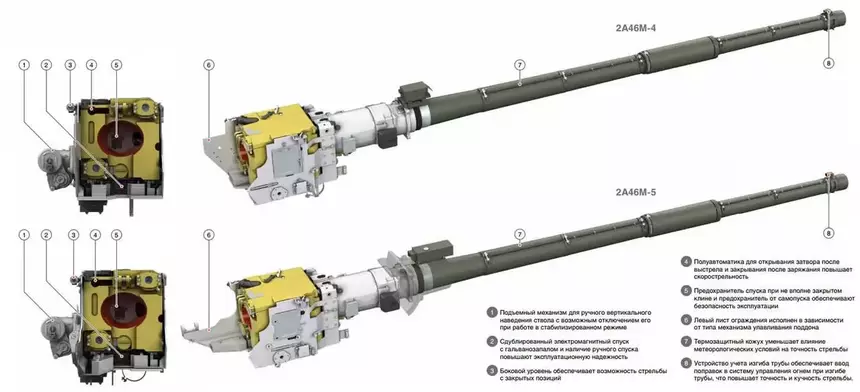
Almost all Soviet-style tanks are equipped with 2A46 guns and their variations.
-
The maximum shot of tank guns with high-explosive fragmentation is about 400 shots, and with sub-caliber (BOPS) - about 200
-
Engine resources, like V-84 upgrades, all the latest modifications (including V-92), on Russian tanks are about 1000 hours, and Ukrainian 5TDF have even less
-
The resource of artillery barrels of howitzers also does notimpressive - the barrel of the NATO super-howitzers M777 needs to be changed after 2500 shots, and the D-20 howitzers (which are on the Acacia self-propelled guns and are used most of all by all parties) can withstand about 1000 shots
Both Russia and Ukraine in the 2000s and laterworked on modernization, not only introducing new types of weapons, but also improving the old ones - and increasing their resource, in the first place. And still, nothing radically improves here. But we have barely touched on this topic, because in the war we need not only tanks and howitzers. Fighting is hundreds of names of different prodigies.

 12
12
V-92 - engine for the T-90 and some later T-72B3s, a distant descendant of the V-2 for the BT-7, T-34 and KV tanks
What is 1000 engine hours?This is about 40,000 km of cross-country driving, that is, you can drive through the equator. Sounds solid. But after all, this is with a calm movement and, of course, taking into account an experienced driver, who will serve correctly and will handle carefully. Only in combat realities they don’t fuss with the engine. And we still don’t think that anyone can be put in the position of a mechanic driver - sometimes, with minimal skills (start, move off, turn).
At the same time, all Soviet-style tanks do not havean additional power plant for the operation of the controls - everything is powered by the engine, which also has to work in defense, sometimes all day long. Therefore, 1000 hours is not so much (and this is not a resource for all modifications yet). Yes, the engines are being changed, but the fighting has been going on for the 9th month.
Why are we doing this?And besides, the technique is obviously “tired” - at such an intensity, its resource “burns out” in a matter of weeks, well, months at most. Both sides have long ago connected storage bases and do not disdain to fight with cast-offs: some are Soviet, others are NATO. But the key word in both cases is "cast-offs".
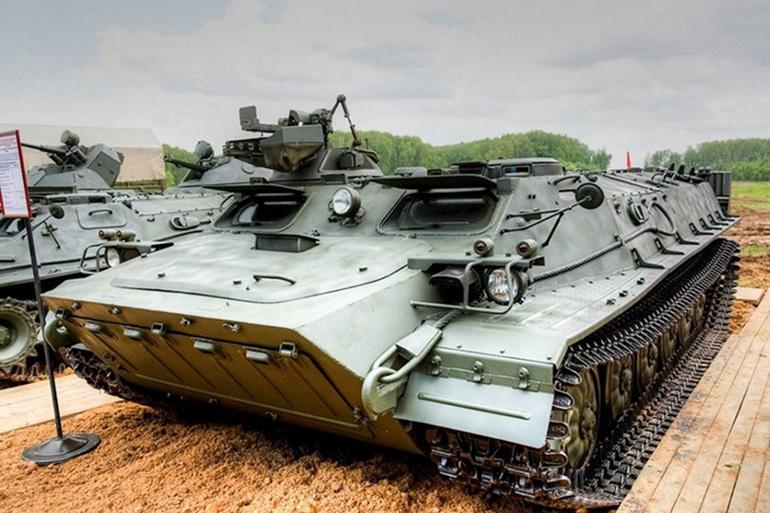
Motolyga or MT-LB: both a tractor, an armored personnel carrier, and a universal platform for anti-aircraft and anti-tank systems - a workhorse on both sides of the conflict
Because of this, the level of mechanization suffers.units - there are not enough tanks, armored personnel carriers, infantry fighting vehicles, motorized leagues and other tractors, engineering vehicles and trucks (logistics routes are already very stretched - Urals and KamAZ trucks are not iron. That is, iron, but not so much). There is also aviation, and these problems with falling planes - there resources and maintenance requirements are two heads higher.
As a result, neither side is actively prepared andto attack briskly, the fighting is increasingly flowing into a positional format with thin raids of special forces and light infantry. Obviously, the outcome largely depends on who will be able to fill up with new tracks and wheels faster and in serious volumes, but so far nothing is particularly visible here.
Read also
What's wrong with supplies to Ukraine?
Here, many will notice - "so after all, Ukraine receives so much from America and Europe." That's right, but there are many nuances.
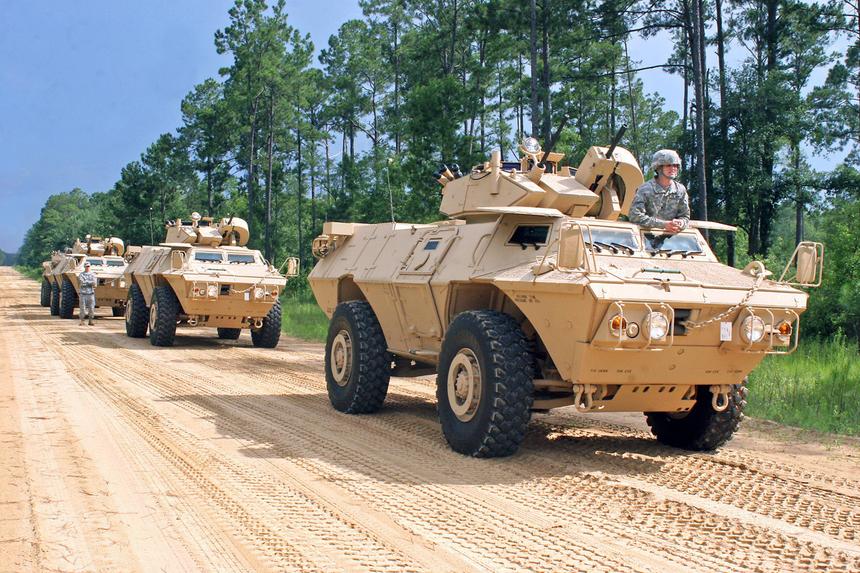
They talk about 250 M1117 units of such armored cars forAPU and other formations of Ukraine. Usually they are referred to as armored personnel carriers, but this is MRAP - a technique for local asymmetric conflicts (advanced Americans against bearded men in slippers, for example). For combined arms combat, such equipment lacks firepower and armor
Allies of Ukraine in the 9th month are still afraidsend a serious offensive weapon. And this is not about operational-tactical missiles (how much does Russia solve with operational-tactical missiles?), but about more “earthly” issues. To put it simply, the Armed Forces of Ukraine need caterpillars - a lot, new ones, which would be stuffed more or less modern.
In recent weeks, in the form of grandiose victoriesmanaged to get 28 Slovenian T-55S and 45 T-72. Do not rush to laugh at the T-55 - this is an Israeli modernization with a 105 mm L7 cannon, adequate dynamic protection, heatpacks and warning systems. But for a war in 2022, this is still such a thing. T-72 is also an extensible thing. The fact is that the T-72A and T-72B are quite different tanks in terms of combat capabilities, not to mention the Russian upgrades of the T-72B3 and T-90.
Read also
Pulling together from the European (former countries of the Warsawagreements) of 72ki storage bases, throwing them into battle “naked”, without significant upgrades, is a very controversial matter. In the database, these are good tanks, but they are good by the standards of the late 1970s.

T-55S
Armored cars are often praised in telegram channelsMastiff, MaxxPro, and now they also started sending M1117. But you need to understand that all these are MRAP armored vehicles - a technique for confronting partisans, in a war against ambushes and mines on the roads. The use of the MRAP class in modern combined arms combat is such a thing. Nobody considers MRAP as a "first line" technique, it is a deep rear (escort, escort, patrol).
In the APU, this technique is essentiallya surrogate for armored personnel carriers and infantry fighting vehicles - it was attacked both near Kharkov and near Kherson. MRAPs do not have high firepower, design features do not make it possible to install automatic guns and launchers for ATGMs. Basically, they are equipped with 12.7 mm machine guns or 40 mm automatic grenade launchers - just right against Afghan mud huts, but for combat in Soviet buildings with cinder block high-rise buildings and industrial zones, this is rather weak.
The United States themselves have done a lot of "mrap" for Iraqand Afghanistan, and despite the fact that they left a considerable part of them in Afghanistan (even if they beat them pretty much), there are still thousands of such machines, and the Americans don’t really need them today. They planned to equip the rear services with the MaxxPro rejected by the army (instead of the M113), and with the heavier M1117 they didn’t understand what to do at all - and now it became possible to profitably dispose of them.
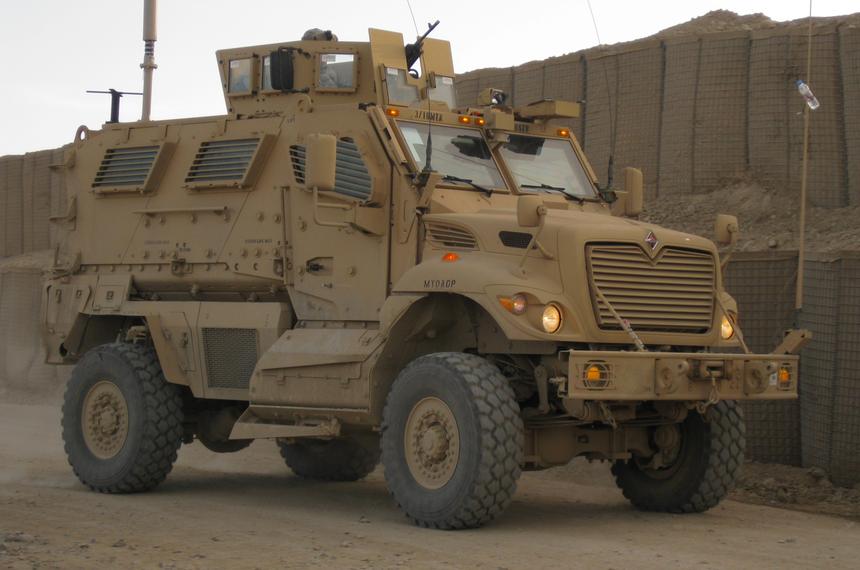
MRAP MaxxPro - many of them today serve as a surrogate for armored personnel carriers for the Armed Forces of Ukraine
Modern NATO BTR modular:in versions for raid operations, this is protection from 14.5 mm in all projections and 30 mm in frontal projection, a dynamic canopy from RPGs, and sometimes even KAZ (active protection complex - anti-missiles from guided anti-tank missiles). The modern BMP is even cooler - these are very tenacious vehicles. Both have massive firepower with programmable munitions and anti-tank missiles.
Ukraine does not receive anything like this, but justificationson this score, the United States has quite ordinary ones - too new equipment, it cannot be serviced. Yes, NATO vehicles are very much unified, but they have different suspensions and transmissions. However, this issue could have been resolved for so long a long time ago. Another thing is that Western countries are rearming with such equipment slowly - such machines number in the dozens, and the Armed Forces of Ukraine need them in the hundreds.
Read also
But they don’t even send older cars, whichbetter than the existing BTR-70/80 or BMP-1/2, and at the same time there are plenty of them. And in general, over the past period it was possible to modernize hundreds of machines and equip them with the APU, but… none of this has been done.
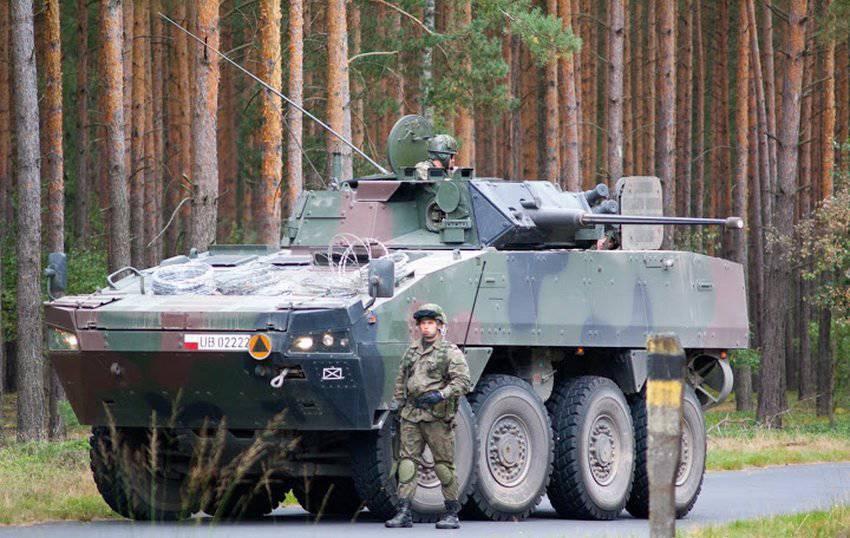
Polish Rosomak based on the Finnish armored personnel carrier Patria is one of the best modern armored personnel carriers
Tanks are an even more painful issue.Zelensky asks for German Leopard-2s, but receives Slovenian T-55s. With a serious increase in the combat capabilities of the Armed Forces of Ukraine - it concerns ammunition and light weapons, air defense systems - Ukraine still does not receive heavy equipment for the offensive, and is not expected.
Prospects
The current conflict is incredibly entertaining for military theorists (for you and me, I think, no longer - everyone is tired). Much of what is happening, of course, extravaganza.
During the Second World War, countries were supplied with maximuman economy loaded for military production, while minimizing non-military industries. The intensity of the battles was such that equipment rarely lived to wear out - I had a chance to read how the crew changed three tanks on the Kursk Bulge (and some lucky ones and several crews).
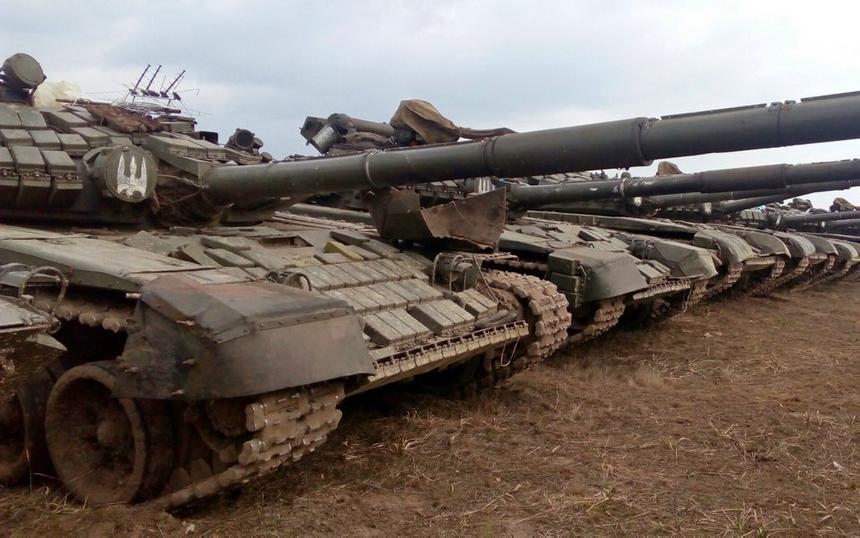
The T-72 is currently the main tank on both sides of the conflict. These are the best vehicles that Ukraine can count on in the supply of its allies.
The military-industrial complex in peaceful mode is not able to cope withproduction volumes of both full-fledged units of equipment and spare parts. Today, all the surviving equipment that began fighting in February is in need of repair - from medium to major, and both sides have difficulty with this.
Purchasing foreign weapons is very difficult todayfor the Russian Federation, and Ukraine did not push the allies to receive heavy offensive weapons. The fact that it is undergoing relative replacement (German self-propelled guns, American howitzers have already been repaired) does not make it possible to seize the initiative to the end - obviously, the allies are not rushing the Ukrainian victory, contrary to bravura statements.