German engineers from the Institute of Organic Electronics, Electron Beam and Plasma Technologies
Titanium oxide, the main component of the coating, inIn its normal state, it repels water, forming droplets that roll off easily. But under the influence of ultraviolet radiation, its state changes, and it begins to attract water. Due to this feature, during the daytime, the surface remains covered with a thin layer of liquid.
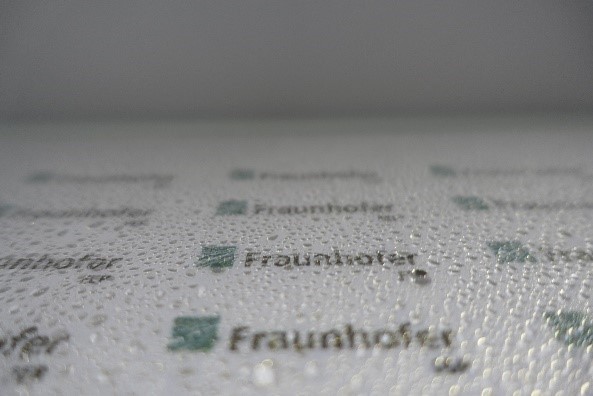
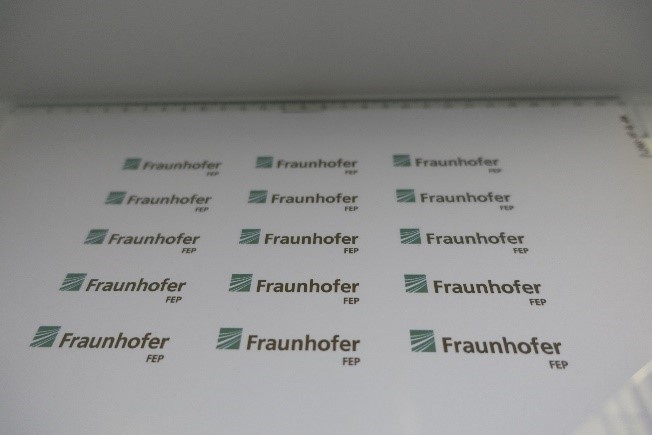
The coating in normal condition is hydrophobic,moisture is repelled and forms droplets (left), and after exposure to ultraviolet irradiation it is hydrophilic, the moisture is distributed in a uniform thin layer (right). Images: Fraunhofer FEP
Dust or dirt that accumulates duringday, they cannot stick to the surface because a thin layer of water holds them, the authors of the development explain. At night, when the coating is no longer exposed to UV radiation, water collects in droplets that easily roll off, carrying dirt with them.
Interestingly, this is not the only featureof this coating: UV-activated titanium oxide also decomposes organic molecules on the surface, acting as a photocatalyst. The result is antibacterial and sterile surfaces. This is not required for solar panels, but it will find application in medical technology, engineers believe.
To enhance the hydrophilic effect, for the first time weWe apply crystalline titanium oxide to ultra-thin glass in a roll process. It's very efficient. Ultra-thin and lightweight glass can be embedded in solar modules or other composite material, applied to facades and even curved surfaces.
Valentin Khizer, co-author of the development
Read more:
Scientists have named the top 6 ways to "save" the memory of older people
A mysterious imprint underground surprised scientists. He is over 1000 years old
Sword thought to be fake turns out to be a 3,000-year-old Bronze Age artifact