Planetary scientists from the Southwest Research Institute have published results for almost 20 years
The Cassini ultraviolet spectrograph hasunique sensitivity to capture the smallest particles that form the rings of Saturn. Especially a lot of details reveal observations in the extreme ultraviolet wavelength range, the scientists explain.
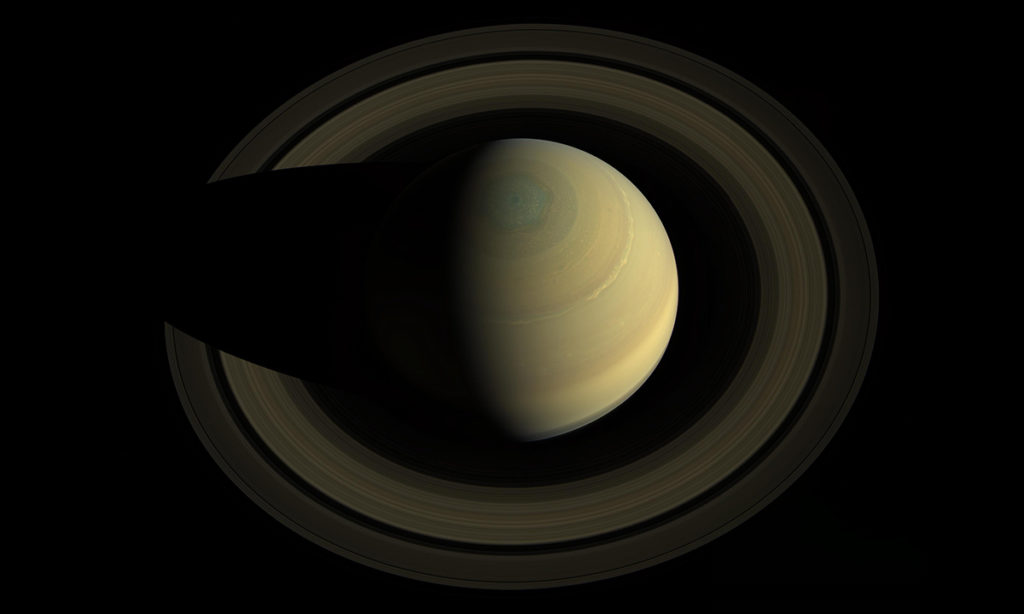 Rings of Saturn. Image: NASA/JPL-Caltech/SSI/Cornell
To determine the particle size, the spectrographphotographed them "in a solar eclipse". Looking against the light of a star resulted in tiny grains of dust blocking some of the light, providing a direct measurement of optical thickness, a key parameter for determining the size and composition of these particles.
The researchers used the group's dataobservations in which the Cassini apparatus was at different angles to the ring system. Since light passing through the rings is deflected at different angles, by combining many observations, planetary scientists can reconstruct not only the shape and size of the particles, but also the structure of the rings.
Scientists note that detailed information about dust particles will reveal the secrets of the formation and evolution of Saturn's rings.
Evidence indicates that the ringsare relatively young and could have formed as a result of the destruction of an icy satellite or comet. However, to support any theory of origin, we need to have a good idea of the size of the particles that make up the rings.
Stephanie Jarmak, Researcher at the Space Science Division of the Southwestern Research Institute
Read more:
Living organisms have made Mars uninhabitable
NASA revealed the origin of Haumea - the most mysterious planet in the solar system
The "dark matter" of the genome hid cancer treatment: what scientists found there