To understand that the wound is healing and does not require treatment, doctors have to remove the bandage. However this
The new smart headband contains a sensor thatcan very accurately measure the moisture level of a wound, and then transmit the data to a smartphone, without requiring doctors to remove bandages. In the future, by changing the geometry and materials of the dressing, researchers may be able to adapt it to different types of injuries. This technology will help doctors manage wounds more easily and effectively.
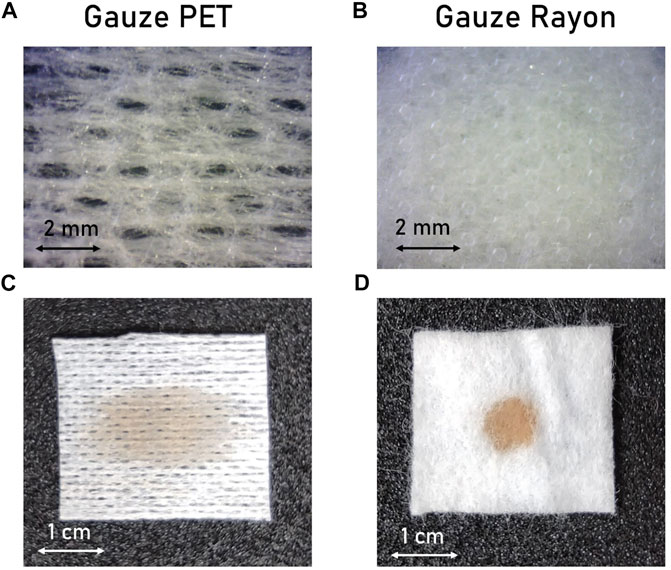 Active gauze textile bases.
There are many factors that can affect wound healing, such as temperature, glucose levels and acidity. However, one of the most important is the humidity level.
However, if the doctor wants to check the levelmoisture of the wound, he needs to remove the bandage, and this can damage the delicate healing tissue. To solve the problem, scientists have created a new smart bandage to non-invasively monitor the condition of the injury. Selecting materials was a challenge because the dressings had to be biocompatible, disposable and inexpensive.
In the development, the researchers used a conductivepolymer PEDOT: PSS. They applied it to gauze using a screen-printing technique. The idea is that a change in the moisture level of the wound causes a change in the electrical signal measured by the sensor.
 Complete architecture of humidity sensors
"PEDOT:PSS is an organic semiconducting polymer that can be easily applied to multiple substrates as a standard ink, explained Dr. Marta Tessarolo from the University of Bologna, author of the study. — We also incorporated a low-cost, disposable, and bandage-compatible RFID tag, similar to those used for clothing security tags, into a textile patch. The tag can transmit humidity level data wirelessly to a smartphone, allowing medical staff to know when to change the bandage.”
Scientists have already tested the dressings by exposing them to artificial wound exudate.
Read more
The largest and most powerful wind generator is under construction. It will provide energy to 20 thousand homes
Atomic clock experiment confirms gravitational redshift
Remote lung screening was as effective as face-to-face examination