Paleontologists from the University of Kansas have discovered two new species of prehistoric primates - primatomorphs.
Paleontologists have found that both species werea little more than their closest relatives of that time, located closer to the equators and tropics. In addition, fossil northern animals are distinguished by large teeth and jaws.
The remains were found during research onEllesmere Island is Canada's northernmost island, located near Greenland. Fossilized animal bones lay in layers of sediment associated with the early Eocene. This is an era that began 56 million years ago and ended 33.9 million years ago and is associated with global warming; the climate in the region was much milder and more comfortable for life than it is now. But, just like today, for almost six months the animals lived in polar night conditions.
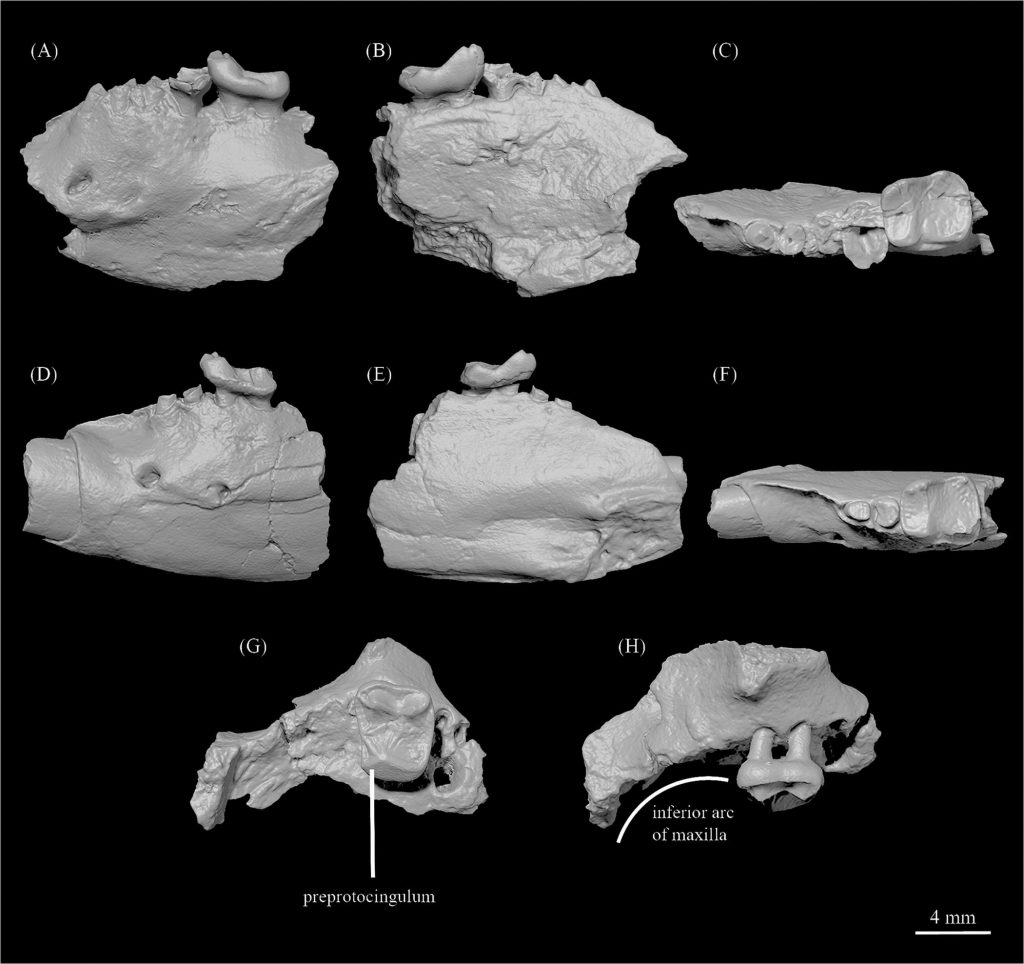 Teeth of Ignacius mckennai. Image: Kristen Miller et al., Plos One
The researchers believe that the food was muchharder to find during the dim winter months. Therefore, the Arctic relatives of primates were forced to consume harder material, such as seeds, nuts or tree bark. This led to the development of powerful jaws capable of chewing such foods. The unusually large size of the animals is associated with adaptation to a colder environment compared to the tropics.
We think this is probably the biggestthe physical problem of the ancient habitat for these animals. How will you survive through six months of winter darkness, even if it is warm enough? The teeth and even the jaw muscles of these animals have changed compared to their close relatives from the middle latitudes.
Chris Beard, professor of ecology and evolutionary biology and study co-author
Scientists believe that the analysis of how the ancientanimals adapted to life in northern latitudes under global warming will show what new traits modern animals will develop in response to anthropogenic climate change. They also believe that as global temperatures rise, the halo of primate habitat will increase.
Read more:
Earth's core will soon be spinning in a different direction
Watch the hydrogen superyacht 'fly' over the water at 75 knots
The Milky Way is abnormally large for its galactic filament
On the cover: Artistic illustration of arctic primatomorphs. Image: Kristen Tietjen, University of Kansas