The meteorite that fell on February 15, 2013 near Chelyabinsk in the Southern Urals was unique in its scale
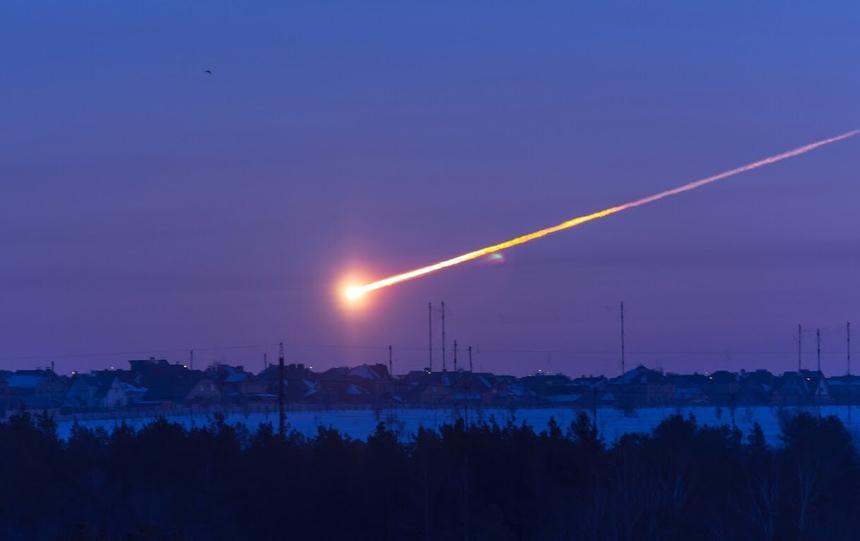
The fall of the Chelyabinsk meteorite was accompanied bysignificant destruction, as a result of which a large number of fragments fell to the surface of the Earth. Its disintegration was also accompanied by the formation of a gas and dust plume and subsequent settling of the dust component.
Gutfleisch and his colleagues studied crystals withusing scanning electron microscopy and found that they have a variety of unusual shapes: closed, quasi-spherical shells and hexagonal rods.
Further analysis using Ramanspectroscopy and X-ray crystallography has shown that carbon crystals are in fact exotic forms of graphite. Most likely, these structures were formed by repeatedly adding graphene layers to closed carbon cores. The researchers studied this process using molecular dynamics simulations of the growth of a number of such structures.