Scientists from Oregon State University found the remains of an insect in a piece of amber. It was
Paleontologists have named a new species - Palaeotanyrhinaexophthalma. The animal, enclosed in a piece of amber about 100 million years old, belongs to the Hemiptera order, which includes more than 80 thousand species, including bugs, cicadas and aphids. But in all this diversity, there were no close relatives of the new insect.
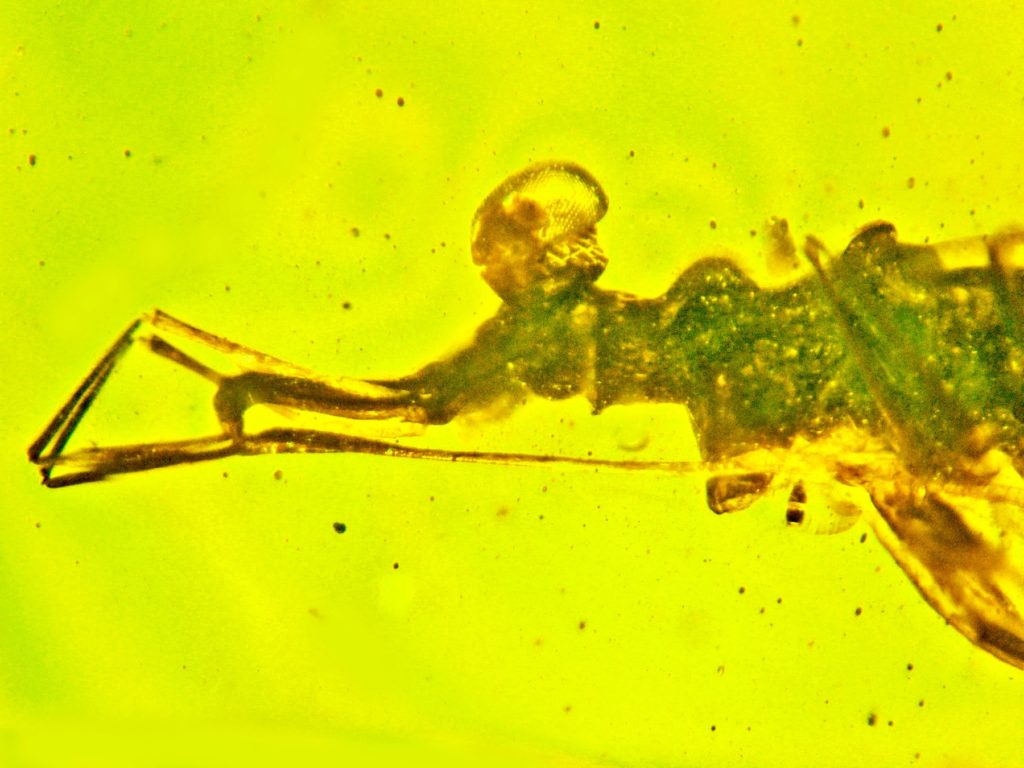
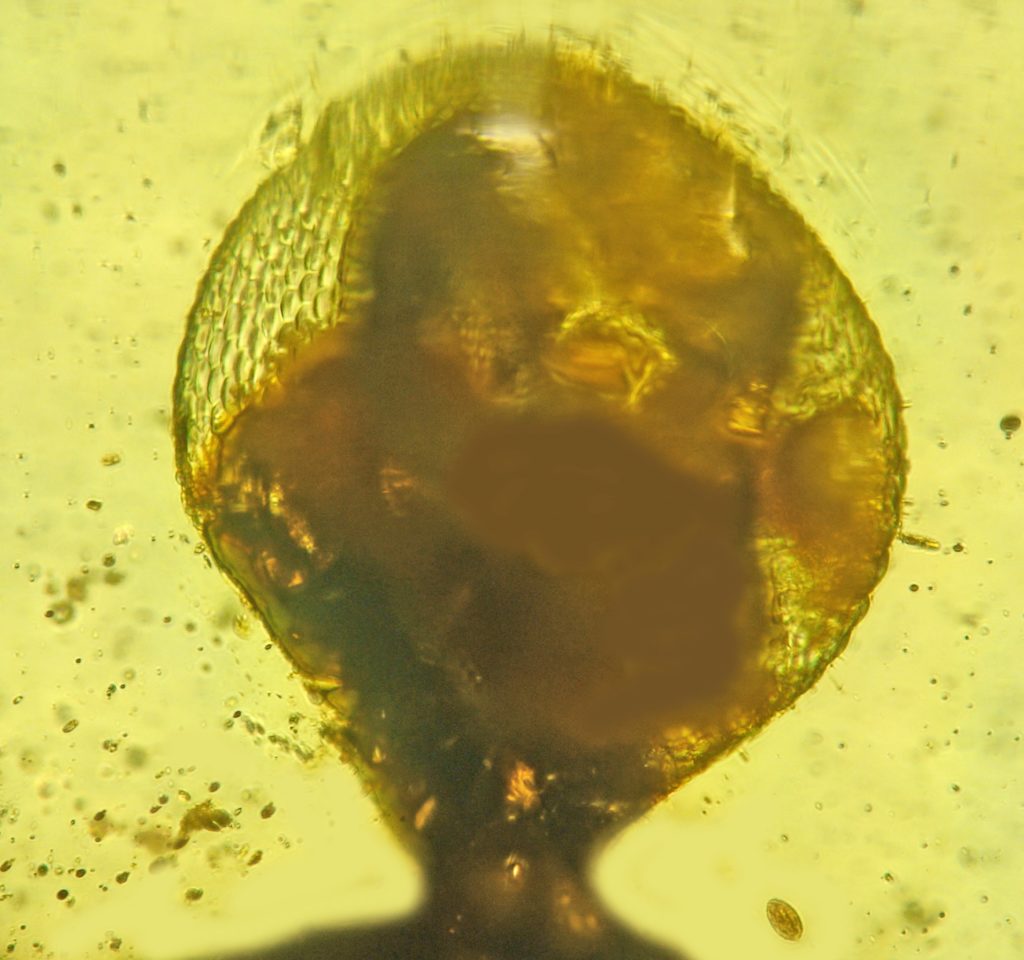
Enlarged view of the head (left) and eye (right) of the fossil Palaeotanyrhina exophthalma. Image: Oregon State University
The body of Palaeotanyrhina exophthalma is ina little over 5 mm long. This insect has strongly protruding eyes that provide a 360° view. Another feature of this fossil is the extended shell on the last leg segment of the fore tarsus. This cavity was filled with a resinous substance, scientists believe. The sticky substance was produced by skin glands and helped the insect to grab potential prey.
The researchers note that the fossil hassome resemblance to members of the family of predators (Reduvoidea), which includes some bugs. But it is distinguished by a long lip (lower mouth), the shape of the head and the veins on the front wings. Because of this, scientists have identified a new family: Palaeotanyrhinidae.
This is a small predator who used hisbulging eyes to find insect prey. Its eyes provided a clear 360-degree view of the habitat, so it could see prey that could appear from any direction.
George Poinar, Jr., professor emeritus at Oregon State University, study co-author
On the cover: the fossil Palaeotanyrhina exophthalma. Image: Oregon State University:
Read more:
Einstein's prediction may come true: how an experiment with invisible atoms will change physics
On the pyramid in China found a portrait of the "king of ancestors". He ruled over 4,000 years ago
“This is science fiction”: scientists create a fundamentally new type of quantum computers