On Wednesday, the sixth planet from the Sun will pass directly behind the Moon and completely disappear from view for three seconds.
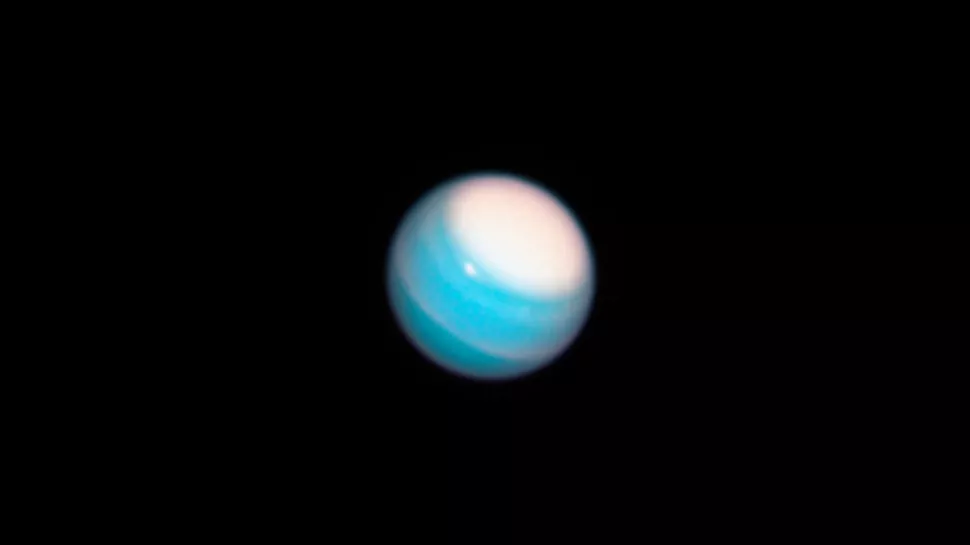 Uranus. Photo: NASA Goddard
However, astronomers in these regions are stillyou will need binoculars or a telescope to see the eclipse of Uranus, since this planet cannot be observed with the naked eye. On a special map, you can see in which regions it is best to conduct observations.
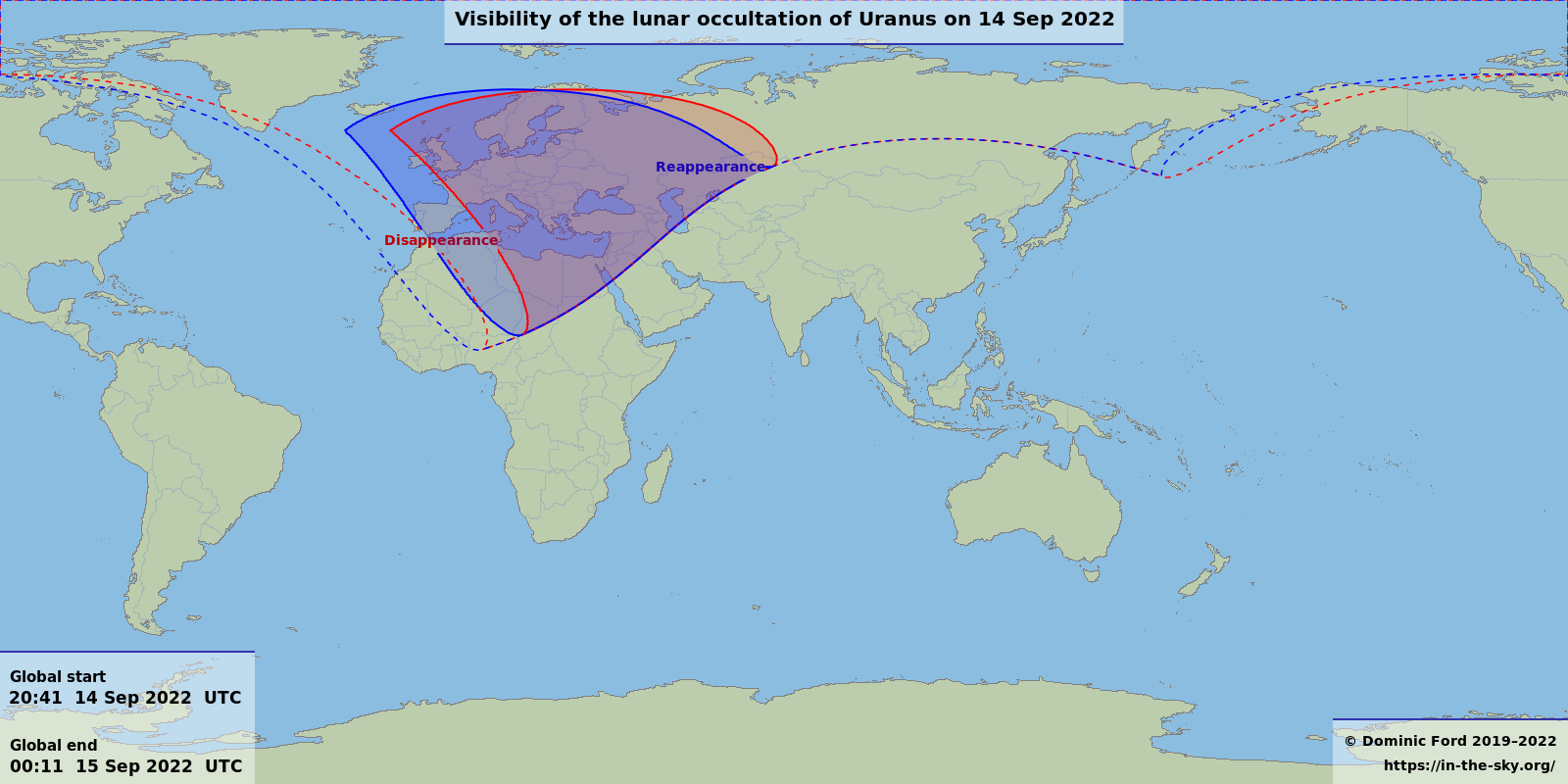 Source: in-the-sky.org
The eclipse can also be viewed live through the Virtual Telescope project. The broadcast will begin at 20:45 GMT (22:45 Moscow time).
The current position of Uranus can be observed on an interactive map.
Read more:
The space plane will deliver cargo to the ISS and land at a regular "airport"
The star approached the black hole and it was torn apart: scientists observed this from three telescopes
Physicists explain Hawking's 'cosmic mismatch': how it will change science
Cover photo: Prnt Scr in-the-sky.org