Frank Keavy, a member of the Backyard Worlds: Planet 9 science project, examined data from the NSF NOIRLab catalog. This base
With the help of further detailed analysis of Kiwichecked these objects for signs of a companion satellite and found 34 binary systems. This discovery almost doubles the number of known such systems, astrophysicists from NOIRLab say.
The nearest pair of dwarfs is at a distanceonly about 170 AU from each other, and the farthest were at a distance of about 8500 AU. from each other. For comparison, Pluto's orbit passes at a distance of 30 to 50 AU. from the sun.
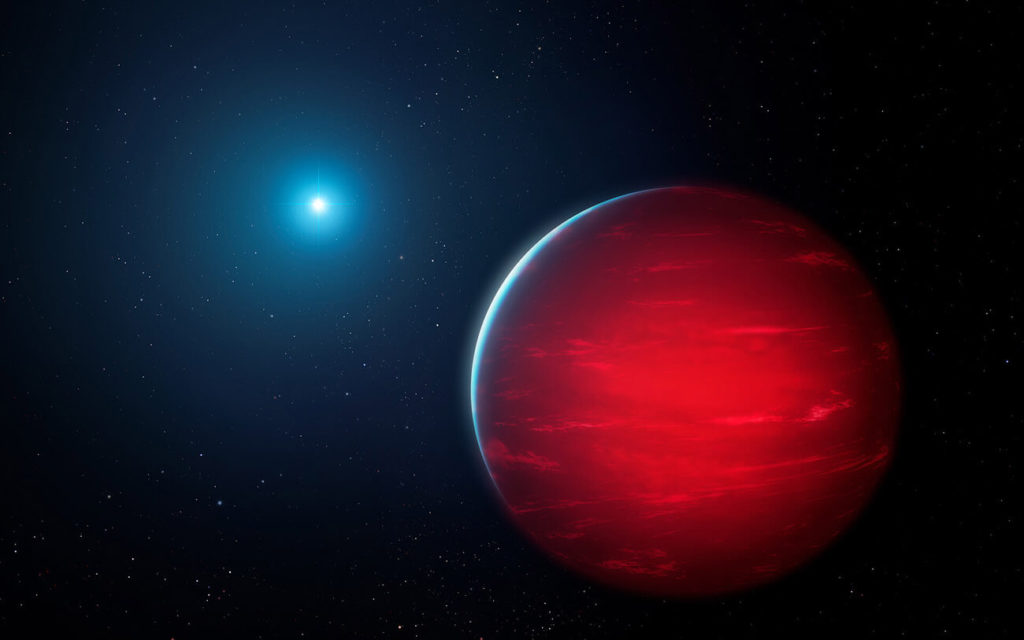 Artistic illustration of an ultracold dwarf with a white dwarf companion. Image: NOIRLab/NSF/AURA/M. Garlick
The researchers note that this discovery is notonly shows the importance of the work of volunteers for scientific research. It will help astronomers determine whether brown dwarfs are more like large planets or smaller stars, as well as provide insight into how star systems evolve over time.
Brown dwarfs are an intermediate type of objectwhich lie between the most massive planets and the smallest stars. Lacking the mass needed to fuel nuclear reactions at their core, brown dwarfs are vaguely like cooling coals on a huge scale. Their weakness and relatively small size make them difficult to identify. Data from sensitive telescopes made it possible to detect several thousand objects, but only a small part of them were identified as binaries.
To help find brown dwarfs,Astronomers from the civilian science project Backyard Worlds: Planet 9 enlist volunteers who carefully study telescope images to determine the subtle movement of brown dwarfs against the background of stars. Despite the power of machine learning and supercomputing, the human eye is still a unique resource when it comes to finding moving objects in telescope images, the scientists conclude.
Cover image: NOIRLab/NSF/AURA/P. Marenfeld
Read more:
The main myth about dinosaurs has been refuted: scientists have understood how reptiles took over the planet
350 million years ago, something strange happened to the Earth: it affected habitability
A huge ozone hole has been found. It is dangerous for 50% of the world's population and is visible all year round.