Inspiration for Mulan
In May it turned out that archaeologists had found the remains of two ancient
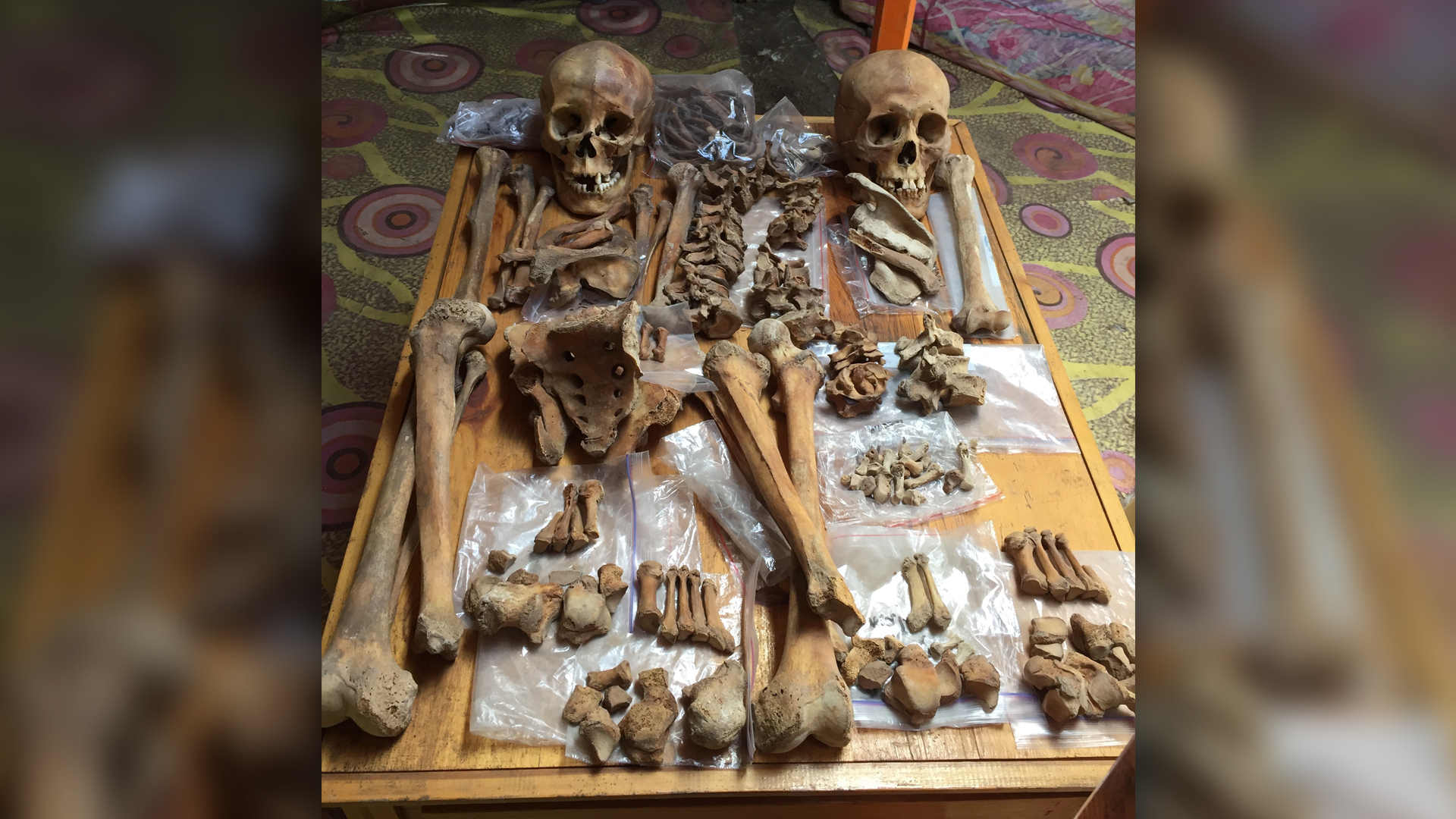 The remains of an elderly female warrior (left) and her husband, which were excavated at the archaeological site of Ayragiin Gozgor in the Orkhon province of northern Mongolia.
Image: © Christine Lee
According to researchers, these two women lived inXianbei period (147–552 CE), a period of political fragmentation and unrest that led to The Ballad of Mulan. Perhaps these women were so athletic because they defended their homes and territories as well as men, suggest researchers Christine Lee and Yahaira Gonzalez, bioarchaeologists at California State University, Los Angeles.
Modern Mongols still believe that Mulan is not a Chinese warrior, she was a Mongolian from the Xianbi - ancient Mongol nomadic tribes who lived in Inner Mongolia.
In the ballad, Mulan is described as an employee“Khan” (the term is more often used in the context of the history of the Mongols), and in China at that time there was no military service, researchers emphasize. So, perhaps it was the Mongolian warrior women who inspired the ancients to “The Ballad of Mulan.” Skeletal remains of Mongol women have shown that they were skilled archers and horsemen, and appear to have fought alongside and alongside men.
The remains of two female warriors were found during excavations of a cemetery at the Ayragiin Gozgor archaeological site in the Orkhon province of northern Mongolia.
Strong Big Game Hunter
A study published in November suggests that women in ancient America hunted big game as often as men.
 Artistic reconstruction of the vicuna hunt in Wilamaya Patjxa. (Image credit: Matthew Verdolivo (UC Davis IET Academic Technology Services))
The new discovery is a big contrastwith the generally accepted history of “male hunters” and “female gatherers.” According to the old theory, ancient men hunted big game, and women gathered herbs and plants. But the recently discovered burial of a 9,000-year-old female hunter and analysis of the burials of other hunters suggest that early women in ancient America hunted big game as often as men.
"These results highlight the idea that"Gender roles that we take for granted in modern society—or that many take for granted—may not be the ultimate truth," said lead study author Randy Haas, assistant professor of anthropology at the University. University of California at Davis.
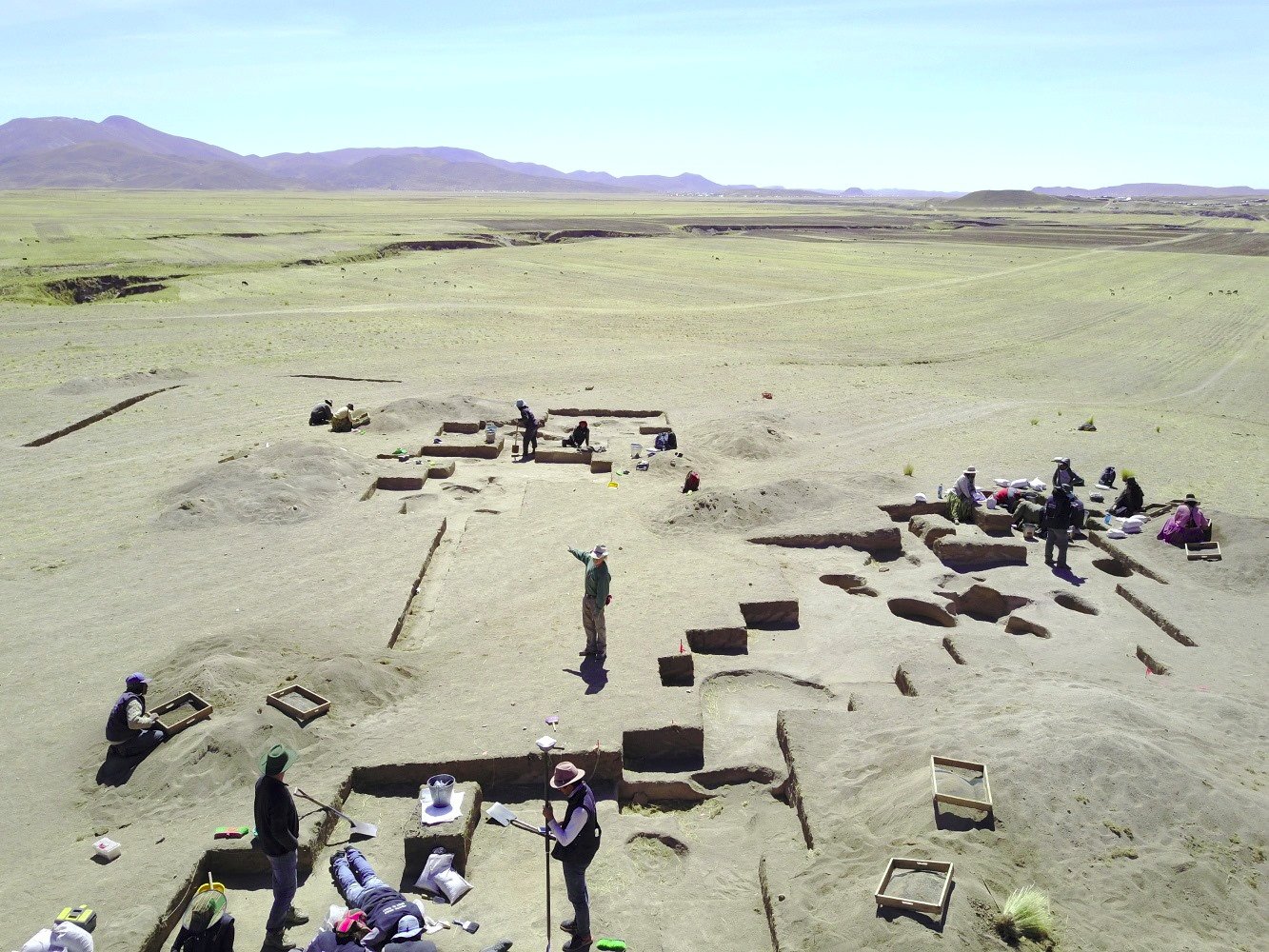 Researchers are excavating the Wilamaya Patjxa site in Peru. (Image credit: Randall Haas)
Further statistical analysis of the remains found showed that from 30 to 50% of hunters in the populations of the first Americans were women. They were also buried along with their weapons as honorary soldiers.
The Mayan Warrior Queen and her Great White Road
Laser scan of the Great White Road,conducted from the air in Mexico has proven that the ancient Maya people were a civilization of skilled builders. Its construction dates back to a period of time when the city of Koba was ruled by a female warrior, a powerful queen namedK'avil Ajo. According to the study's lead author, TracyArdren, most likely, it was this ruler who ordered the construction of the road in the 7th century AD. Coba was at one time one of the most powerful cities of the ancient Mayan world.
In recent years, archaeologists have increasingly used a new technology calledlidar. This device uses a laser to“look” through the dense jungle and even below the surface of the earth. Scientists from the University of Miami in the US used it to study the Mayan Great White Road. Since its discovery in the 1930s, it has been carefully studied by scientists and is increasingly being called a true engineering marvel. It connected the ancient cities of Coba and Yaxuna on the Yucatan Peninsula. It is believed that the road was built 13 centuries ago. The length of this “stone highway” is 100 km. This is the longest road built by the Mayans.
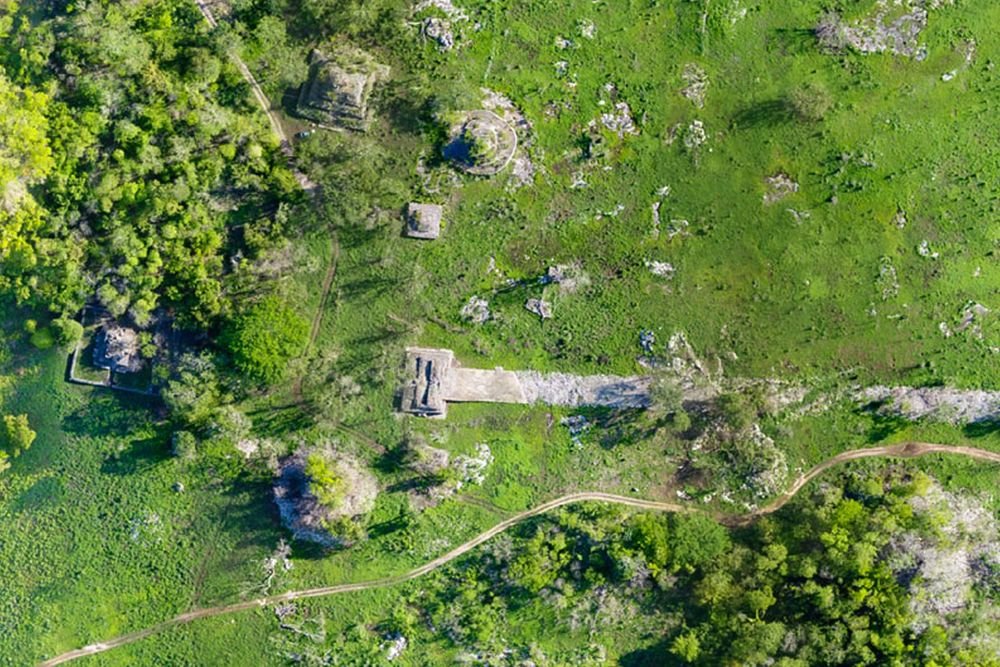 Photo: Traci Ardren and Dominique Meyer / University of Miami
Stones were set along the road with carvedscenes on them. For example, the drawings depict warriors leading their captives along the Great White Road. Some of the captives are trampled by the rulers. Such engravings prompted scientists to conclude that the road was built to achieve military goals.
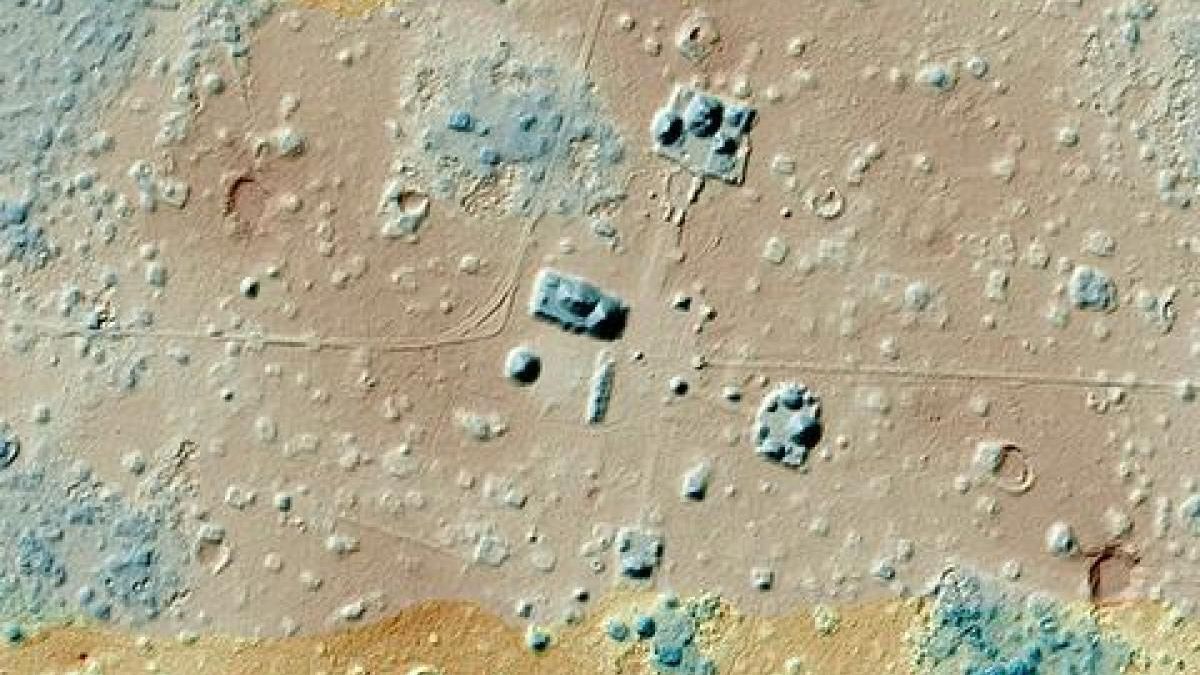 Archaeologists have explored the Mayan road using lidar technology to reveal ancient structures along its length.
Image: © Courtesy of Tracy Ardren (University of Miami), Proyecto Sacbe Yacuna-Coba and the Cultural Heritage Engineering Initiative
Probably,K'avil Ajo had plans to conquer the neighboring, smaller city of Yaxun, which occupied a strategically important position. At that time the empire was gaining strengthChichen Itza, and the rulers of Koba tried their best to repel her attacks.
K'avil Ajo was one of the most powerful and warlike rulers of the ancient city of Coba, concludes archaeologist Travis Stanton of the University of California at Riverside.
Noble noblewoman in ancient China preferred polo
In March, scientists reported that they had found the first evidence that imperial Chinese nobles played polo on donkeys in the grave of a wealthy and powerful woman who died in Xi'an more than 2,000 years ago.
A woman named Cui Shi was buriedalong with her “steeds,” perhaps so she could “continue playing polo in the afterlife,” archaeologists report in a new study. Cui Shi's tomb was looted before it was discovered, and the thieves took most of the funerary artifacts with them. However, the bones of the animals that were buried next to the noblewoman remained intact.
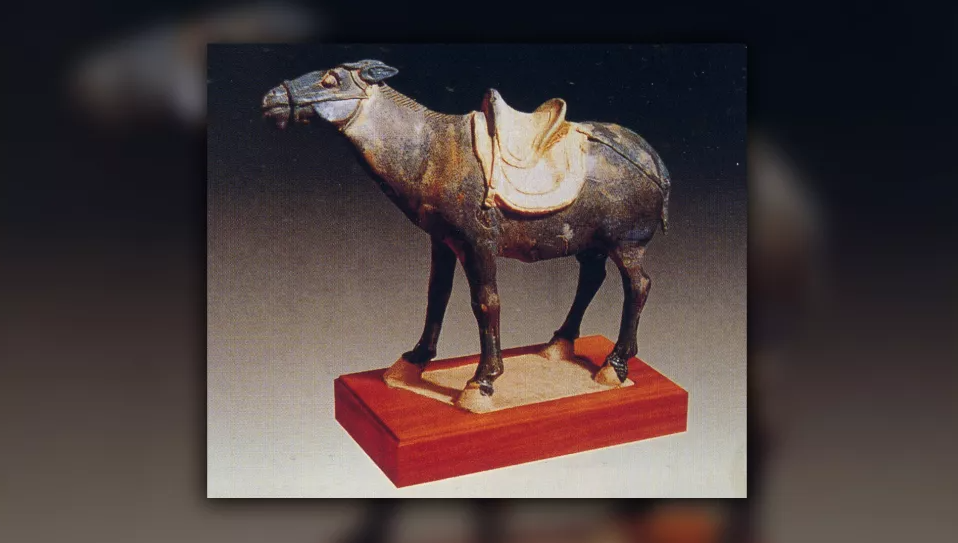 Tri-color glazed figurine of a donkey from Xi'an. (Image credit: Antiquity Publications Ltd / X. Hu and J. Han)
Records of the Tang Dynasty time period (618–907 BC)e.) prove that polo was popular among the upper classes of imperial China, despite the danger of the game. One historical account notes that Cui Shi's husband was not as skilled in the sport. During one of the matches, he lost an eye.
Ancient woman warrior of Siberia
Archaeologists in Siberia unearthed a grave 2 years old500 years, which contained the remains of four people from the ancient Tagar culture, including two warriors, a man and a woman, as well as a cache of their weapons.
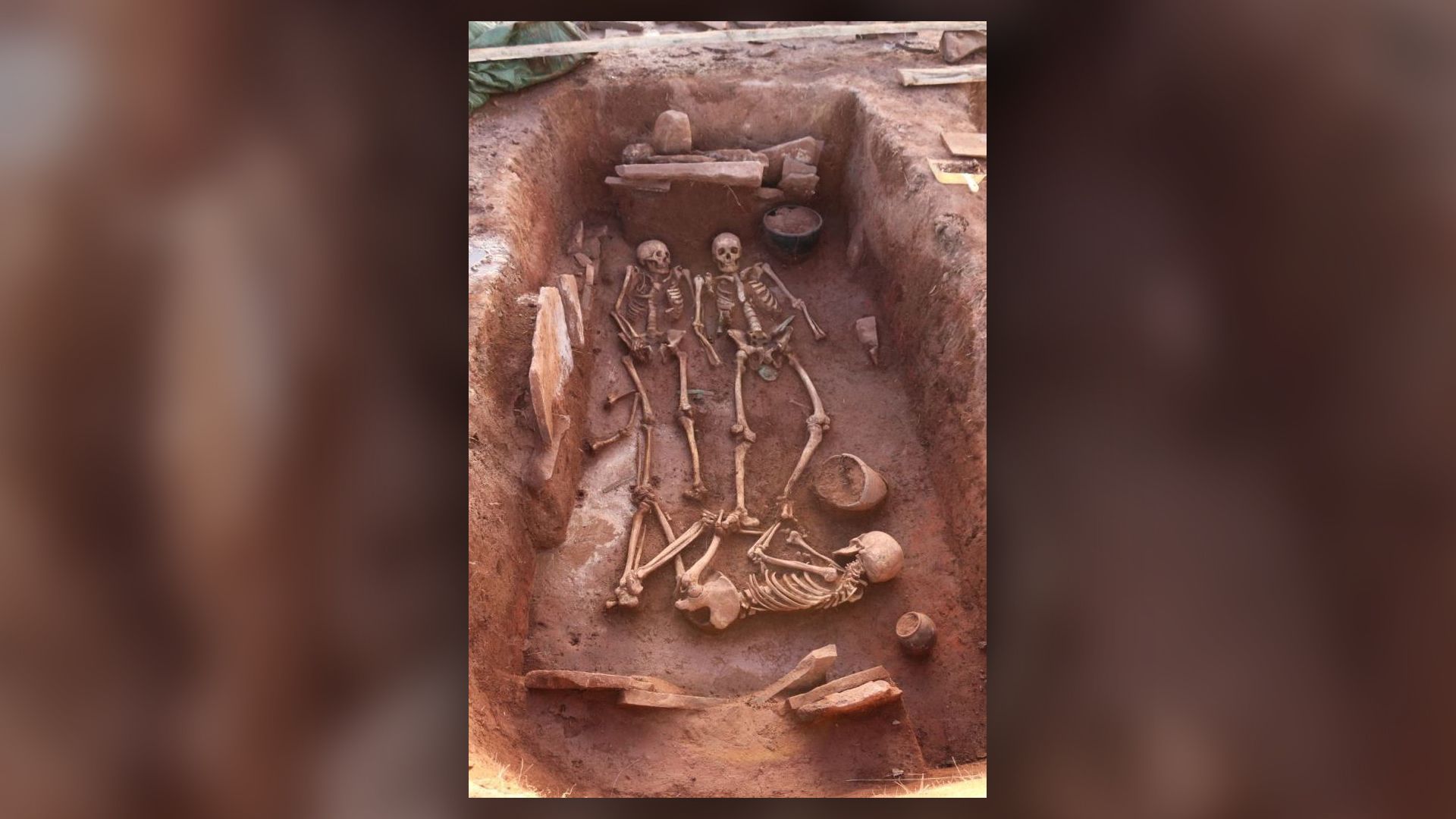 A man, two women and a child were buried in this grave about 2500 years ago on the territory of modern Siberia.
Image: Siberian Branch of the Russian Academy of Sciences
Recall that the Tagar culture is an archaeological culture of the Bronze Age and Iron Age, named after the place name - Tagarsky Island on the Yenisei River. The Tagar culture was replaced by the Tashtyk culture.
The burial place of the early Iron Age containedthe remains of Tagar men, women, infants and elderly women, as well as many weapons and artifacts, including bronze daggers, knives, axes, bronze mirrors and a miniature animal horn comb.
 Part of the metal inventory found in the group burial.
Image courtesy of the Siberian Branch of the Russian Academy of Sciences
Tagar culture, part of the Scythian civilization(nomadic warriors who lived in what is now southern Siberia) often buried their dead with miniature versions of real objects, probably symbolizing property that, in their opinion, was necessary for the owners in the afterlife. However, in this case, the deceased were buried along with life-size objects, archaeologists emphasize.
A team from the Institute of Archeology and Ethnography discovered the burial in the southern part of Khakassia, a region in Siberia, before construction work began on the railway.
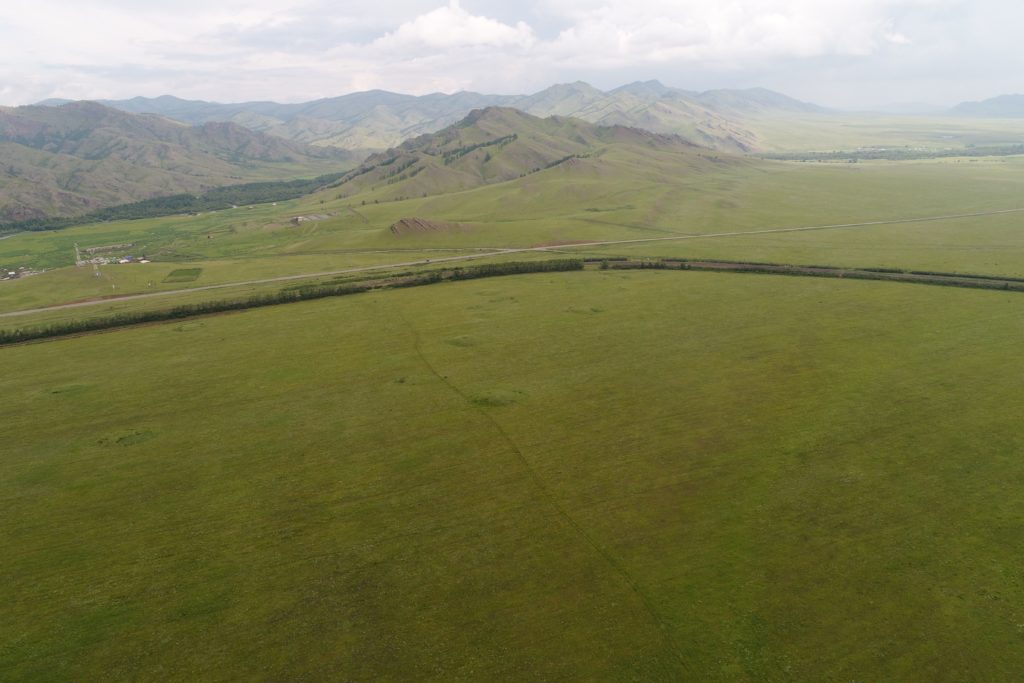 Aerial view of the burial mountain at the foot of Mount Aar-tag.
Image courtesy of the Siberian Branch of the Russian Academy of Sciences
The remains of a man and a woman who were probablydied between the ages of 30 and 40, were found with large ceramic vessels next to each of them. According to the statement, the woman, like the man, had a set of her own weapons (two bronze daggers and two axes). The woman’s equipment also included a tool with a long handle, which most closely resembles a battle axe, noted Oleg Andreevich Mitko, director of excavations and head of archeology at Novosibirsk State University.
Read also
Abortion and science: what will happen to the children who will give birth
Check out the most beautiful pictures of Hubble. What has the telescope seen in 30 years?
NASA published a photo of the Earth from the moon, which was taken in 1968