Myth No. 1.3D printing takes place with almost no human intervention
When many people hear about 3D printing,
But the key role in the construction of the object is played by its3D model. It is a map on which the finished product will be built. The quality and characteristics of the future subject depend on its detailed study. Here, the participation of specialists with high competencies in the fields of design, technology and materials is needed.
In industrial production, the construction of a 3D model is carried out in AutoCAD computer-aided design systems.In accordance with the terms of reference and using various calculation methods, the design engineer createsEven if a 3D model already exists and does not need to be built from scratch, AutoCAD programs carry out its topological optimization — redesign for additive manufacturing.
This process is aimed at removing voltage concentrators and eliminating thin-walled elements, which can cause the printing process toAlong with the 3D model, the location of technological supports is also designed, i.e. support structures necessary for the optimal location of the part on the platform, heat dissipation and reducing the risk of deformation during the printing of the product. Printing is also preceded by the process of developing technological modes of construction, which he is working onProcess Engineer.
Then, based on the prepared 3D model, the printer prints on its own, sometimes working for several days in a row.But before that, you need to prepare the hardware — make sure that the build platform is wortheven the powder in the 3D printerIt does not just fall asleep, but goes through the stages of incoming control and preparation.
Another mandatory stage in the production cycle of a product, where human participation is required, is post-processing.
Myth #2: A finished product comes out of a 3D printer.
Many people think of 3D printing the way it is.shown in films. Robotic installations in a matter of minutes create superhero costumes and print elements of spaceships. Technology, of course, is striving for this, but today all products removed from the printer need post-processing.
To relieve internal stress, whichoccurs during the printing process, the product undergoes alternating heating and cooling procedures. This way it achieves full mechanical properties. Then technological supports are cut off - they have already fulfilled their function. Removal of excess powder and surface treatment of the product are carried out using a sandblasting chamber. If it is necessary to achieve absolute smoothness of surfaces, then milling, turning, electrochemical and grinding machines are used. For plastic products, chemical post-treatment with acetone or other solvents is sometimes used.
Myth #3: You can 3D print anything
Innovations in the field of additive technologiesappear every year and already surpass our imagination. Synthetic meat steaks, a human heart and a whole house are already being printed. It seems that the possibilities of additive manufacturing are endless and a 3D printer can do anything. But now there are several limitations related to the size and material of the product - it is impossible to create very large and very small objects.
For example, the Center for Additive Technologies hasinstallation with a construction chamber up to half a meter, the largest printer in Russia based on selective laser melting technology. Elements of Russian aircraft engines are already being “grown” there.
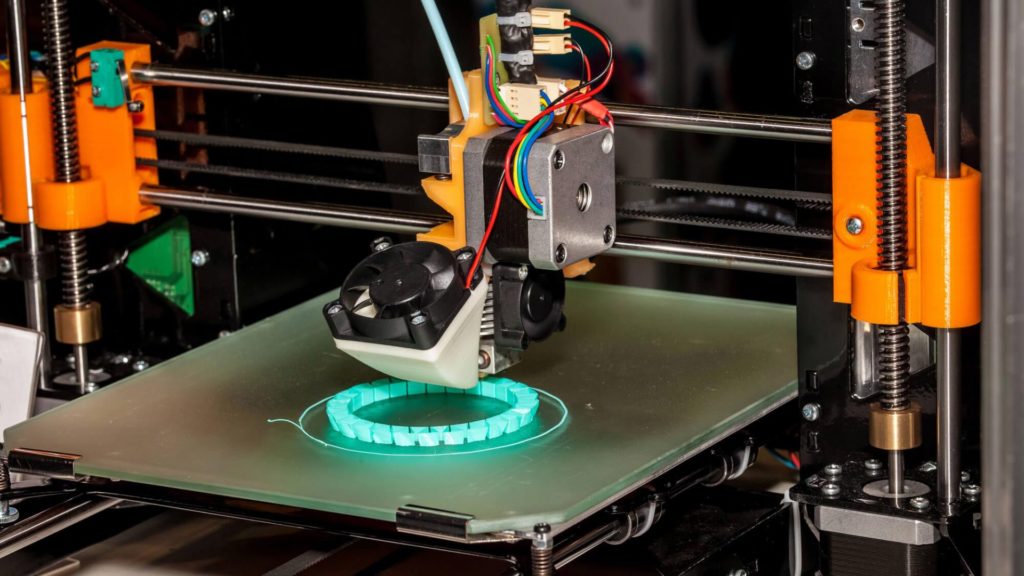 “Innovations in the field of additive technologies appear every year”
The possibilities of polymer printers are much wider – one of them, listed in the Guinness Book of Records, canIn 2017, a monolithic boat weighing 2 tons and 7 m long was printed on it.Its length is 2-3 times less than the thickness of a human hair – just 30 micrometers (0.03 mm).
With the help of 3D printers, they are already creating even at home.It works by analogy with an FDMD printer that prints plastic products, but instead of polymer materials, cement mixtures are used as "ink".The world's largest 3D printed building hasThe area is 641 sq.m. and is located in the UAE.
Other Limitations in Additive Manufacturingare not related to the size of the 3D printer build chamber, but to the material used. During the printing process, it is in a liquid or molten state, therefore, it should melt normally. Wood, fabric, or paper objects cannot yet be printed, as they will burn before the material can be melted. Although here you can find a loophole: if you mix crushed cellulose fibers with a water-based gel, and then freeze the object, gradually removing water from it, you will get products made of a material similar to wood.
Myth number 4.3D printed products are worse in quality
Visually, the 3D printing process looks like layer-by-layer application of the material.The question arises: how firmly do the layers connect to each other?
When 3D printing, several defects may appear,therefore it is important to follow the technological process. A lot depends on the quality of the materials. In industrial production, all metal powders undergo input control, this process is regulated by standards. Even if the material is certified, it is very important to observe the conditions for proper storage: avoid moisture and dampness, place in a special package. If you do not check the condition of the nozzle, set the temperature or print speed incorrectly, misalignment of layers, overheating, or other defects may occur.
If all conditions are met, then the productproperties will not yield, and often even surpass the analog made by traditional methods. If you compare two aluminum objects under a microscope, the printed product will have a denser structure.
 “If all conditions are met, then the product will not be inferior in properties, and often even surpass the analog made by traditional methods”
Myth No. 5.3D printing is eco-friendly
It is believed that 3D printing is eco-friendly, as this type of production leavesIn fact, this is a complex issue in which there is no waste yet.Consensus.
3D printers consume a lot of electricity andleave a large carbon footprint: The ATKINS project found that the production of a product using additive technologies accounts for approximately 7 times more CO2 emissions than the production of injection molded products.
But the use of additive technologies is essentialreduces waste and materials used. CIM (material utilization factor) in the manufacture of casting does not exceed 40%, for additive technologies this figure approaches 100%. Additive technologies also help to reduce the weight of the final product. Reducing the weight of an aircraft by 100 kg can save up to 1.3 million tons of CO2 throughout its entire life cycle.
Read more:
An out-of-control Chinese rocket will soon fall back to Earth. What's happening
Scientists filmed a strange creature with tentacles, which they mistook for a flower
Marine archaeologists find wreckage from medieval shipwreck