Европейское космическое агентство сравнило снимок слияния галактик IC 1623 A и B, полученный телескопом «Джеймс
 Слияние двух галактик на снимке телескопов «Уэбб» (слева) и Хаббл (справа).ESA/Webb, NASA & CSA, L. Armus & A. Evans
IC 1623 is a pair of interlacedinteracting galaxies, which is located approximately 270 million light-years from Earth in the constellation Cetus. Two galaxies sink into each other in the process of merging. Their collision caused a rapid burst of star formation. New stars in this system are born 20 times faster than in the Milky Way.
This system of interacting galaxies is especiallybright in the infrared range to which the instruments of the James Webb telescope are sensitive. Researchers have previously observed this system, but a thick lane of dust obscures the center of the merging galaxies in visible light. The burst of star formation produces intense infrared radiation, and the merger could lead to the formation of a supermassive black hole, but these details may simply be hidden from scientists.
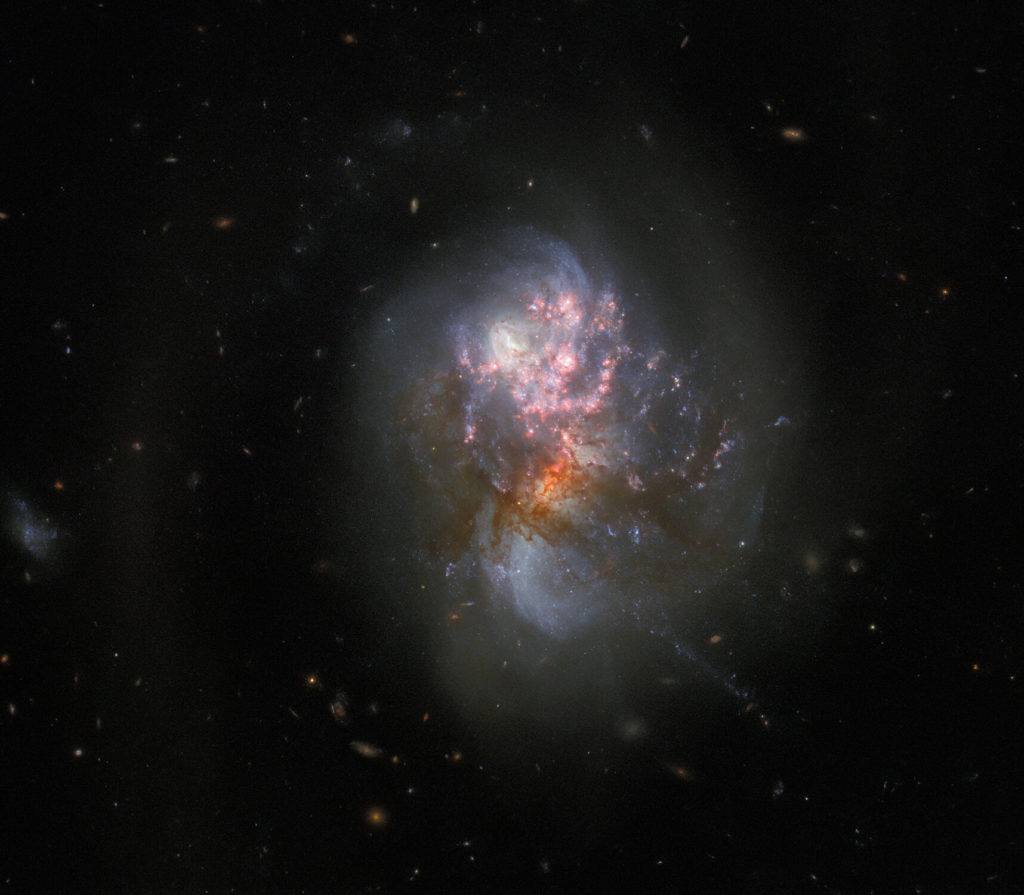
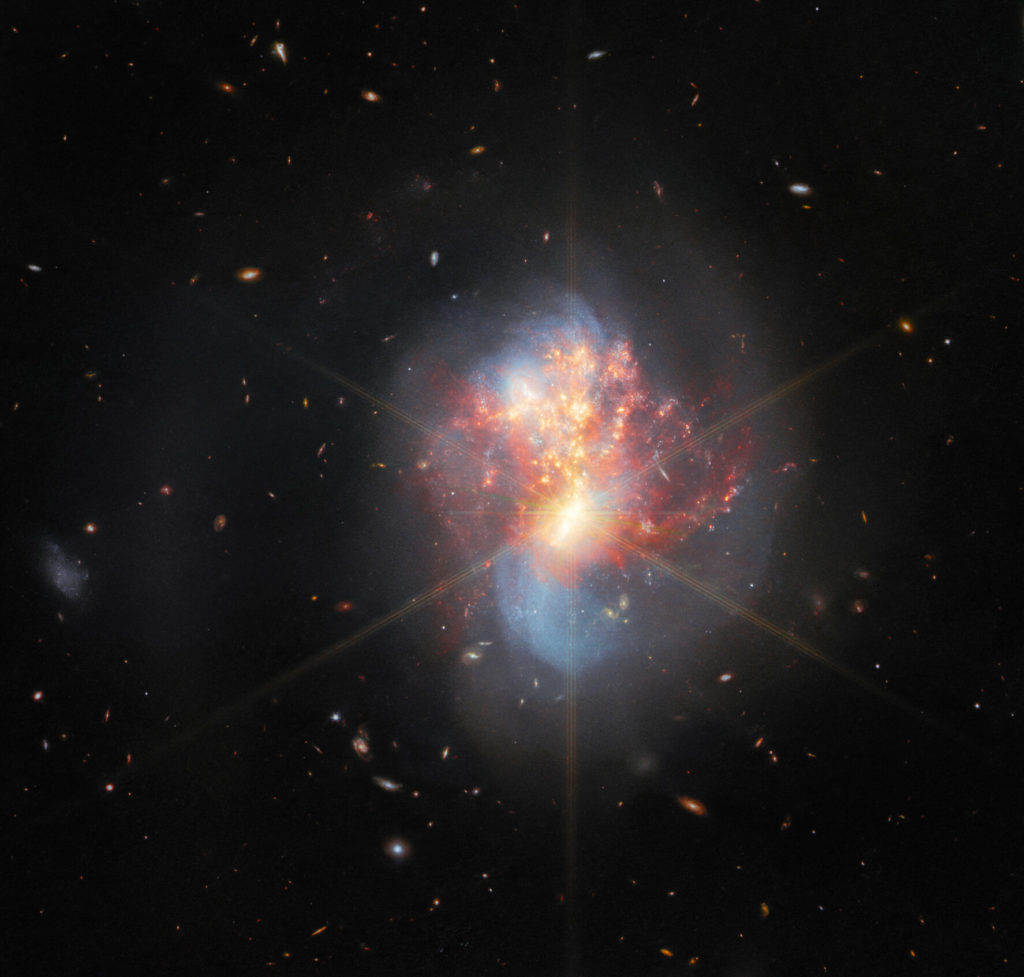
Слияние двух галактик на снимке телескопа «Хаббл» (слева) и Уэбб (справа). Изображение: ESA/Webb, NASA & CSA, L. Armus & A. Evans
Infrared sensitivity "Webb" allowtelescope to see through the dust, revealing the details of the object. As you can see in the picture, the luminous core of the galaxy merger center turns out to be very bright and very compact. It emits so much light that it forms diffraction spikes in the image. These hexagonal "snowflakes" are related to the interaction of light from bright objects with the physical structure of the telescope.
Read more:
Archaeologists have officially confirmed the legends from the Bible
It turned out what happens to the cells of the body when the heart dies
Starlink signal hacked to be used as an alternative to GPS