The European Space Agency has published the results of an observation of the James Space Telescope
Astrophysicists used an averageinfrared (MIRI) telescope to study three barred spiral galaxies - NGC 1433, NGC 1365 and NGC 7496. The new observations are part of the PHANGS research program to study 19 nearby spiral galaxies. Scientists believe that with the help of the James Webb telescope, it will be possible to study star formation at a very early stage, which is usually hidden in a fog of gas and dust.
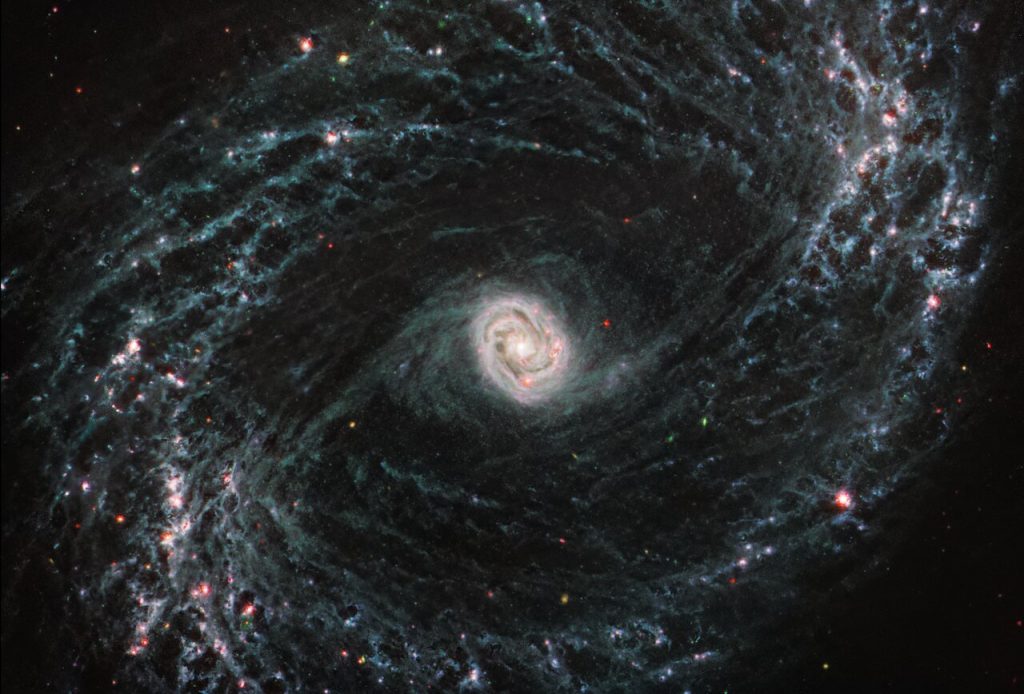 A mid-infrared image of the galaxy NGC 1433 taken by the James Webb Space Telescope. Image: NASA, ESA, CSA, J. Lee (NOIRLab), A. Pagan (STScI)
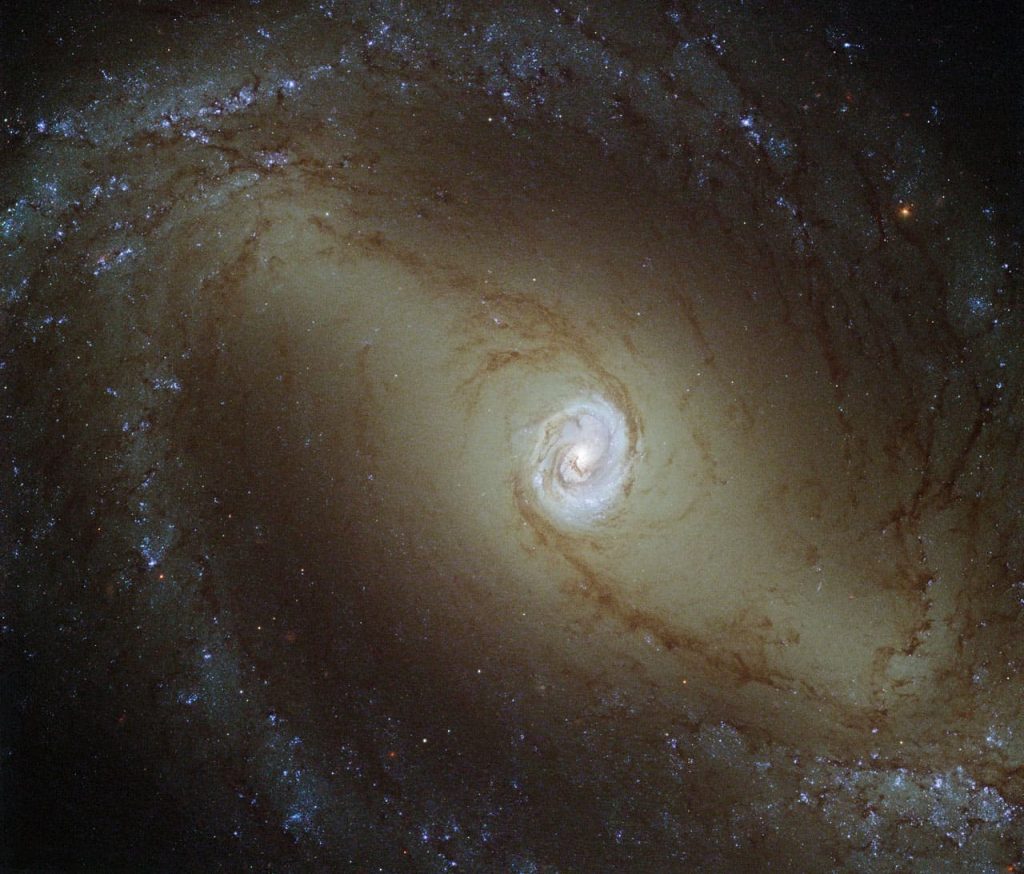 An ultraviolet and visible light image of NGC 1433 taken by the Hubble Space Telescope. Image: ESA/Hubble, NASA
Images taken with MIRI,show in the spiral arms of these galaxies a network of structured elements: luminous cavities of dust and huge bubbles of gas. In some areas of the images, traces of very young stars are visible, releasing energy, and in some cases, “blowing” gas and dust from the surrounding space.
NGC 1433 is located 46 million light years fromEarth in the constellation Hours. The image of this galaxy shows a dense and bright core with a unique double ring structure. It consists of tightly wound spiral arms that form an oval along the axis of the galaxy's bar. The brightness of the galaxy and the absence of a lot of dust in the image of NGC 1433 indicate a possible recent merger or collision of two galaxies.
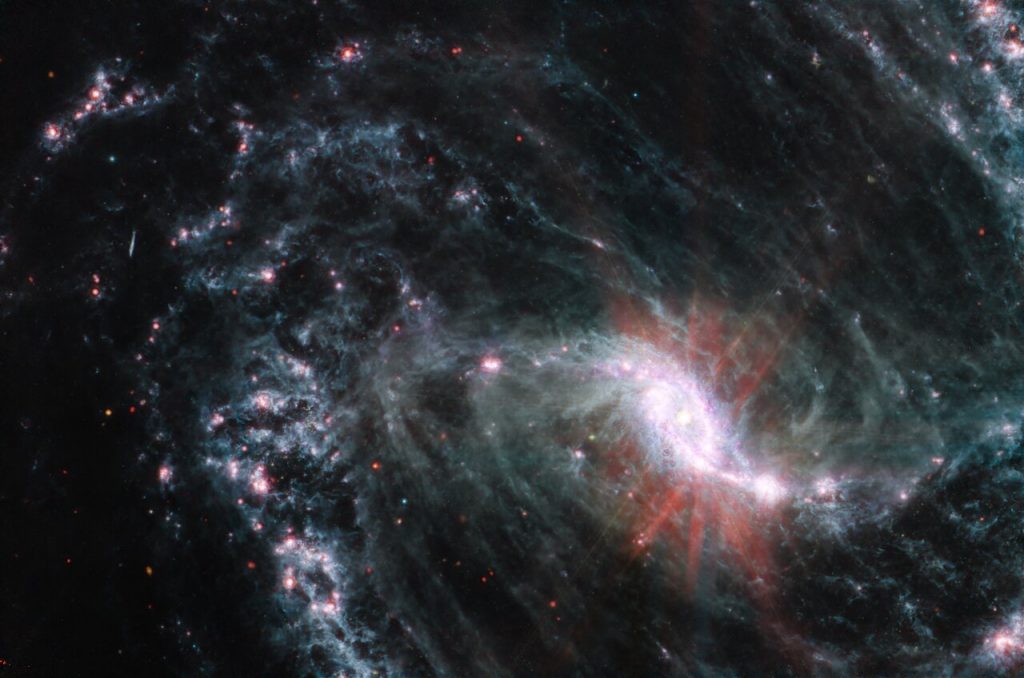 A mid-infrared image of the galaxy NGC 1365 taken by the James Webb Space Telescope. Image: NASA, ESA, CSA, J. Lee (NOIRLab), A. Pagan (STScI)
 An ultraviolet and visible light image of NGC 1365 taken by the Hubble Space Telescope. Image: ESA/Hubble, NASA, J. Lee, the PHANGS-HST Team
NGC 1365 is a double spiral galaxyjumper, located at a distance of about 56 million light years from Earth. It is one of the largest galaxies currently known, twice the length of the Milky Way. The image of this galaxy clearly shows filaments of dust formed around cavernous black bubbles of gas. In addition, the researchers discovered several previously unknown clusters of young stars.
NGC 7496 is the closest of the three galaxies.It is located at a distance of about 24 million light years from Earth in the constellation Crane. At the center of this galaxy is an active nucleus: a supermassive black hole emitting jets. A preliminary analysis of the data showed the location of about 60 new clusters of young stars hidden in clouds of dust and gas.
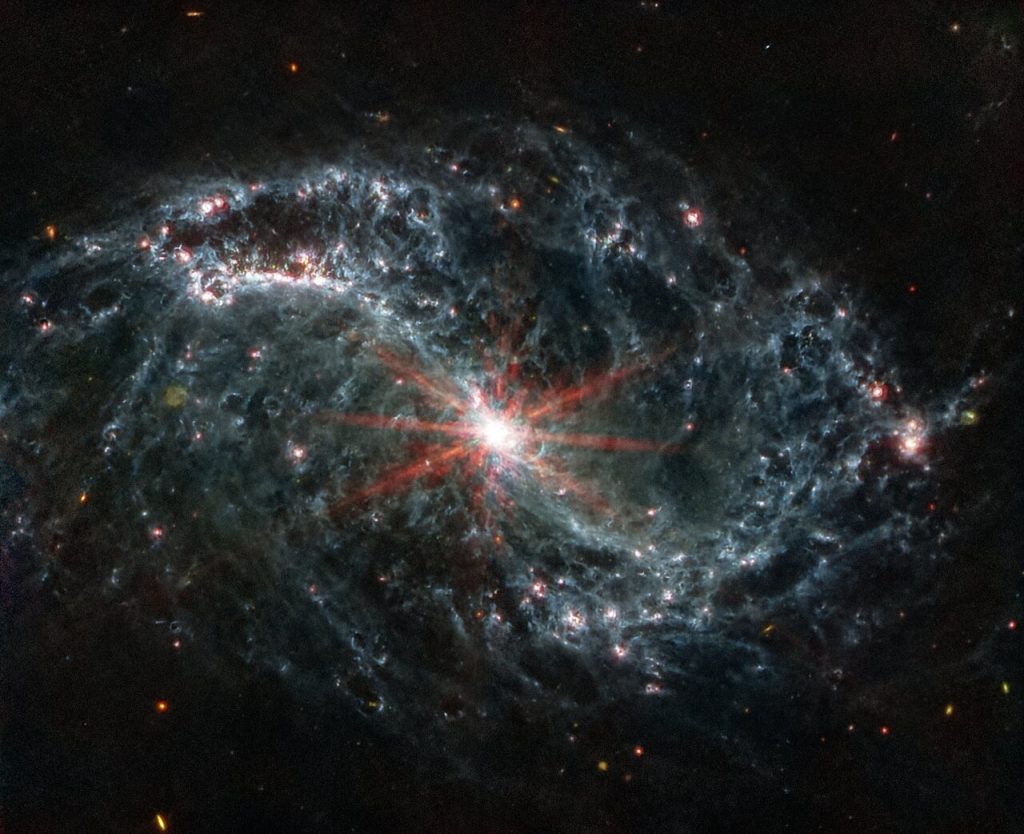 A mid-infrared image of the galaxy NGC 7496 taken by the James Webb Space Telescope. Image: NASA, ESA, CSA, J. Lee (NOIRLab), A. Pagan (STScI)
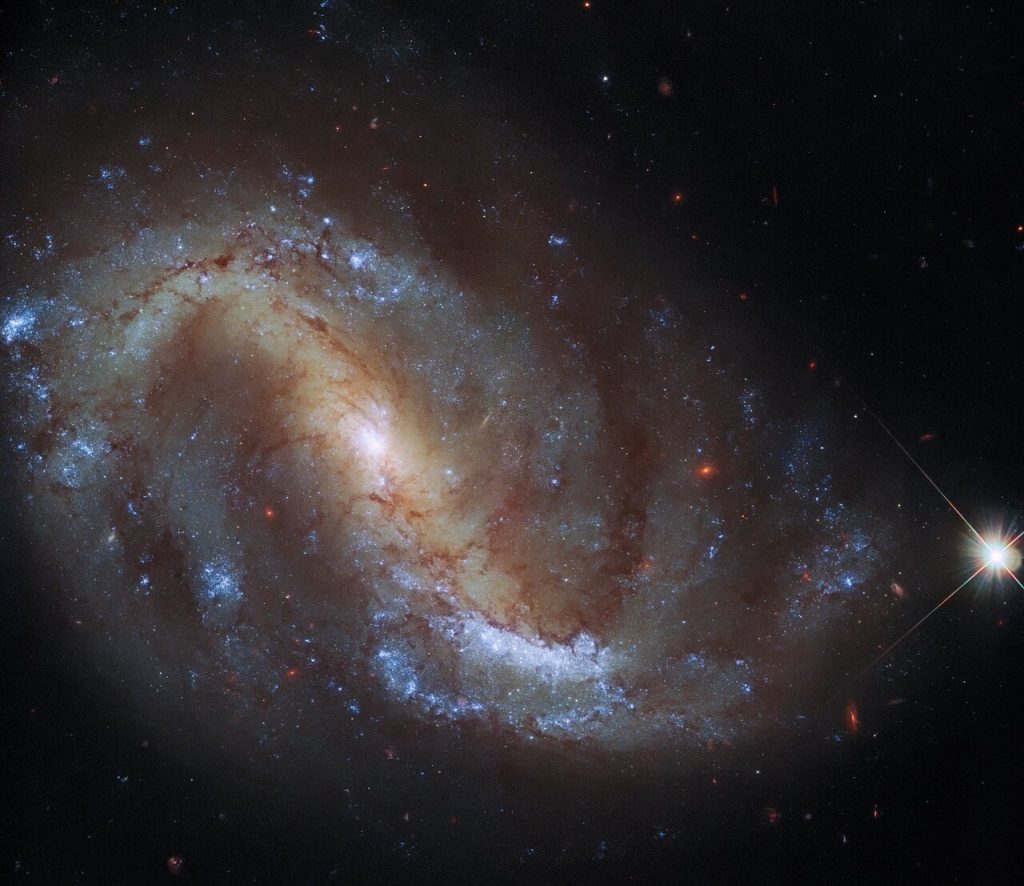 An ultraviolet and visible light image of NGC 7496 taken by the Hubble Space Telescope. Image: ESA/Hubble, NASA, J. Lee, the PHANGS-HST Team
The researchers believe that further analysiswill help to understand how star formation processes affect the development and evolution of galaxies over time. So far, the analysis of five of the 19 galaxies selected for the project has been completed. Previously, Hi-Tech talked about two other galaxies in this review: M74 and IC 5332.
Read more:
It's not about the Earth: scientists explained why the solar system is the rarest
Dinosaurs in bamboo corsets were found among the artifacts of the expedition of the early twentieth century
Substance from the "grandfather's beard" improves memory and neuronal growth