A team of astrophysicists examined an image of the Carina Nebula - one of the first images taken
Researchers analyzed parts of the nebulaCarinae (NGC 3324), in which only a few young stars have previously been discovered. They analyzed the emission data at a single infrared wavelength of 4.7 microns. Observations have shown at least two dozen previously unknown outflows of molecular hydrogen from young stars. The gas streams vary in size, but many are believed to come from protostars that will eventually become small stars like the Sun.
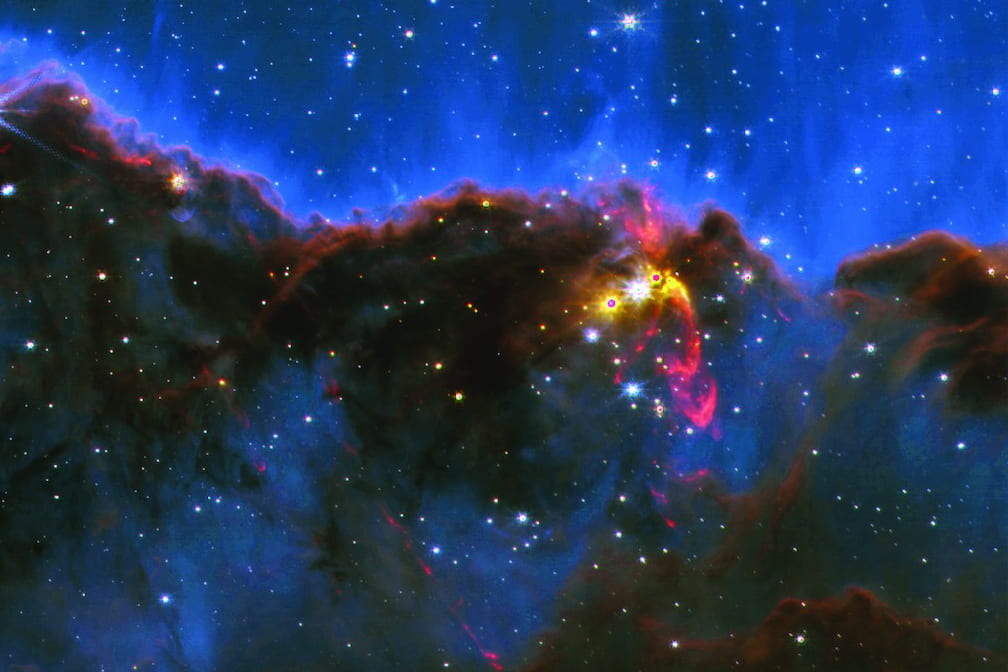 Infrared image of the Carina Nebula region,taken by the James Webb telescope. The image shows shock waves of molecular hydrogen (in red) emanating from newborn stars in a star-forming region called the Space Rocks in the southern constellation Carina. Image: NASA, ESA, CSA and STScI
During the first 10,000 years, newborn starscollect material from their surrounding gas and dust. Most young stars eject some of this material back into space with jets flying in opposite directions from the poles. Dust and gas accumulate in front of the jets, which clear a path through foggy clouds like snowplows. These jets pick up one of the vital ingredients in young stars, molecular hydrogen, and it's visible in Webb's infrared images.
Jets like these are the most exciting part of the star formation process. We only see them for a short period of time when the protostar is actively accreting.
Nathan Smith, study co-author at the University of Arizona
Nebula NGC 3324, located in the southernconstellation Carina, contains several well-researched star-forming regions that scientists have been studying for decades. But many details of this region remained hidden behind dense clouds of dust and gas. The study found that observing infrared radiation with the James Webb instruments can peer through a "wall of fog" and see jets of gas and dust erupting from the poles of newborn stars.
Read more:
Scientists from the permafrost zone: how they develop smart clothes and a cancer vaccine
Two planets have been found not far from Earth. Perhaps they are inhabited
Scientists have found out who benefited from the death of dinosaurs