The James Webb Space Telescope of the US, European and Canadian space agencies demonstrates new
According to the European Space Agency blogagency, the most surprising thing about Webb's new photograph is its clear depiction of the planet's dynamic rings. Some of them had never been observed before, let alone with such clarity. It has not been recorded since the flyby of Voyager 2 in 1989. Neptune in the new image can even be confused with Saturn.
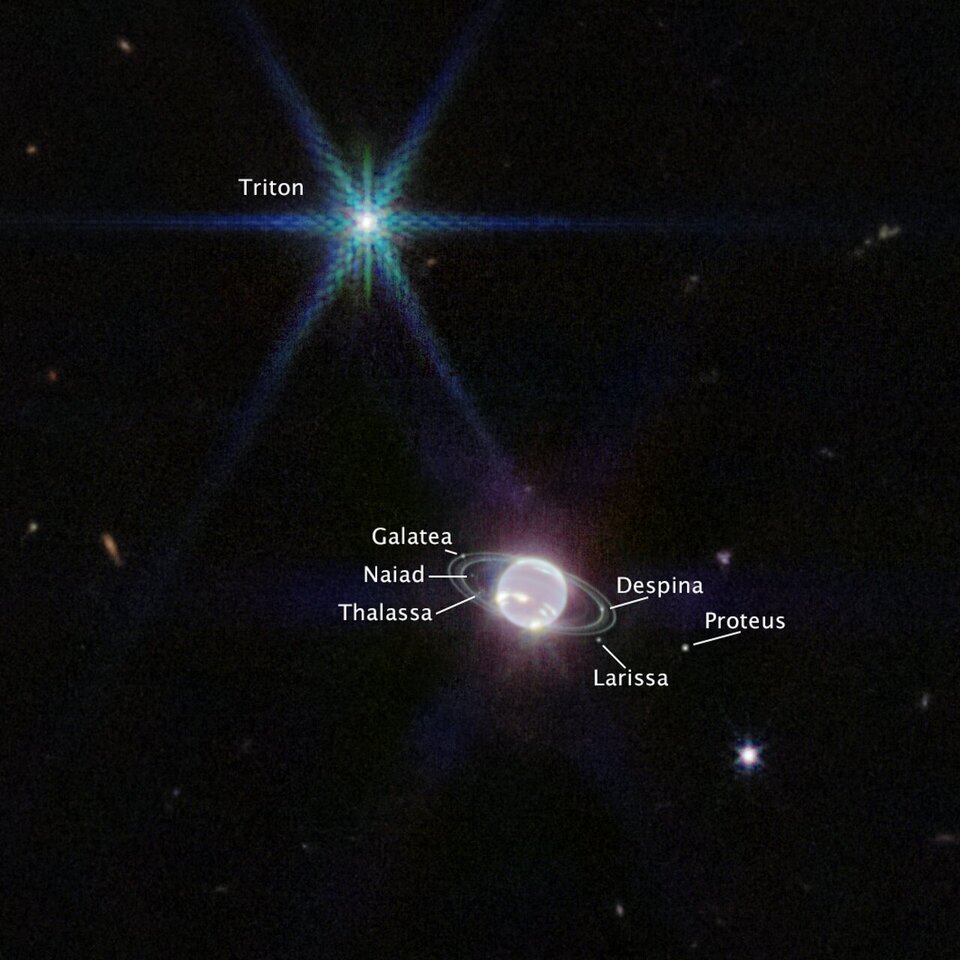 Image of NIRCam with comments
Also clearly visible in the Webb image are Neptune's fainter dust lanes, not just the bright, narrow rings. Thanks to the excellent “vision” of the telescope, they were seen so close to the bright planet.
Neptune is 30 times farther from the Sun thanThe Earth orbits in one of the dimmest regions of our solar system. At this extreme distance, the star is so small and dim in the sky that noon on the planet resembles Earth's dim twilight.
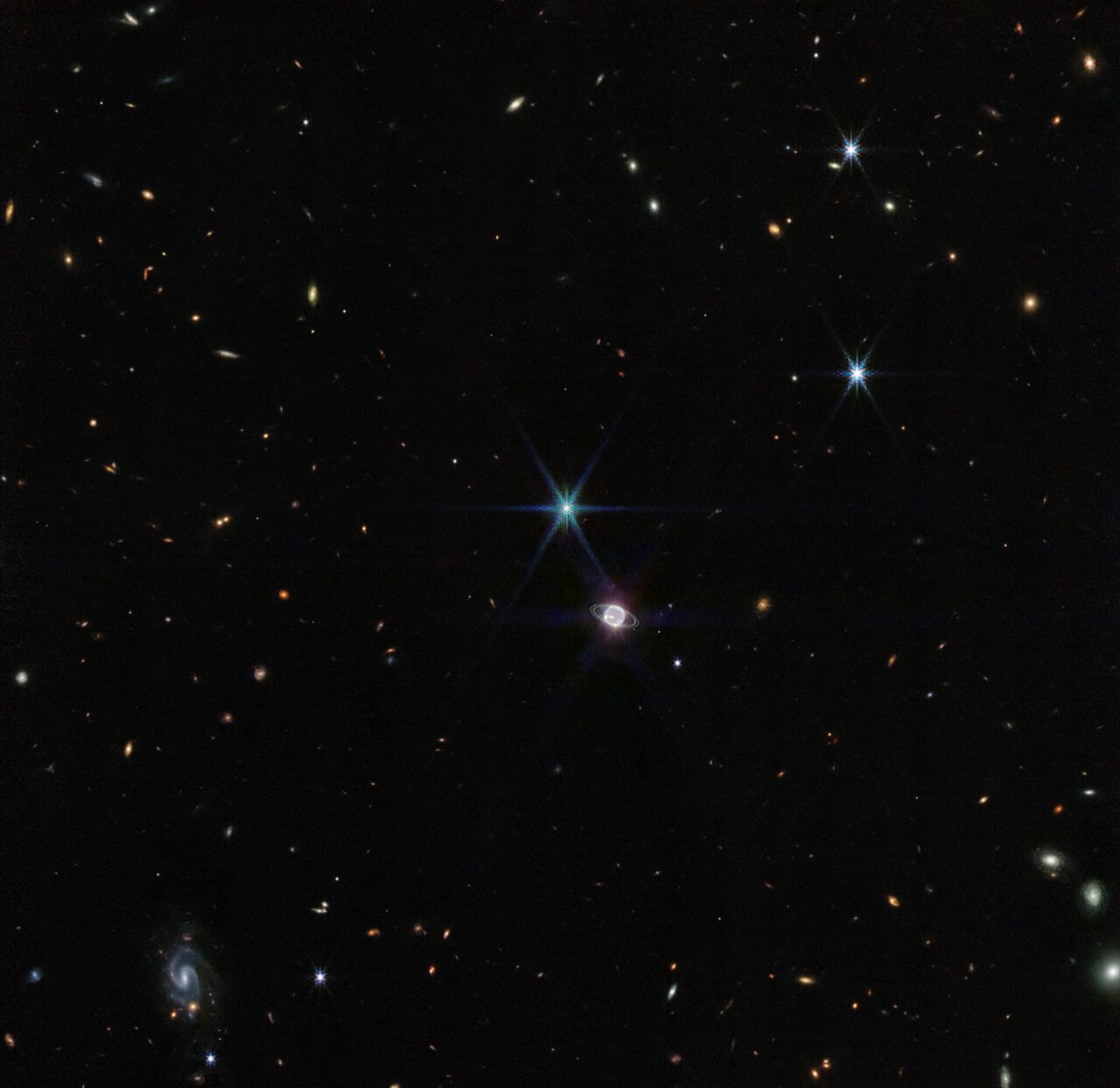 Wide angle view of Neptune (NIRCam image)
Also in the photo is a video of Triton - the moon of Neptune and other natural satellites of the planet.
This planet is characterized as an ice giantdue to the chemical composition of its depths. Compared to Jupiter and Saturn, Neptune is much richer in elements heavier than hydrogen and helium. This is clearly visible in Neptune's characteristic blue color in visible wavelengths, caused by small amounts of methane gas.
Read more:
Mysterious 'blue goo' at the bottom of the sea baffles scientists
Developed generator for wind farms without expensive magnets
Look at a phenomenon that is simply impossible on Mars