Halley's Comet is one of the most famous comets in history, and there are many reasons for this. First of all, it's visible
Halley in the history of the Earth
</ p>Remarkably, the history of 1P/Halley began long before the birth of Edmond Halley, the English astronomer for whom the comet was named, and even before the invention of the first telescope in 1608.
According to the European Space Agency,Halley's comet was probably noticed by Chinese astronomers in 240 BC. Some suggest that a comet seen in ancient Greece between 467 and 466 B.C. e., could be Halley's comet. Babylonian records found on ancient clay tablets show it was observed in 164 BC. and 87 BC
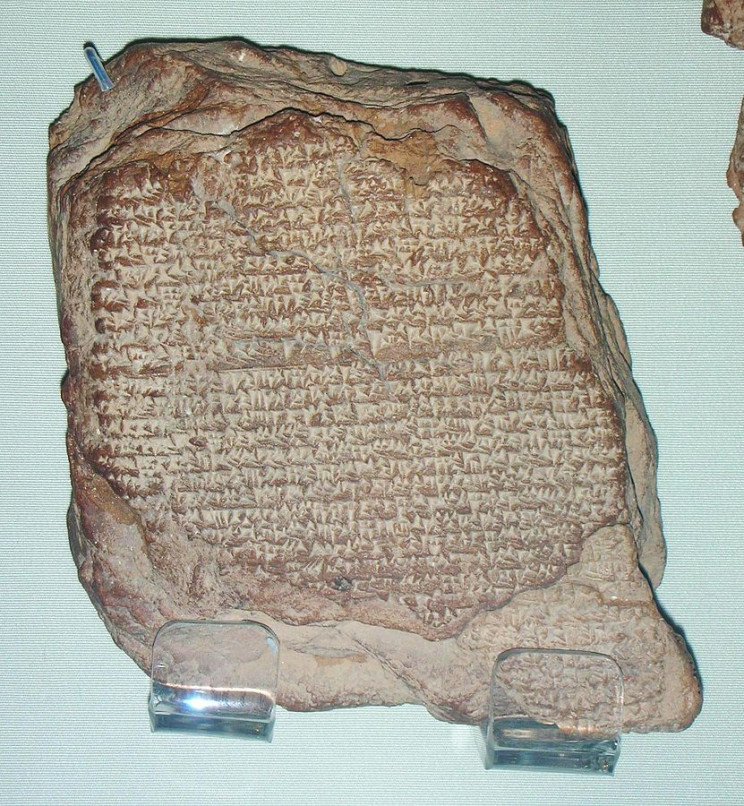 Source: Gavin Collins/Wikimedia Commons
Thus, 1P / Halley is considered one of the most important in the history of mankind, the same constant satellite of the Earth as the Moon.
Where is this comet now?
</ p>Now the famous comet is in the constellationHydra. It is distant from the Earth at a distance of 5,200 million km (this is almost 35 times farther than our planet is from the Sun). 1P/Halley will next return to the solar system in July 2061. Then the comet will approach the Earth at a distance of 71 million km. This means that the distance between us and 1P/Halley will be reduced by a factor of 70 (it will be 0.49 AU from Earth). It is noteworthy that the comet will be visible much better and longer than in the 80s.
What happens if Halley's Comet hits Earth?
</ p>The diameter of 1P/Halley is estimated to be 11,000meters. For comparison, the diameter of the asteroid that allegedly caused the Cretaceous-Paleogene extinction event more than 65 million years ago was about 10 km. Also, according to the theory, it was he who left a crater with a diameter of 180 km off the coast of Mexico.
It is believed that dinosaurs did not die instantly due toasteroid. The impact led to forest fires, volcanoes and tsunamis, as well as the release of hazardous chemicals into the atmosphere, which caused acid rain. All this led to one of the five largest extinctions - the Cretaceous-Paleogene.
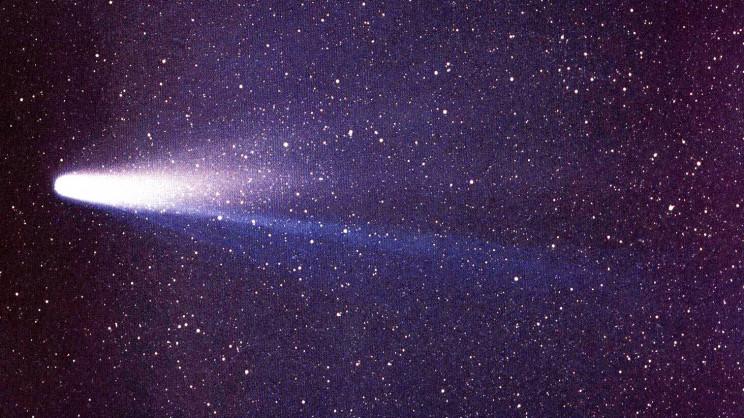 Comet Halley. Photo: Wikimedia Commons
Considering this, it can be assumed that what happened,if Halley's comet collided with our planet in the near future. In this case, the Earth would suffer not only from the blast wave. It would suffer irreparable damage: the environment would suffer so much that it would lead to the extinction of most life forms on Earth.
Is it possible?
</ p>The good news is that even in 2061year, the famous comet poses no danger to the Earth. It came closest to our planet in the 8th century. Then it was at a distance of about 5 million million from the Earth. At the same time, scientists do not foresee a stronger approach of the planet to 1P/Halley. However, every year people will be able to observe its remnants during such meteor showers as the Eta Aquarids and Orionids.
Read more
It has been hunted for centuries: what do we know about the planet Vulcan next to the Sun
Physicists have experimentally confirmed a new fundamental law for liquids
Astronomers have found the source of mysterious radio bursts that come from space