What is Internet Tel?
To understand what the Internet of bodies is, you need to remember the Internet of Things (IoT). By
The Internet of Things (IoT) connects devices intocomputer network and allows them to collect, analyze, process and transmit data to other objects through software, applications or technical devices.
IoT devices function independently, althoughpeople can customize them or provide access to data. IoT systems operate in real time and usually consist of a network of smart devices and a cloud platform to which they are connected via WiFi, Bluetooth, or other forms of communication.
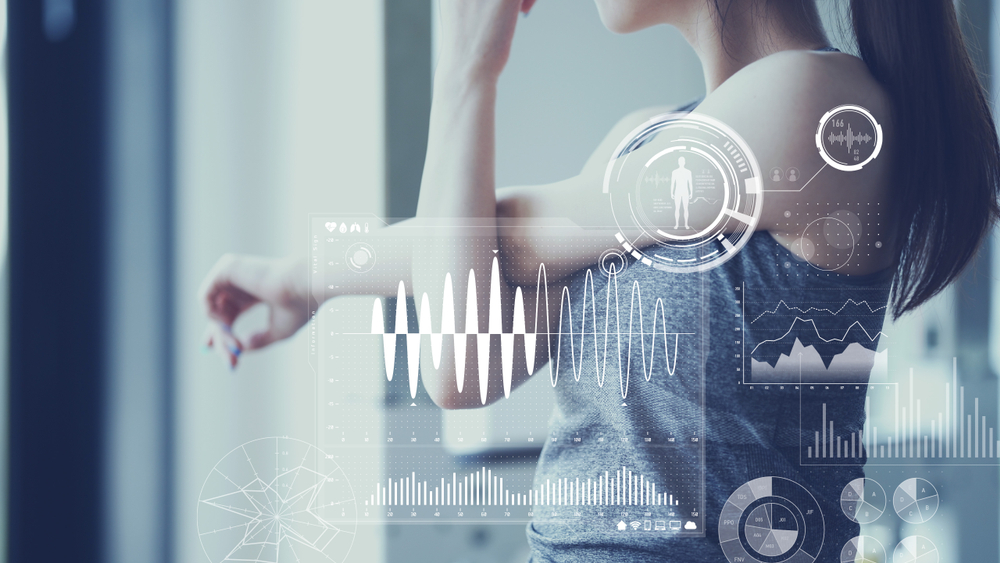
When the internet of things connects to your body,Internet of bodies (IoB) appears. Basically, the Internet of bodies (IoB) is an extended version of the Internet of Things. The system connects the human body to the network through devices that are introduced into the body, implanted, or connected in some way to the body. Once connected, you can exchange data, as well as remotely control both the body and the device associated with it.
There are three generations of Internet of bodies, which include:
- External devices: wearable gadgets like Apple Watch or Fitbits can monitor our health;
- Internal devices: These include pacemakers, cochlear implants, and digital pills;
- Body Embedded Devices: Technology and the human body are connected together and have real-time communication, such as a neurocomputer interface.
Advances in wireless communications, materials, and technical innovations allow implantable medical devices (IMDs) to scale and be viable in many applications.
Examples of Internet Tel devices
Pacemakers
The most famous example of the internet of bodiesis a defibrillator or pacemaker. This is a small device placed in the abdomen or chest to help patients with heart disease control abnormal heart rhythms using electrical impulses. In 2013, former US Vice President Dick Cheney replaced his Wi-Fi defibrillator with a non-networked defibrillator. There were concerns that he could be electrocuted if an attacker hacked into the device.
In 2018, a California healthcare professionalKaiser Permanente has launched a virtual rehabilitation program for patients recovering from heart attacks. Patients shared their data with healthcare providers through smartwatches, which allowed for better control and a closer and more permanent relationship between patient and doctor. Thanks to this innovation, the completion rate of the rehabilitation program increased from less than 50% to 87%, accompanied by a drop in readmission rates and program costs.
Smart pills
"Smart tablet" is another deviceIoB. Once ingested, they collect data on the state of the organs, and then send it to a remote device connected to the network.
In November 2017, the US Office ofThe Food and Drug Administration (FDA) has approved the first digital drug - a tablet with a sensor that will track whether a patient has taken it and when. The antipsychotic drug Abilify MyCite is aripiprazole used in the treatment of schizophrenia, bipolar I disorder and depression. The drug is manufactured by the Japanese pharmaceutical company Otsuka Pharmaceutical, and the sensor was developed by Proteus Digital Health. The sensor is activated by the action of gastric juice. The data that the patient has taken the pill is transferred to a special digital patch worn by the patient, and from it to a mobile application that tracks medication intake. Patients sign an agreement, according to which the doctor and several other people, for example, family members, can get access to the data on taking the medicine.
Smart lenses
Smart contact lenses are being developed thatcombine sensors and microcircuits that conduct health diagnostics based on information from the eye and eye fluid. One smart contact lens under development is designed for glucose monitoring. In the future, this will allow diabetics to control their sugar levels without injections throughout the day.
Work in the direction of creating smart lenses has been going on since 2014 and since then several large corporations at once - Samsung, Google, Sony, Mojo Vison.
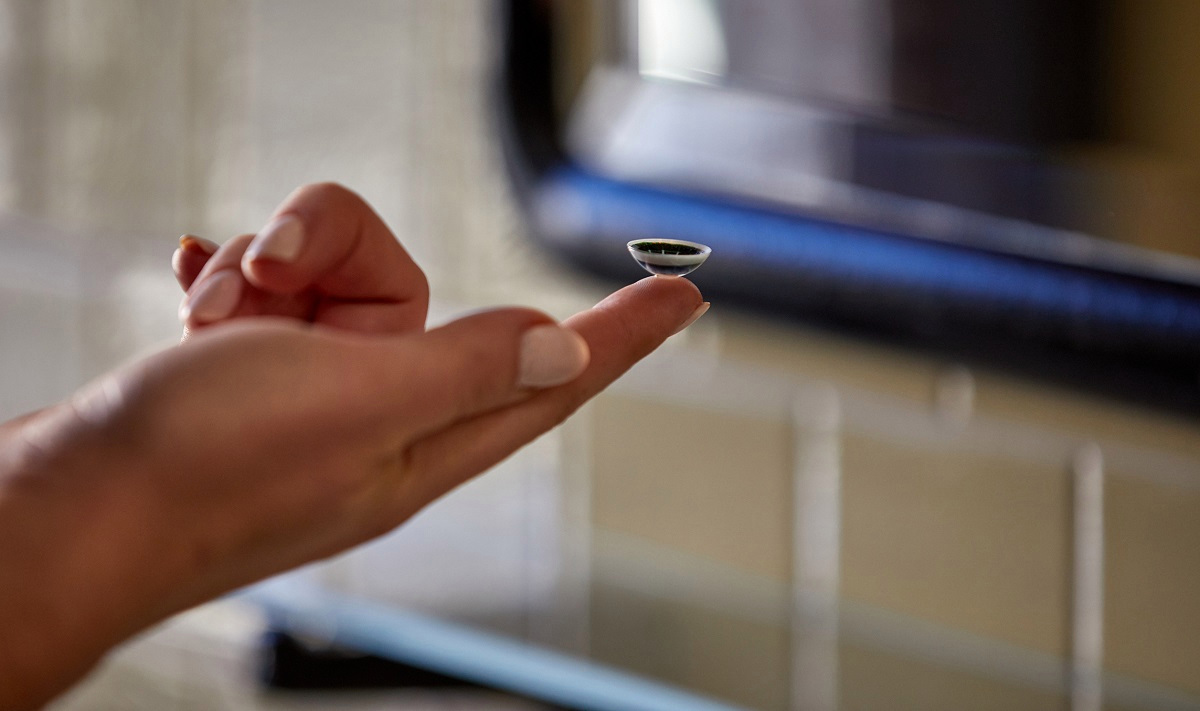 Mojo vision
For example, in January 2020 MojoVision demonstrated the first prototype of smart lenses. Engineers developed a display, an oxygen saturation system, a microchip and energy management tools, as well as eye tracking algorithms.
Mojo Lenses Promise to Provide Usersuseful and timely information without the need to look at the screen or be distracted from the conversation. Outwardly, they look exactly like regular cosmetic contact lenses that change the color of the eyes. However, in reality it is a whole computer with tiny displays, batteries and electronics.
Brain-computer interface
It is worth paying attention andto a neurocomputer interface, in which the human brain is actually combined with an external device for monitoring and control in real time. The ultimate goal is to help restore function to people with disabilities using brain signals rather than conventional neuromuscular pathways.
But the technology will be used not only in medicine, but in the entertainment industry.
The American company Valve announced the developmenta neurocomputer interface (BCI), which the company intends to take into account when developing future game projects. This was announced by the founder of the company and the Steam service Gabe Newell in an interview with the resource 1 NEWS.
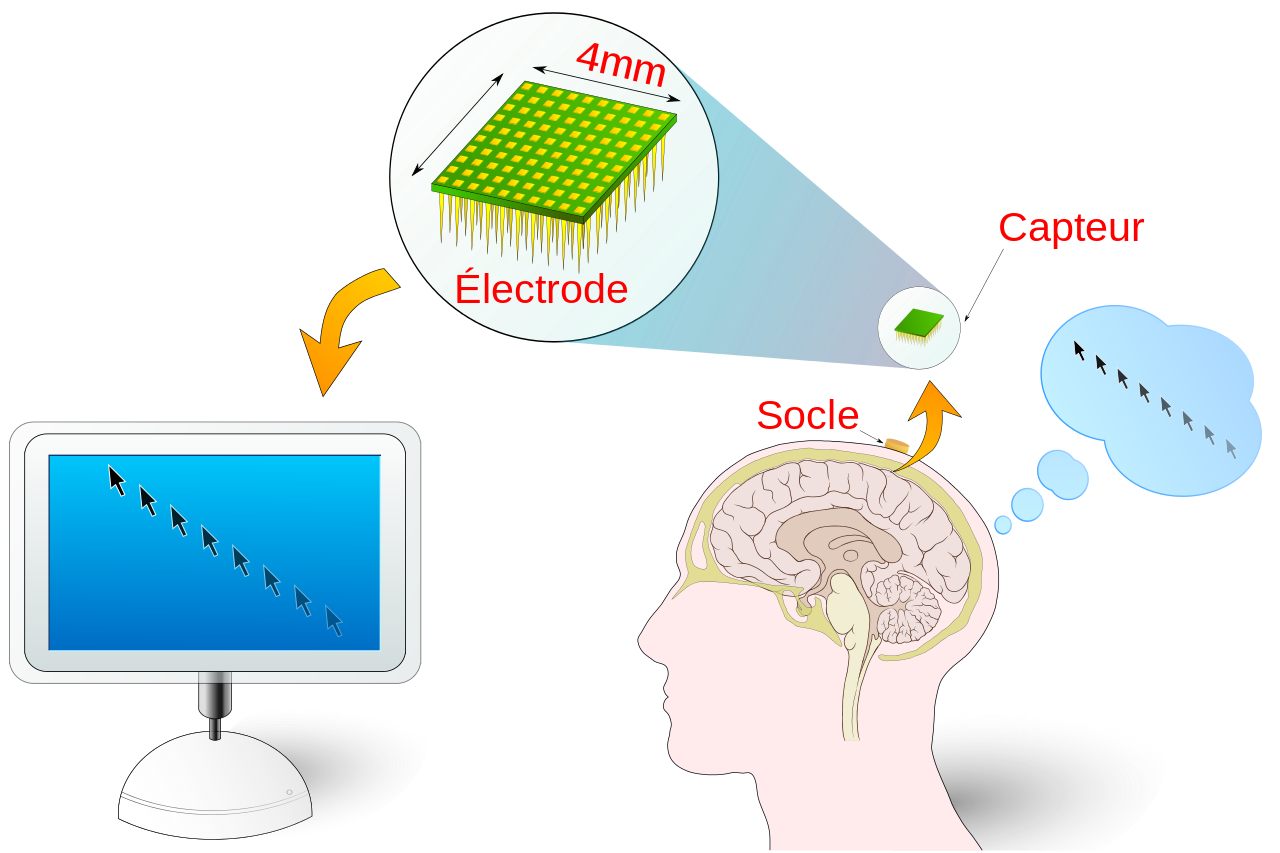 Author: Balougador — [1], CC BY-SA 4.0,
According to a study published in Marchthis year in the journal Neuron, scientists were able to use ultrasound to observe blood flow in different parts of the brain. They experimented with primates and found that certain patterns of blood flow in the brain not only coincide with the actions of animals, but can also predict what actions the animal will take.
The system was able to effectively predictwhether the animal is going to move its eyes to the left or right with an accuracy of 78 percent and whether the animal is going to stretch its paw to the left or right with an accuracy of 89 percent.
Bioengineering company Biohax has implemented chips inmore than 4,000 people, primarily for convenience. In one well-known example, 50 Three Square Market employees agreed to implant an RFID microchip the size of a large grain of rice. Recall that RFID is a method of automatic object identification, in which data stored in so-called transponders, or RFID tags, are read or written by means of radio signals. Any RFID system consists of a reader and a transponder. It allows these employees to enter the building without a key, pay for goods with a wave of their hand at the vending machine.
The most discussed example of a neurochip right now isdeveloped by Elon Musk's company - Neuralink. At the 2020 presentation, second-generation chips were demonstrated, which are now being embedded in the skull and the robot used to install it, as well as pigs with an implanted device.
Why is internet phone useful?
For healthcare professionals, Internet of Bodies opens the gate to a new era of effective monitoring and treatment.
The stream of data collected by suchtechnology contributes to our understanding of how human behavior, lifestyle and environmental conditions affect our health. He also expanded the concept of healthcare beyond the hospital or surgery into everyday life. This could be critical in the fight against the coronavirus pandemic. Tracking symptoms can help us stop the spread of infection and find new cases quickly. Researchers are investigating whether data collected from smartwatches and similar devices can be used as alerts for viral infections by tracking the user's heart rate and breathing.
Data streams on everything from diets to socialinteractions can help improve preventive health care, increase employee productivity, and encourage people to become active participants in their health.
An artificial pancreas canautomate insulin dosing for diabetics. Brain-computer interfaces could allow people with disabilities to use their minds to control prosthetic limbs. And smart diapers can alert parents via the Bluetooth app when their baby needs to change.
But despite its potential to revolutionize almost everything and add value, Internet of bodies can jeopardize our most intimate personal information.
But is it that simple?
Privacy risks and concerns
The situation when US Vice President Cheneyorders a defibrillator not connected to Wi-Fi for security reasons illustrates one of the biggest challenges facing Internet of Bodies technology—how to protect devices and the information they collect and transmit. In 2017, the US Food and Drug Administration recalled nearly half a million pacemakers due to safety issues requiring firmware updates, explains Bernard Marr, a renowned futurist, in his column for Forbes. The security challenges facing Internet of Body technology are similar to those facing the Internet of Things in general. However, the consequences of a breach can be much more tragic when IoB devices are involved. Additionally, IoB devices pose another cybersecurity challenge that needs to be protected from hackers.
Confidentiality is also paramountvalue. Questions about who can access the data and for what purposes need answers. For example, a device that tracks diagnostics for a condition can also track unhealthy behavior. Can health insurance companies deny coverage if a customer's IoB device reports their behavior? A cochlear implant can restore hearing, but it can also record all sound in a person's environment. Will this data remain confidential?
It's worth remembering the story of the fire survivor Ross.Compton. In September 2016, a fire destroyed his $ 400,000 home in Middletown, Ohio. Luckily, Compton told investigators that he was able to stuff several bags with a few things, including a charger for an external defibrillator, before smashing a window with his cane and escaping. But as the smoke cleared, police began to suspect that the Compton story was fabricated. His statements were contradictory. The debris smelled of gasoline. And it seemed unlikely that someone fleeing a burning house, especially someone with a medical condition like Compton's, would be able to carry out such a complex plan to escape the fire.
In the end, the investigators were able to showCompton was charged with felony aggravated arson and insurance fraud. Their perfect witness? His pacemaker.
The police received a warrant to obtain data oncardiac activity of Compton before, during and after the fire. After examining this information, the cardiologist concluded that it was "very unlikely" that Compton could have escaped the fire so quickly by carrying so many things.
Compton pleaded not guilty.His lawyer argued that the pacemaker data could not be used in the case; including it would violate the confidentiality of the doctor-patient relationship and Compton's constitutional right to privacy, the lawyer said. The case was strange and riddled with difficult questions. Regardless of whether Compton actually burned down his home, should a rescue device inside someone's body be part of the case to send him to jail?
Compton died at age 62, leaving his case—and whatever precedent it set—unresolved.
 Author: Steven Fruitsmaak — Own work, removed from a deceased patient before cremation. Holding it in my hand., CC BY 3.0
It may seem like one of a kindchain of events, aberration. But as industries open up a new era of devices that track personal information using the internet and the human body in equal measure, it won't be the last.
Internet of bodies can improve our livesin countless ways. But there is no escape from the risks. The RAND study examines IoB and its risks. RAND is an American non-profit organization that serves as a strategic research center for the US government, its military and related organizations.
"When it comes to IoB regulation, it'sWild West,” explains Mary Lee, a mathematician at RAND and lead author of the study. “These technologies have many advantages that some consider too great to be contained by policy. But we need to have a broader conversation about what those benefits will cost us—and how we can avoid some of the risks entirely.”
“We collect huge amounts of data, and the rules forthe data is really fuzzy, ”she adds.“ There is no clarity about who owns the data, how it is used, and even to whom it might be sold. ”
Lee and her colleagues have studied the risks that canrepresent IoB devices, in three areas: data privacy, cybersecurity and ethics. The team also identified guidelines that can help policymakers balance the many risks and benefits of IoB.
- Implantable heart devices
Benefits of implantable cardiacdevices are clearly documented - they can improve the patient's quality of life and, in many cases, support his life. But, as the case of Ross Compton shows, it is unclear whether the use of IoB data by law enforcement violates constitutional protections against self-incrimination and unwarranted search and seizure.
Connecting to the Internet creates the possibility of hacking these devices and compromising the data they transmit.
- Productivity technologies
Amazon has patented the bracelet technology,designed to track and record the location of workers and hand movements. If the bracelet senses a lull in performance, it will vibrate, encouraging the employee to focus.
Although it is unclear if Amazon will everto produce this device, such productivity technology can help businesses become more efficient and less error prone. But because it would provide employers with highly personal information about their employees, such as information about toilet breaks, there are concerns that the technology described in Amazon's patents could violate employees' privacy rights.
How it works: The wristband will send ultrasonic pulses at set intervals to track hand movements and the relative position of the hands of employees and storage bins.
Employees may view this technology as intrusive and spyware.
- Health trackers
IoB bracelets, watches, rings and smartphone apps can track steps, heart rate, sleep patterns and other physical data such as alcohol consumption.
The amount of personal data that these collectdevices, security vulnerabilities and the possibility of user error have created ideal conditions for spying on people. Companies and hackers can use data for financial or political gain.
These devices work using modern accelerometers and other sensors that can convert motion into digital measurements.
By the way, some studies have shown thatContinuously tracking biometric activity with health apps like sleep trackers can heighten users' anxiety and aggravate insomnia and other conditions.
- Digital tablets
Patients can provide medicalworkers and doctors access this information through the web portal. This can help healthcare providers confirm whether patients are adhering to their treatment plans. But this is due to the fact that networks of health care providers can be subject to cyber attacks.
Data collected with digital tabletscan give insurance companies the ability to keep track of when and when a patient is taking their drugs, and deny coverage for those who do not adhere to the prescribed regimen.
What's the bottom line?
Privacy and security risks are inherentlyare essentially ethical concerns for individuals whose data has been compromised. But the IoB raises additional ethical concerns, including injustice and threats to personal autonomy.
No insurance coverage, no internet access, orTo a certain level of technical savvy, some groups may be missing out on the immediate benefits of IoB, as well as its impact on public health initiatives in the long term. And since IoB is in its infancy, there are still major questions about whether people own their personal data or have the right to opt out of data collection.
As internet of bodies technology continues to evolve, it will be necessary to address regulatory and legal issues and build policies based on the correct use of technology.
Read more
The most stormy place on Earth: why Drake Passage is the most dangerous route to Antarctica
Astrophysicists have modeled the first trillionth of a second of the Big Bang
Mars Express helped find out where and how the water disappeared from the Red Planet
The digital tablet is a new word in the schemedoctor-patient interactions. The tablet is equipped with a sensor that records the swallowing of the medication by the patient and, in general, compliance with the prescribed medication regimen.
Cochlear implant is a medical devicea prosthesis that acts directly on the auditory nerve to compensate for hearing loss in some patients with severe or severe sensorineural hearing loss.
Electrocardiostimulator (ECS) - medicala device measuring 3x5 cm, weighing 30-45 grams, designed to encourage or impose a normal heart rhythm in patients whose heart rate is not fast enough or there is a blockade of signal transmission between different parts of the organ by sending electrical impulses. The pacemaker consists of a titanium case, which contains a microcircuit and a battery.
Neurocomputer interface - a system createdfor the exchange of information between the brain and an electronic device. In unidirectional interfaces, external devices can either receive signals from the brain or send signals to it.