They were rightfully proud of this weapon, they were going to defeat NATO, but in the end, there was little sense from it? Discuss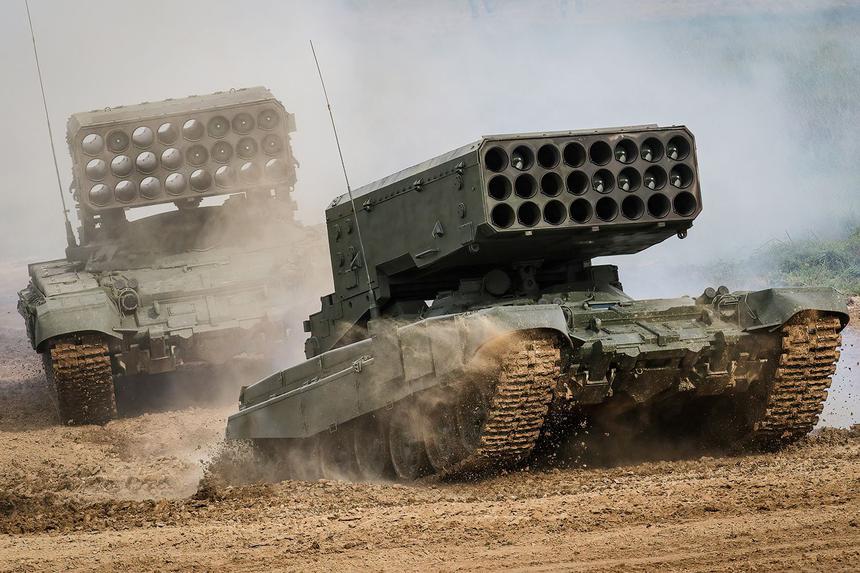
Table of contents
- TOS Solntsepek
- Attack aircraft and attack helicopters
- electronic warfare
- Operational-tactical missiles
The events in Ukraine have already become a testing ground for many systems, and on both sides. Many of them have never been used in "big confrontations" before, which means that now they are a serious test.
After more than six months, we can already tryappreciate a lot. But, of course, first of all, we are interested in the fact that little justified its reputation: a weapon to which questions arose - is it needed at all?
TOS Solntsepek
Patriots in the comments begin to swear at the author in a fit of rage because of the encroachment on the sacred after 3… 2… 1…
What it is
TOS-1A Solntsepek.According to the principle of operation, this is a MLRS, but the shells are thermobaric. The explosion of such ammunition creates a more powerful temperature and blast wave compared to a conventional land mine. The impact of such an explosion is also longer, and the "drawing" of air to the epicenter of the explosion creates both a vacuum effect and a "second shock wave" - a pressure surge leads to ruptures of light equipment and body tissues.
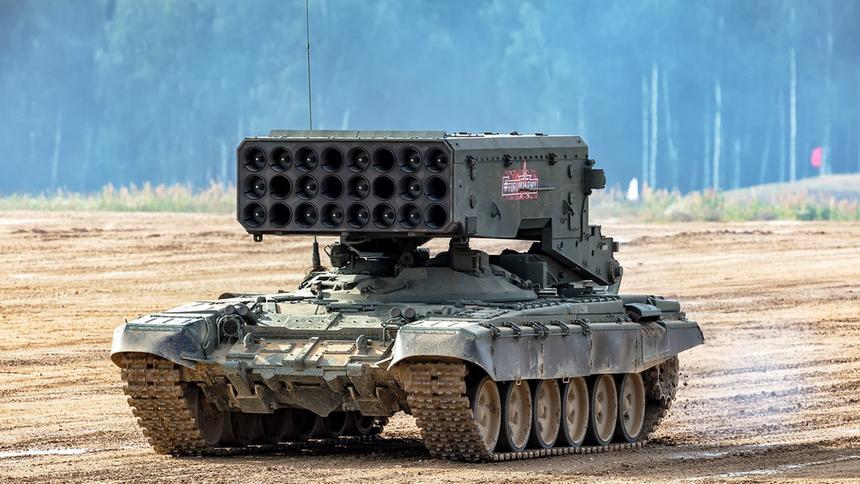
TOS-1A Soltsepek, well, here he is
anna-news.info
High temperature heat, pressure, double shockwave - practically no shelter protects against thermobaric ammunition. Hooray-patriots were written with boiling water from these systems - now, we will fry all the Pindos, we will burn all the Natu, and our names will be written on the ruins of Fashington. The United States was really afraid of the system - it is impossible to provide even potential protection from it, although the United States itself has thermobaric bombs even worse.
The former TOS-1 Buratino complexes are the mostfamous, but in fact they were more of a pre-production model for the development of new weapons. But TOS-1A Solntsepek is already a version aimed at serial production, and most of all in the troops. Since last year, they have been supplemented with a wheeled version of the TOS-2 Tosochka - on a wheeled chassis (Solntsepek on the T-72 chassis), based on experience in the Middle East.
Read also
What is being discussed
Experts have had questions about the system before.First of all, the problem is in a short distance - Solntsepeka's rockets fly 6-7 km maximum (Pinocchio - generally 3800 m). For comparison, even regimental MLRS Grad operate 20 km away.
And this is how Sunflower works
This means that they, even working on the frontedge of the enemy (we can say that TOC is an assault weapon), they themselves are dangerously close - a tasty target for attack aircraft and especially helicopters (they are not used very often, but they are). In addition, the sky is monitored by drones, which can quickly find and give the exact coordinates of artillery - under favorable conditions, it can respond quickly. And then they themselves will launch a rocket.
Another issue is booking.If the crew is protected at the level of almost a tank, but the block with guides itself has only bulletproof protection, while it contains ammunition with an extremely destructive warhead. In this case, TOS become a tasty target for sabotage and reconnaissance groups, the abundance of which among Ukrainians can be no doubt - everyone who is friends with the Internet has already seen this.
The official reviews for CBT are full of bravado inofficial or near-official statements, but in unofficial there is a lot of information about the losses of this equipment (often in good condition), and its use mainly in eastern Ukraine during the assault on fortified defenses in the Donbass (Peski). Otherwise, the effectiveness of an expensive ($6.5 million for a set of launcher and loader) and difficult-to-maintain vehicle is not high.
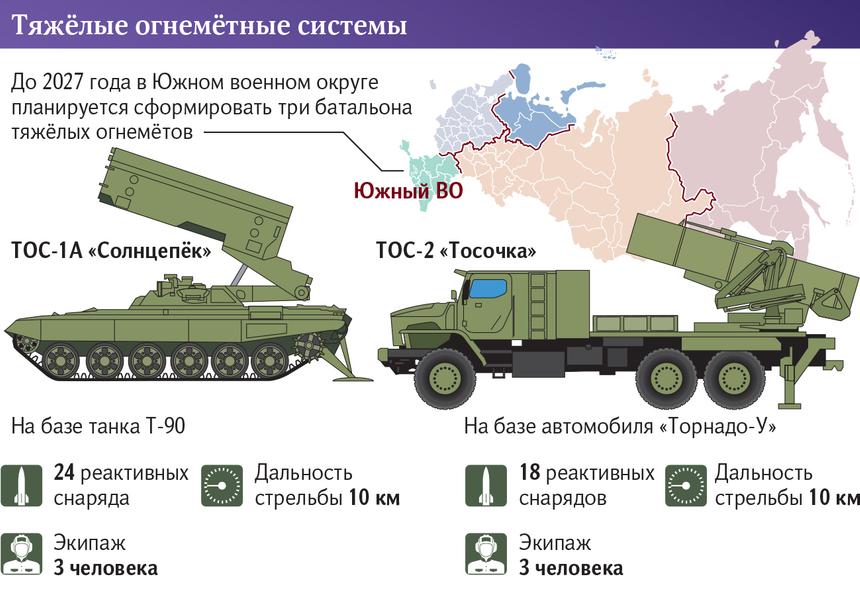
TOS and Tosochka
This weapon has a very limited range of use compared to conventional MLRS, which makes it quite specific - more information will probably be after... all this.
Attack aircraft and attack helicopters
Based on the experience of recent conflicts, it was createdthe impression that without aviation a modern soldier on earth will not even go anywhere. Well, probably, it was aviation to solve a huge range of tasks ... if the enemy has no or almost no air defense. But in this case, both sides have sufficient air defense both in terms of quality and quantity of complexes.
Yes, they are sorely lacking for such a stretchedfront, but this is a problem when the enemy uses missiles - but the number of lost aircraft and helicopters on both sides is impressive. Already in the summer operations, the activity of aviation fell so much that even the video with the use of aviation in the same Telegram could be counted on the fingers.
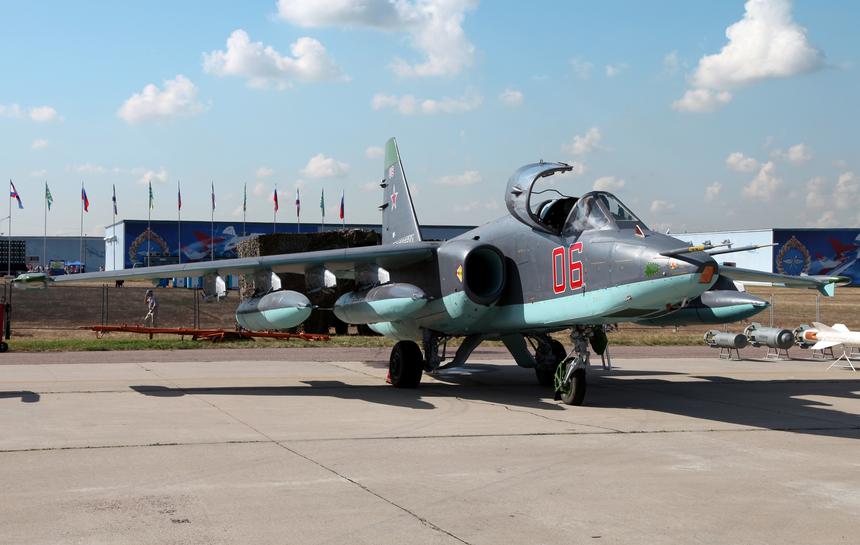
Su-25
Well, hand on heart, stormtroopers alreadybeen buried for a long time. Their main task is to iron the front line of defense or work at a shallow tactical depth. Primary weapons are unguided missiles, anti-tank missiles and autocannons. At the same time, the attack aircraft itself is not a difficult target for air defense - the aircraft is clearly visible, and no matter how armored it is, nevertheless, it goes astray like any other.
For the last forty years, they fought well inlocal conflicts, but there were modern hostilities of approximately equal opponents - and now they justified the worst expectations. Yes, the armor of these aircraft often withstands a hit from a MANPADS or a burst from a ZUshka, but this means that you need to tinker with them a little more, that's all.
Attack drones, although they drag on themselves once a5 is less combat load, however, it is more difficult to shoot down - small-sized and made of composite materials, very few radars are able to detect them in time. Compared to attack aircraft, their survival rate is higher.
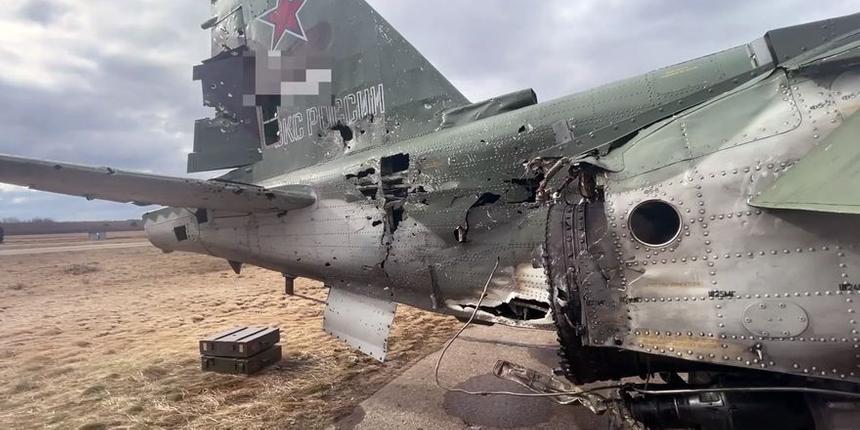
Su-25 after being hit by MANPADS is able to “survive”… but not always
Photo © Ministry of Defense of the Russian Federation
And this is not to mention the fact that UAVs are much cheaper.(even modern and sophisticated compared to even the not-new Su-25). And most importantly, they do not need a pilot: a well-trained pilot can work out ground targets with high quality (and this is + about a third / a quarter of the cost of the aircraft itself).
The loss of an UAV is less painful in every sense, and a small combat load is covered by the ability to work non-stop (a person should rest).
The UAV is not afraid to work in the most adverseconditions (the pilot may lose his nerves), in assessing the situation and searching for targets - the computer and the operator sitting in safety are also more effective than relying on the pilot's eye, especially under enemy fire.
With helicopters, the situation is similar - yes, for largeAir defense, slower turntables, the target is more difficult, but here MANPADS operators and cannon weapons come to the fore. Everyone saw the footage of Russian helicopter pilots launching missiles from a pitch-up to increase their flight range - no one wants to enter the area of operation of the Stingers or the Ukrainian Igla MANPADS. So the situation is no better here.
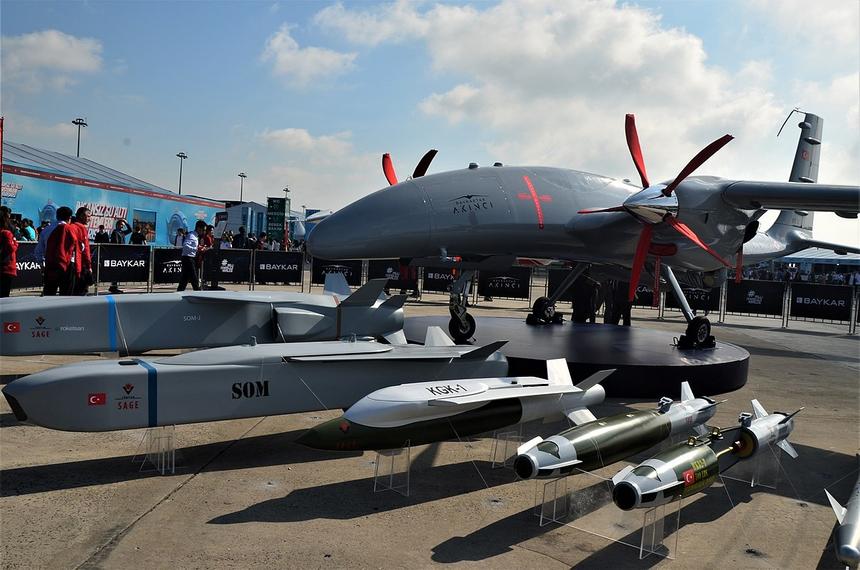
Heavy Turkish Akinci can even be equipped with SOM cruise missiles
It must be assumed that attack aircraft and helicopters inIn the future, they can occupy the niche of "colonial weapons" for local wars, anti-terrorist operations and showdowns in third world countries. If UAVs are not completely replaced in the niche of tactical aviation at all.
electronic warfare
Means of electronic warfare.I remember how the commentators prayed to them - they say that these Bayraktars are for us: they will put electronic warfare there, they will put them out of action ... that's business. Practice has shown that this was a very naive way of thinking.
EW is a whole range of tools and activities, andnot any specific weapon - these are stations, and on-board equipment for aviation and ground equipment, and even hand-held "EW guns". EW actions are mainly reduced to:
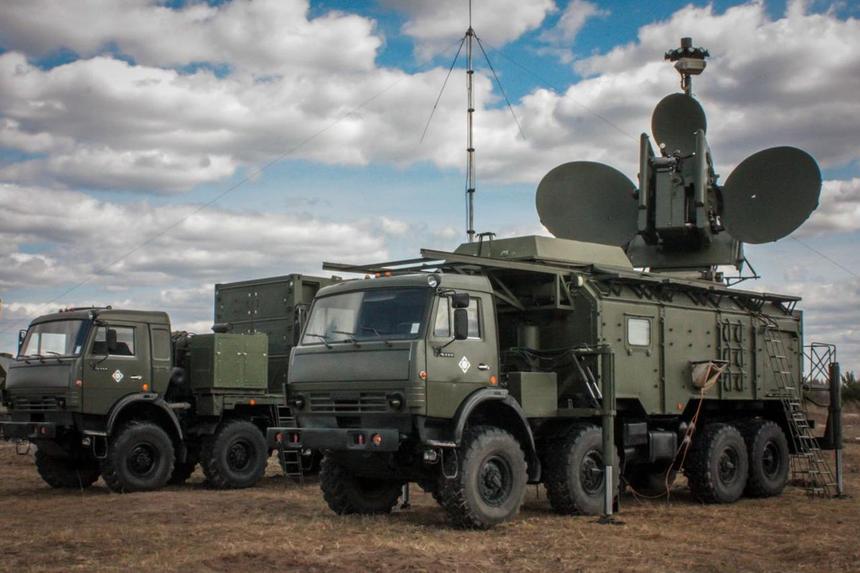
Electronic warfare station EW 1RL257 "Krasukha-4"
-
An electromagnetic pulse that can disable communications and information exchange
-
Interference that disrupts the operation of electronic systems (communications, navigation, on-board computers), the enemy cannot use all this normally, so his combat capabilities drop sharply
Read also
-
UAV interception, when drone control can be “taken away” from an enemy operator, land the car yourself and trophy or destroy
-
Electronic intelligence to detectactivity of radar stations for various purposes and strike at them, disrupting the operation of air defense, as well as guidance means for aircraft / helicopters, counter-battery radar, disrupting their operation
Even a cell phone signal can cause a firestorm across positions before the call ends.
- Finally, protection from enemy electronic warfare - you don’t believe that he will swallow it all?
It cannot be said that electronic warfare systems work poorly: again, because electronic warfare is a lot of things.
However, it should be noted that the expectationsthey, to put it mildly, did not justify the neutralization of the UAV. Already the experience of the war in Karabakh 2020 has shown how naive the expectations are that they will easily neutralize all these “radio-controlled airplanes”, which can only drive spooks across the desert.
EW is not capable of covering a wide front, andthe main thing is that it is not a selective weapon. The activity of your own electronic warfare will prevent you from using electronic and fiber optic components yourself. In addition, electronic warfare turned out to be powerless against satellite and digital communications.
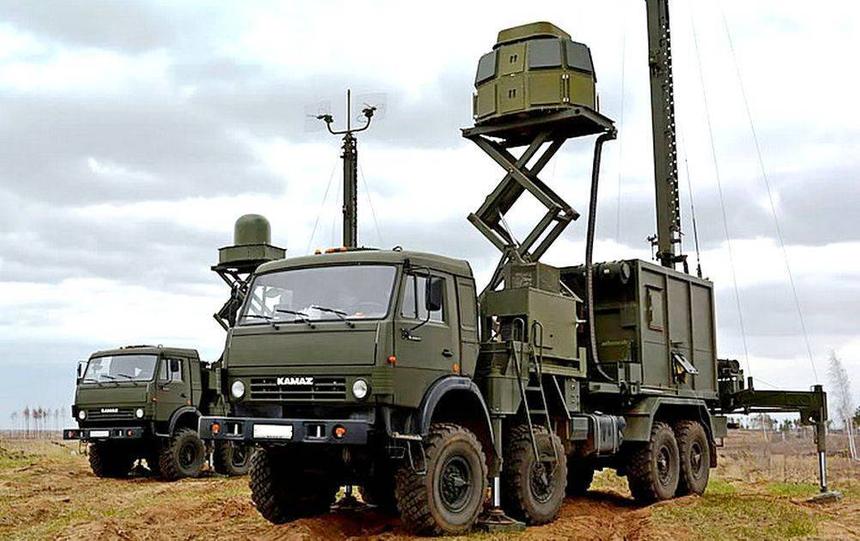
EW station "Repellent". Used by the Armenian side in the Karabakh war - at least one installation was lost
The electronic warfare doctrine was born back in the radio era, andToday, this mass of expensive and complex equipment in some places cannot cope with simple and not so expensive means that work on slightly different principles. Link 16 digital secure communication allows even air defense to be used - such as, for example, the NASAMS systems supplied to Ukraine, which, in comparison with most analogues, are almost not afraid of electronic warfare.
Operational-tactical missiles
Many experts agree that the Russian Federation has used up various missiles (ballistic and cruise missiles) worth about 8 billion dollars. What is the bottom line?
We have touched this weapon periodically in the past.articles, so I don’t want to write about it again and again. But let us denote that operational-tactical missiles are the most powerful weapon after nuclear, they were created as an alternative to nuclear weapons in non-nuclear wars, or as an addition to nuclear weapons.
Read also
In theory, tactical missile strikes should:
-
Disable completely, or to a large extent, air defense systems
-
Attack military infrastructure facilities. Or, more simply, to leave the enemy without fuel and shells (spare parts, fuel, equipment)
-
Inflict significant losses by strikes against clusters of equipment and manpower
-
Disrupt the operation of civilian infrastructure related to the military - de-energize military factories, immobilize railways, render runways unusable, etc.
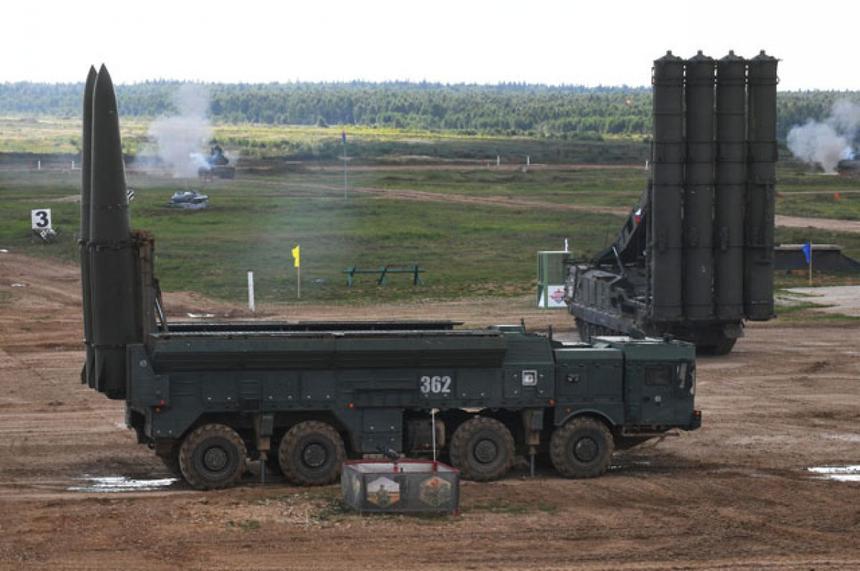
Iskander-M
About one and a half thousand of these missiles were used up:Iskanders (land-based), Daggers (air), Caliber (sea) - it's all from there, if you still don't understand. As a result, by the summer it was necessary to use the anti-ship Oniks, which were not intended for such work (they bombed railway substations in western Ukraine), the extremely outdated Kh-22 and even missiles from the S-300.
S-300 and descendants are air defense, but in general they canwork on ground facilities. The only thing is that missiles of this purpose have a specific warhead with fragments to destroy the airframe of the aircraft. Against ground targets, the effectiveness of such missiles is negligible.
Outcome:the enemy is not only not defeated for more than six months, he also attacks periodically. His factories are working, his air defense system is intact and, probably, has already recovered at least in volumes before February 24th. The transport infrastructure carries lend-leases, and the notorious "decision centers" make decisions.
What is this if not the failure of the entire concept of the use of operational-tactical missiles?