It is important that everyone is able to read the results of their own blood test.Not in order to
Why is a blood test needed?
A complete blood count (CBC) is a test that accompanies us from birth to life.Medical check-ups, scheduled annual visits to the doctor, pregnancy and childbirth, health disorders and diseases are all reasons to draw blood from a finger or vein.
A complete blood count is the main assistant of any doctor. His tasks:
- Check your general health.
- Diagnose the disease.
- Monitor the dynamics of the disease.
- Monitor the effectiveness of treatment.
Two rules for decrypting UAC
Rule No. 1.Not all abnormalities in the CBC matter, for example, if you are generally healthy and do not havesigns or symptoms of disease, CBC results that are slightly out of the normal range mayIn such a case, special follow-up care may be provided bynot required.
Rule No. 2.A general blood test is by no meansdefinitive diagnostic study. Depending on the reason your doctor recommended you have a complete blood count, results outside the normal range may indicate the need for follow-up and additional testing. To correctly interpret the pronounced changes in the CBC, the doctor will need to talk with you and carefully study not only the results of this analysis, but also the data of other, additional studies. These can be other blood tests, as well as other research methods, for example, instrumental: ultrasound, computed tomography and many others. In some cases, if your results are significantly higher or lower than normal, your GP may immediately refer you to a doctor who specializes in blood disorders - a hematologist.
 The doctor does not treat abnormalities in the complete blood count
Main conclusion:The doctor does not treat abnormalities in the general blood test. The doctor treats a specific disease of an individual patient, which can be determined using a general blood test, a detailed conversation with the patient about his symptoms and additional laboratory and instrumental tests.
Why be able to decipher a complete blood count?
Of course, the final verdict on the values,received at the UAC must remain with the doctor. However, a basic knowledge of what the analysis shows can be very helpful. And above all, in order to competently conduct a conversation with a doctor in any situation and without hesitation ask him questions that interest you.
Understanding what our blood is made of and howit works, it will allow you to be more attentive to your analyzes, it will make it possible to preliminary evaluate the indicators and compare them with your well-being. You will learn to understand if you need to speed up your next visit to the doctor or if you don’t have to worry and calmly wait for a regular consultation.
What can be learned from a general blood test?
A complete blood count measures the quantity and quality of the main parameters of our blood. This is:
- Red blood cells (RBCs) are red blood cells that carry oxygen throughout the body.
- White blood cells (WBCs) are white blood cells that fight infection.
- Platelets (PLT) are platelets of blood that help blood clot and stop bleeding.
In addition, using the KLA you can evaluate:
- The amount of hemoglobin (Hb) - a protein found in red blood cells and responsible for oxygen transport.
- Hematocrit (HCT) is the ratio of the number of red blood cells to the liquid component of blood, that is, plasma.
- Various qualitative characteristics of blood cells: the volume of erythrocytes and platelets, the ratio of different types of leukocytes.
Learning to decipher your blood test
Let's not go into the medical jungle and deal with the basic indicators and concepts in order.
Reference range: it should be relevant for your gender and age
For each indicator there is its ownreference range - two values within which the blood parameters of most people on Earth are located. The reference range (or interval) has an upper and lower limit, also called normal limits. The reference range varies:
- For different UAC indicators.
- For different genders.
- For different ages.
That is why a tube with a blood sample comes to the laboratory with a note about the gender and age of the patient.
Be sure to note that not alllaboratories issue an analysis with a reference range for a specific age of the patient: this primarily concerns children and can be a cause for concern for parents. Therefore, when receiving a test, you first need to assess whether the reference range will be relevant for your age and gender. To do this, you need to carefully read everything in the resulting conclusion that concerns the reference value field. It must be taken into account that there are exceptions everywhere and 5% of people in the world have individual indicators. They will differ from the accepted reference values and this is the norm for them. This norm can be determined by several consecutive studies of the CBC and excluding possible causes of deviations.
RBC count, hemoglobin and hematocrit
RBC, hemoglobin, and hematocrit are related because they each measure aspects of the red blood cell.
Note:If readings in these three areas are below normal, anemia may be suspected. And this should be a mandatory question for your attending physician. Anemia has many causes - it could be low levels of certain vitamins or iron, or chronic blood loss. Also, anemia may not be an independent disease, but a consequence of another disease.
Normal hemoglobin levels depend onage and gender. For example, the lower limit of the norm for the hemoglobin of a three-month-old baby is 95 g/l and at this level of hemoglobin there is no cause for concern, while the lower limit of the norm for an adult woman is a level of 120 g/l, and anything below the reference value can indicate about her anemia.
There are special tables of norms for indicators by age, and it is these that you need to focus on when assessing the level of hemoglobin, red blood cells and hematocrit.
MCV indicators are also important in diagnosing anemia -average erythrocyte volume, MCH - average hemoglobin content in an erythrocyte, MCHC - average hemoglobin concentration in an erythrocyte, RET - reticulocytes (early form of erythrocytes). These indicators reflect the characteristics of the entire population of red blood cells and are used both for the initial diagnosis of the type of anemia and for monitoring during its treatment. Their interpretation is quite complex and requires medical experience.
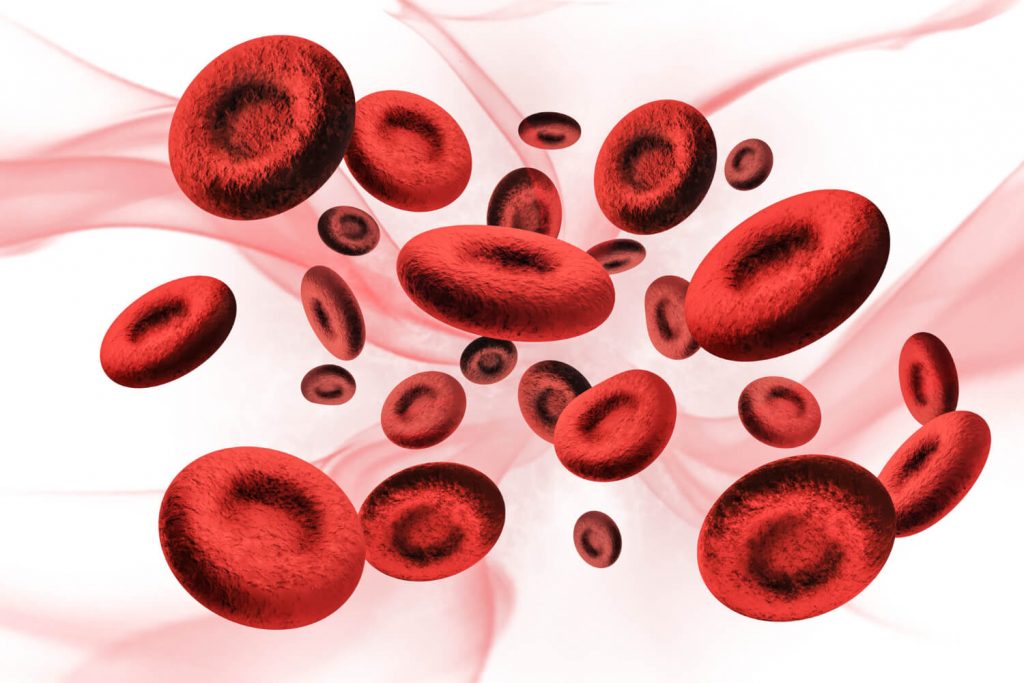 Red blood cells, hemoglobin, and hematocrit are related because they each measure aspects of red blood cells.
Increased number of red blood cells (erythrocytosis)or high levels of hemoglobin or hematocrit may indicate diseases such as polycythemia vera, malignant diseases. Exceeding the age norm in such cases must be persistent and significant. People who smoke and have chronic diseases of the cardiovascular system may have slightly increased hemoglobin - this is a consequence of the compensatory work of the body suffering from hypoxia and is not dangerous in itself, but requires attention to the cause of this increase.
White blood cell count
A low white blood cell count—leukopenia—maybe a consequence of a recent infectious disease, as well as an autoimmune process, as a result of which one’s own immune system can mistakenly destroy one of the types of leukocytes - neutrophils. This is a fairly common situation among young children, less often among adults, and most often does not require any intervention, provided there are no other symptoms. Less commonly, leukopenia can be caused by hematological or oncological diseases; in such cases, it will most often be accompanied by other changes in the analysis. Leukopenia can be caused by certain medications, in particular, chemotherapy drugs used to treat malignant diseases, and strict diets.
The level of leukocytes is higher than normal - leukocytosis -may indicate the presence of a focus of inflammation in the body or the course of a general infectious process. Many people know that leukocytosis can indicate oncohematological diseases. However, before sounding the alarm, assess your health and consult with your doctor, because a high white blood cell count can also be a reaction to various medications.
For the leukocyte count indicator, there aretheir reference values for different ages. If you receive a test that shows a high or low white blood cell count, the first thing you need to pay attention to is age. The younger the owner of the analysis, the higher the norm for him, which decreases as he grows older. The most common cause of deviations in the number of leukocytes is infectious diseases; if their course is not severe, the deviations will be moderate, and after a few days or weeks the analysis will return to full normal.
Leukocyte formula
If there are abnormalities in the level of leukocytesIt is necessary to pay attention to the leukocyte formula. The fact is that all leukocytes are divided into several types, each of which performs its own special functions:
- Neutrophils (segmented and band) - independently destroy bacteria and attract other leukocytes to the site of inflammation.
- Lymphocytes are responsible for the production of antibodies and cellular memory, destroy pathogens by releasing various biologically active substances.
- Monocytes - cleanse the site of inflammation, absorbing particles of spent leukocytes and pathogens.
- Eosinophils - are responsible for allergic reactions and respond to parasitic diseases.
- Basophils - help the work of other white blood cells in various ways.
The number of types of leukocytes is consideredautomatic analyzer. The analyzer produces two values - absolute and percentage. First of all, the absolute value plays a role in the evaluation of the analysis. Normal absolute values and slight shifts in percentages are a variant of the norm. As well as minor shifts in absolute values.
Leukocytes live in the body for a short time and quicklyreact to any changes that happen to us. If shortly before the test you ate or experienced stress, the level of leukocytes will increase - this is how the body prepares for the fact that it may find itself in difficult conditions for it and this is absolutely normal. This type of leukocytosis is called physiological, and most often with it the level of all types of leukocytes increases simultaneously. If leukocytosis is a consequence of a disease, the deviation of each type of leukocyte from the norm will be different.
If the analyzer data reveals pronounceddeviations, you may be prescribed a leukocyte count under a microscope. In this case, the doctor will apply a drop of blood to a glass slide and carefully examine all the cells that come into view. This analysis is necessarily performed with very high leukocytosis and allows you to reliably assess the composition of leukocytes. In the smear you can detect immature granulocytes - metamyelocytes, myelocytes, promyelocytes, which appear in the blood under the influence of infectious-inflammatory or myeloproliferative diseases. Also in the formula you can identify cells that normally should not be present at all - anaplastic blast cells, which may be a sign of an oncohematological disease.
Any appearance of cells atypical for the blood formula is not a diagnosis, but is a reason to consult a specialist.
Platelet count
Platelet count below normal(thrombocytopenia) or higher than normal (thrombocytosis) is often a sign of an underlying disease or may be a side effect of medications. If your platelet count is outside the normal range, you will likely need additional tests to diagnose the cause.
Platelet levels also vary with age. However, for this indicator the difference in reference values for different ages is small.
The main reasons for increased platelets may bebe: infection, iron deficiency anemia, hemolysis, trauma, cancer. Platelets will be elevated in people who have had their spleen removed, since normally most of the platelets are in it, like in a depot.
Thrombocytosis can also be mediated by a malignant disease of the myeloid lineage of the bone marrow, for example, essential thrombocytosis and chronic myeloid leukemia.
Thrombocytopenia can be caused by variousreasons: increased consumption of platelets (massive trauma, sepsis, thrombosis, bleeding, hemolytic-uremic syndrome), decreased production of platelets in the bone marrow (viral infections, intoxication, drug therapy, aplastic anemia, oncohematological diseases), increased destruction of platelets in immune diseases, hereditary thrombocytopenia.
When detecting thrombocytopenia, first of all it is necessaryretake the test or perform a platelet count on the blood smear - this is done to exclude false pseudothrombocytopenia, which may occur in vitro due to interaction with the anticoagulant.
How accurate are CBC results?
Correctly performed analysis is practicallyeliminates possible errors. However, in medicine it is quite difficult to achieve absolute accuracy and there are situations that can distort the final result of the analysis. This could be clots in the tube if there were difficulties with drawing blood, destruction of blood cells (hemolysis) in the tube due to too much pressure from the tourniquet on the hand, or improper storage or transportation of the tubes.
Main rule:Don’t worry, read and initially analyze your tests yourself and prepare a list of questions for your doctor. Only a doctor will help you finally understand and dispel all your doubts. And if necessary, together with you, he will pay attention to the details and prescribe additional studies.
Read more:
An Earth-sized planet has been found not far from us. Perhaps there is an atmosphere
Look at the golden "braces" of the 17th century: they were installed by a socialite
Named the real reason for the disappearance of the Hittite Empire