Kirzachs became the standard because they were practical, or were they simply cheap? Is it true that they were worn since
Discuss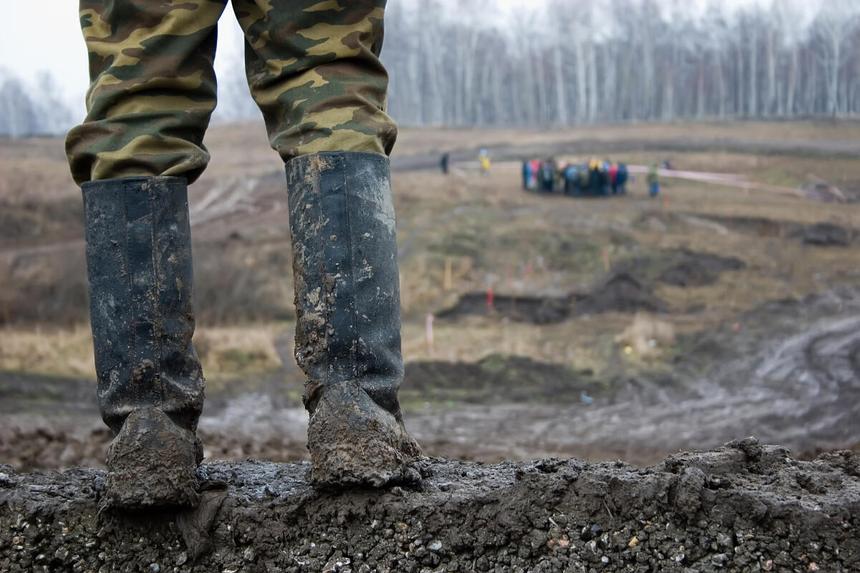
Table of contents
- Military shoes
- Why boots couldn't be an army norm
- Kirza
- Tarpaulin boots: pros and cons
Kirzachi, how much there is in this sound... The lastFor decades, satellites, thermal imagers, ballistic computers appeared in military affairs, but the kirzachi still did not want to leave. In a good way, they even became an informal symbol of the Soviet, and then the Russian army.
Officially, since 2007, there have been no kirzaches in the army, but II myself caught the era and personally saw how they were still worn in many places in the early 2010s. And now in some places they are handed out to the mobilized, so we can safely say that their century has not yet passed - at least not completely.
How and why did kirzachi appear? What kind of word is this - kirza? How they solved the issue of shoes from a potential enemy and how things are with her now - we'll talk about all this right now.
Remembered? Get class!
Military shoes
If in everyday life shoes are just shoes,whether good or bad (who has what means), then in the army ... in the army, shoes are her face. Whatever you equip, but in a real war a lot depends on shoes: the leg is the main “warring” part of the soldier’s body. Convenience, quality at a reasonable price and, finally, respect by the state and the country of people who risk their lives for it. That's what shoes are.
At the same time, the entire military history of shoes -this is the biggest problem since the appearance of regular armies and the issue of providing a soldier completely fell on the shoulders of the state. It would be possible to make a long digression into history - there are a lot of interesting things, how different countries solved the issue, but ... in previous articles, we have already noticed that you are not interested in such matters, so we will get down to business.
The boot was the main type of footwear at all times,although more often soldiers are associated with boots. In the era of the 18-19 centuries, when there was no developed industry and applied scientific developments, there was no synthetics either. The main material was only leather, and it was problematic even to supply all officers with leather boots, there was no talk of soldiers.


 13
13
Reconstruction of shoes from the time of Napoleon
Therefore, the leather boot was supplemented with leggings, theythe same "shoes", often above the knee of coarse cloth or felt. Thanks to them, pebbles, dirt, water did not get into the shoes. Well, at least something. By the way, the American troops used these for the longest time, made of thick canvas fabric - if you were wondering what the hell the Americans had on their legs in the movie “Saving Private Ryan”, then here they are.
Why boots couldn't be an army norm
In the middle of the 19th century, boots or low shoes withhigh berets have become the norm +/- in all armies. But when countries began to switch to universal military service, and the troops already numbered in the millions, the problem of “what to put on” became relevant again.
As a result, the standard of the First World War became lowboots with windings - a thin strip of fabric wrapped around the entire leg instead of a sock or footcloth, and went further to the knees. The Russian army at first still flirted with boots, but soon switched to a general trend, and boots remained in the guard - again, because you can’t get enough leather for everyone.

 12
12
American shoes during WWII
The civil war devastated the country so much thatin the 20s in the Workers 'and Peasants' Red Army... bast shoes became the norm. Yes, there was no money at all and the company received about 6 pairs of boots for guard duty, or to go on leave. On the eve of World War II, the Red Army was approaching 5 million in number, and then mobilization was announced…
In short, synthetic material for mass footwear was desperately needed:
-
waterproof, everything is clear here, but at the same time breathable for hygienic reasons
-
high, take care of the leg when jumping (from equipment, into a trench, with a parachute), protect it from dust and litter getting into shoes
-
cheap enough, with predictable wear limit, convenient for mass production
Kirza
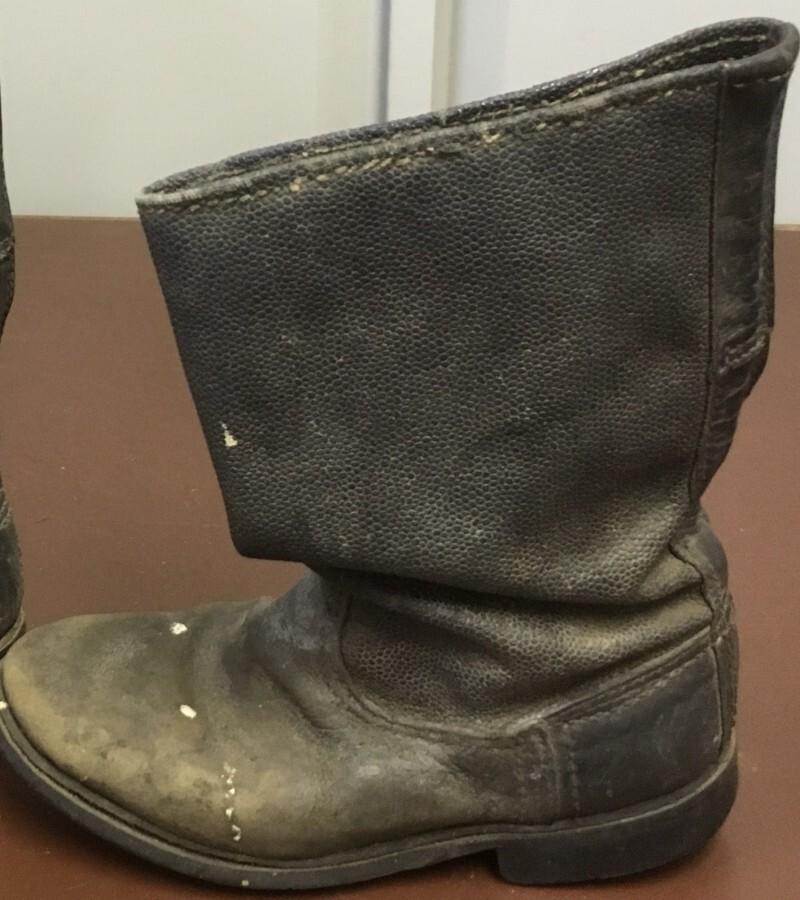
Tarpaulin boot that's seen some shit
The exact origin of this word is not clear to this day - let's leave the etymology to specialists.
Officially, kirza was invented in 1904 by MikhailPomortsev based on the development of tarpaulin covers for guns - a membrane-forming material from egg yolk, rosin and paraffin impregnated a thick multilayer cotton fabric. The result was a material suitable for horse harness, belts, belts, knapsacks, pouches, and, well, for shoes.
However, then a full-fledged mass leatherette andThe “first” tarpaulin did not happen - the technology turned out to be not so cheap as to easily replace the skin, plus the corruption of the late tsarist regime during the war (well, as always) prevented. They forgot about kirza for 20 years.
Again remembered this technology in the 1930s, withwhat it was not connected with the shoes for the soldiers at first - they were looking for alternatives to rubber, including for tires. The new tarpaulin did not withstand any tests - neither frost nor moisture, did not hold heat, cracked and crippled legs. As a result of the Soviet-Finnish war, the material for shoes was not so hot.
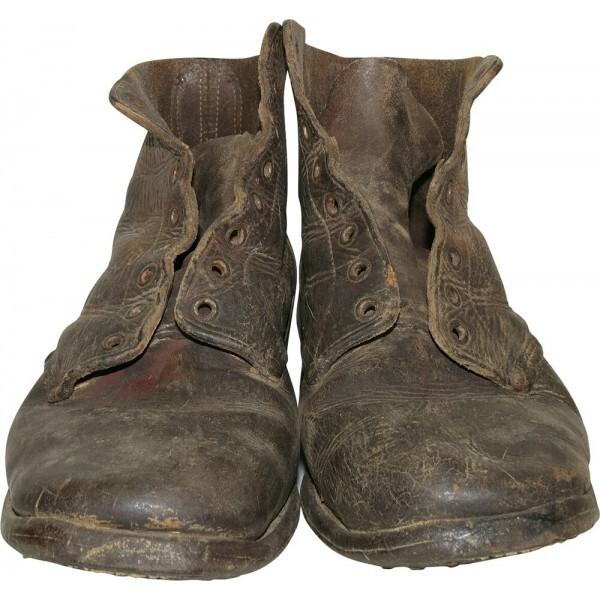
Lendliz boots of the Red Army
But on the eve of the Second World War, the engineers of Chomutov improved the formulaand Plotnikov, having received material from Kirza SK. A multi-layered cotton fabric was impregnated with a film-forming material based on petroleum products - this is how the kirzachi we already know turned out.
Tarpaulin boots: pros and cons
During the Great Patriotic War, kirzachi anddid not become the main footwear of the army. From the Lend-Lease allies received 15 million pairs of shoes, as well as thousands of tons of shoe leather. Their own production was also preserved: those who were lucky - imported boots and boots, those who were not - boots with windings. The kirzachs would become truly the main footwear after the war, although in the 1950s they also practiced boots with gaiters, as in the US Army or the Germans at the late stage of World War II.
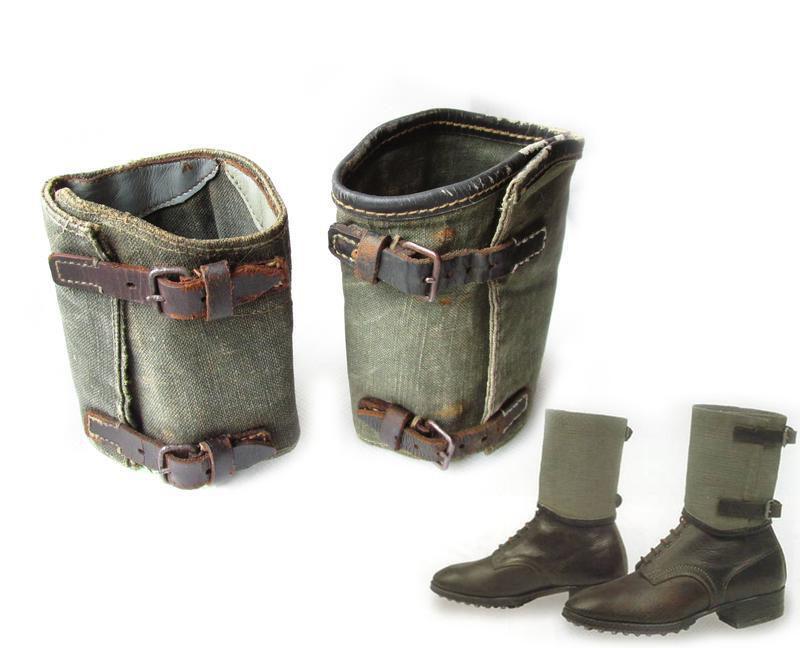
Wehrmacht leggings at the end of the war, some of their analogues were tried to be introduced in the Soviet army in the 1950s
It would seem that a boot made of synthetic materials -it's a miserable surrogate for shoes ... the way it is. But the “real” kirzachs assumed a yuft bottom, this is specially dressed leather, but the kirza pulled out the top itself. Thus, the foot was shod in high-quality shoes, and the high top made it practical for army needs.
The officers relied on boots completelyyuft, or barren, as they are also called. Well, in parallel with them, chrome, where the skin was tanned with special salts. Both chrome and cowhide boots are leather. Although, of course, especially advanced soldiers found ways to get themselves such.
Especially tarpaulin boots were valued in the Airborne Forces, as forskydiving, it is important that when landing there is a high shaft - this prevents dislocations and fractures. During the Second World War, paratroopers needed high shoes without any surrogates in the form of gaiters or windings, so the Americans and Germans had to develop special shoes. But the Soviet landing adhered to just kirzaches.
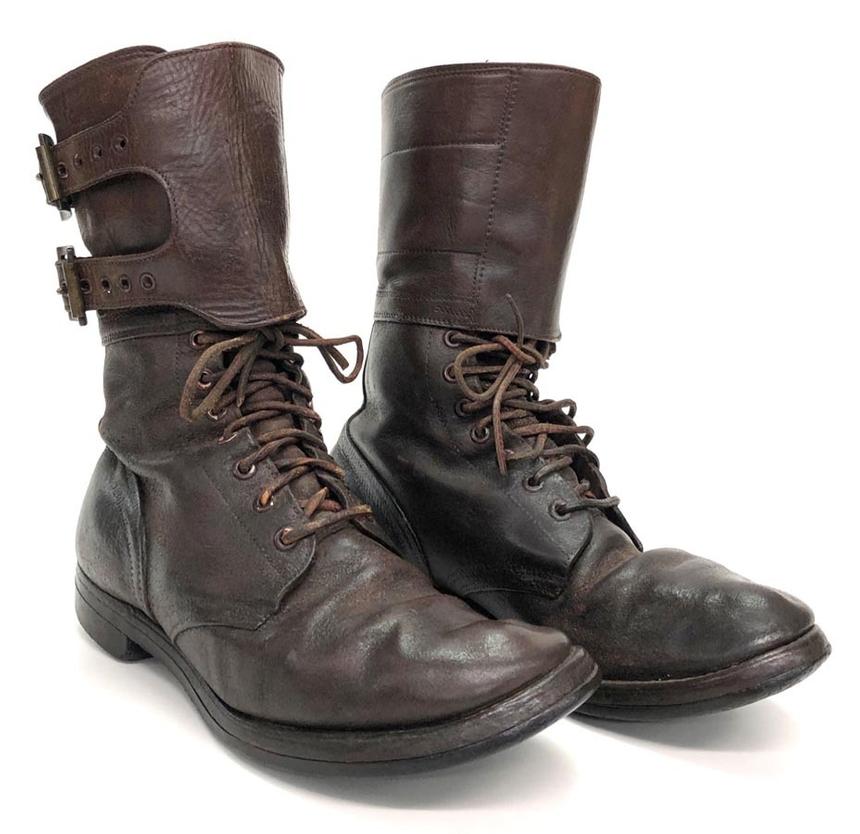
The universal boots of the US Army began to appear towards the end of the war.
However, for the 1970s, the boot - even tarpaulin,even leather - became clearly outdated shoes. Most of the countries switched to high-top boots. During the years of great reforms, the same Americans finally settled on boots of rough dressing, completely made of leather and with a high beret.
At first, boots compared to a boot are clearlyinferior, but even the US economy could not distribute leather boots to all soldiers, so they were first mixed with canvas and then leather gaiters (more expensive, but the cost of dressing and sewing was reduced). A little later, the mechanization of the infantry and the development of military equipment reduced the requirements for dynamic loads on shoes.
For maneuvering under intense firea lighter, well-fitting shoe was needed - a lace-up boot was better suited for this. Military doctrines were not supposed to sit for months in a trench slurry or march tens of kilometers a day, and after all, a boot was historically preferable in such conditions.
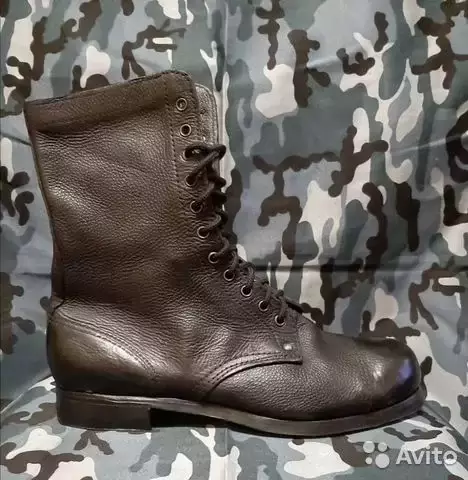
Berts "Margelovka" with Avito. Margelov was attentive to global military trends
At the same time, the change of cheap socks and insoles in boots and the conditions for drying shoes in places of permanent deployment guaranteed hygiene and better protected against the “trench foot”.
Now the boot was considered heavy and uncomfortable shoes.It was not suitable for a parachute landing due to frequent flying off its feet, so the USSR first transferred the Airborne Forces to the “berets” on the eve of the Afghan war. And in general, in conditions of active hostilities, they began to abandon the kirzaches during this period.
The heavy boot was uncomfortable when running, and even more so- for short runs with frequent elevation changes. This gave the fighter only unnecessary exhaustion. And, coupled with a footcloth, the boots no longer met the hygienic standards of the new time.
But they did not keep these shoes until the beginning of the 20th century.because of its miraculous properties, proven over the years, and the soldier's ingenuity of miracle boots, but because of poverty. Synthetic materials and well-established production made it possible to significantly save on shoes, and the transition to the already scarce leather in the USSR on an army scale was almost impossible.
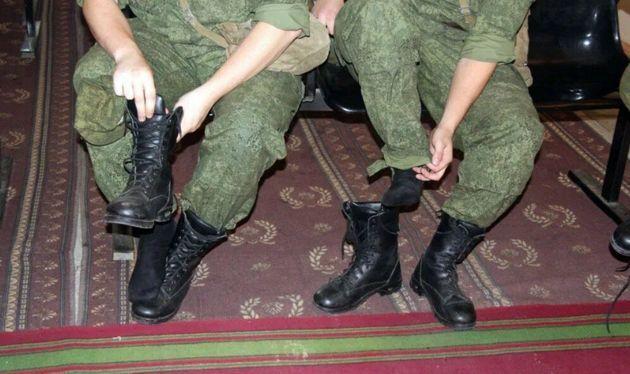
The first mass berets that came to replace the kirzachs
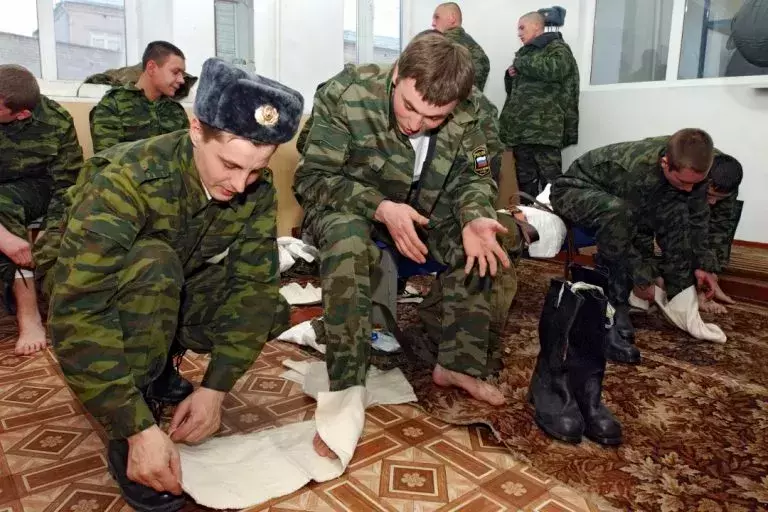
Russia refused kirzaches for a long time on the samereason. The epic with the berets only complicated the problem, since the authorized ones continued to be made from synthetics, which interfered with its demi-season - in the summer the legs sweat, and in the winter they freeze. It is with kirzachs that they are used to winding insulated footcloths for the winter, and with laced shoes it is more difficult (although I wore berets with footcloths in the army, and all these rises in a minute were a hell of a lot when the entire battery was already put on shoes in the ranks).
Later they came to a pair set of summer andwinter boots, but even then there was no leather. The notorious Cordura boots (nylon moisture-resistant fabric) from Donobuv were hardly suitable for the fields, so this problem had to be solved ... at our own expense.
Create a system for manning the army with normal,inexpensive leather boots are still difficult. The main problem is grassroots corruption. You won’t particularly push this synthetic to anyone, but leather statutory boots will go with a bang. Therefore, in order not to leave the army completely barefoot, to this day it is more practical to put it on a shoe surrogate.