Does global warming exist? What is this?
When scientists and environmentalists talk about 1.5 degrees of warming, they
It is important to understand that global warmingcaused by the combustion of fossil fuels is not a homogeneous process. Due to a variety of natural factors, some areas—like the poles—warm up much faster than others. So when we talk about preventing global warming from reaching 1.5 degrees, we are talking about preventing the Earth's average temperature from rising. Some places have already crossed this line.
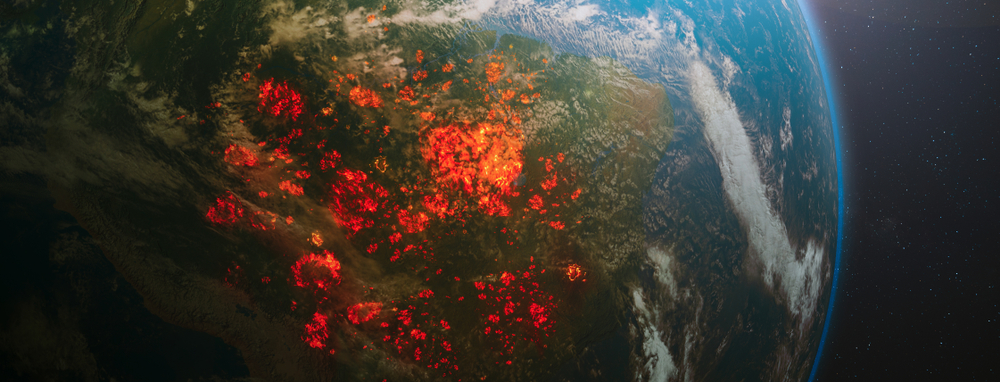
Of course, the climate is constantly changing in the past.The earth was experiencing both warming and freezing. And for 4.5 billion years of the existence of the Earth, it was both much warmer and much colder than it is now. However, even if you collect all the available values of the global temperature in one timeline, you can see that the growth rate has never been so high.
So the problem is mainly due to the too rapid climate change.
Why is warming even by 1.5 degrees dangerous?
Many people hear the words «global warming» think about the hottest days of summer, when an increase of one or two degrees will, of course, lead to inconvenience, but does not seem like the end of the world.
Reaching global warming of 1.5 degrees does not mean that average temperatures in some places will not rise significantly above this number. Again, this is just the global average.
In addition, as the average temperature risesbursts and heatwaves will be much, much higher than just 1.5 degrees, according to the Intergovernmental Panel on Climate Change (IPCC). In other words, if global warming reaches 1.5 degrees, the highest of the warmest temperatures will rise and many (other) places will become dangerously hot. "
And what will happen with a warming of 1.49999999 degrees?
Another important thing to understand inregarding global warming, is that not everything up to 1.49999 degrees is rainbows, unicorns and free ice cream for everyone. Once the planet crosses the 1.5 degree line, the Four Horsemen of the Apocalypse will not begin to destroy the Earth. This is happening now.
The climate crisis has already arrived.Today, warmer temperatures are already causing droughts and destroying crops. The Himalayan glaciers, which provide water for about 240 million people, are already melting. Storms like Hurricanes Harvey, Irma and Marie are already getting stronger and more destructive due to climate change. The list goes on.
All of these impacts (and many more) affectcomplex systems. Some are layered on top of each other. Some don't. But they are all united by warmth. Warmth — it is a factor that disables natural systems with their fragile system of checks and balances.
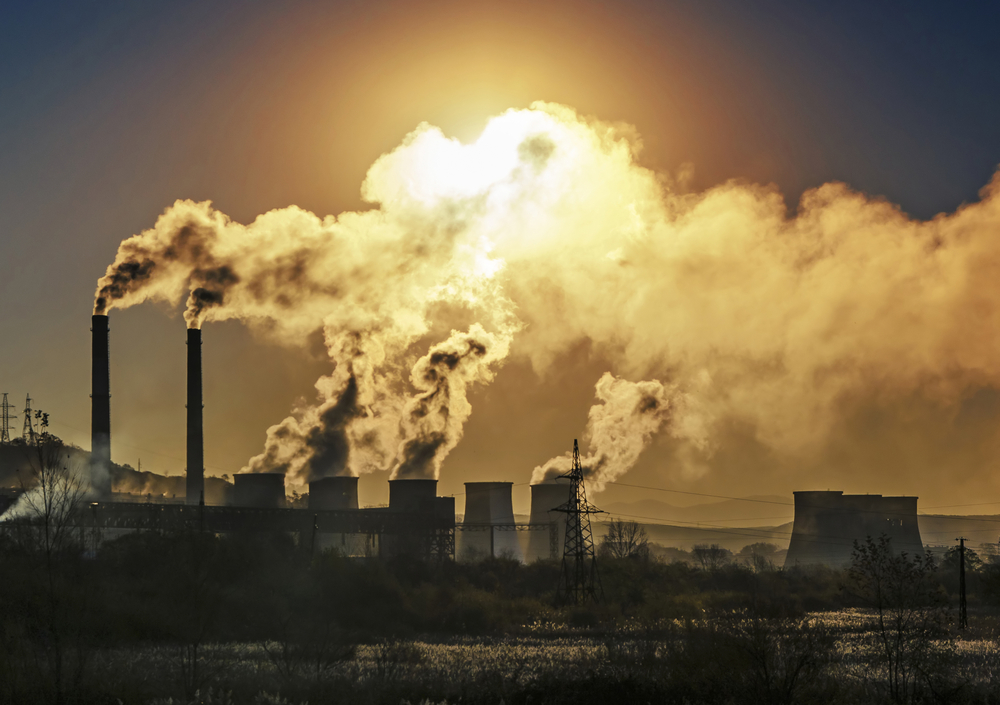
A simpler version is that thanThe more heat is added to the Earth's climate system, the more natural systems become unbalanced. The more unbalanced natural systems are, the more destruction and suffering they lead to.
Well, global warming is about 1.5a degree is enough to push many of the natural systems that support humans to a dangerous turning point. Consider 1.5 degrees not as an absolute line in the sand, but as a general indicator of where many climatic impacts go from destructive to catastrophic. This is a sign on the door that leads to a very dark place where no one wants to go.
“Is it actually getting warmer? It’s always cold outside!”
Between the polar and equatorial parts of the planetthere is a natural difference in average temperatures: it is warmer at the equator, colder at the poles. One would expect that with a general increase in temperature on the planet, this temperature difference will simply "rise" - it will get warmer everywhere. However, in fact, the temperature line is not only rising, but also straightening - the difference between the equator and the poles is getting smaller, the average annual temperature in the Arctic and Antarctic is growing faster than at the equator. According to Roshydromet estimates, climate warming on the territory of Russia is about 2.5 times more intense than the global average.
Climate change, however, does not meana simple increase in temperatures: it can be accompanied by waves of cold that arise and are established over large areas. This process is associated with a change in the movement of air flows at the poles, which, in turn, can be triggered by climate change. However, this particular connection is not yet an established fact, but only a subject for research.
What happens if the temperature rises by 1.5-2 degrees? Will people die right there?
No. But that's not the problem.
When warming by 1.5 degrees Celsiusclimate-related risks to human health, livelihoods, food security, human security, water supply and economic growth will increase. Disadvantaged and vulnerable populations, some indigenous peoples and communities whose livelihoods are based on agriculture or coastal resources, will be most at risk. Regions at greatest risk include arctic ecosystems, drylands, small island developing states and least developed countries. Certain groups of the population will face increasing poverty and disadvantage. Limiting warming to 1.5 degrees Celsius could reduce the number of people at risk of climate-related poverty by several hundred million by 2050.
- Disease and mortalityheat related
Cities will experience the worst heatwaves due to the urban heat island effect, which retains heat more than adjacent rural areas.

Land surface type and temperature maps forBaltimore, Maryland, show a strong relationship between development and the urban heat island effect. Land temperatures in the densely built city center are 10 degrees Celsius higher than the surrounding forested landscape. A special IPCC report states that cities will experience the worst heatwave effects due to the urban heat island effect. Credit: NASA Earth Observatory.
Impact will vary depending onregion due to many factors, such as the ability of the population to adapt to changes in the environment, the vulnerability of the population, the built environment and access to air conditioning.
The elderly, children, women, people with chronic illnesses, and people taking certain medications will be at greatest risk.
- Vector-borne diseases
More and more people are dying from vector-borne diseases like malaria and dengue, and the situation will worsen with warming of 1.5 degrees.
- food security
It is expected that with a warming of 2 degrees CCelsius, food security will decline from 1.5 degrees, the authors of the report say, with the greatest risks arising in the African Sahel, the Mediterranean, Central Europe, the Amazon, and Western and Southern Africa.
The yield of crops such as corn, rice,Wheat and other grain crops will be smaller at 2 degrees warming than at 1.5 degrees, especially in sub-Saharan Africa, Southeast Asia and Central and South America.
Rice and wheat will become less nutritious. Predicted food availability during warming. Seven to 10 percent of the rangeland population will die.
And what awaits nature?
Many natural systems will cross the point of no return, causing lasting change and transforming life as we know it.
Such a sharp rise in sea level can havedevastating consequences: the inhabitants of the planet risk losing about 1.79 million square kilometers of land, and up to 187 million people will lose their homes. Small island states in the Pacific will be flooded and uninhabited. Such changes over the next 80 years will cause serious social unrest, experts say.
In addition, limiting warming to 1.5degrees Celsius will reduce rising ocean temperatures and associated increases in ocean acidity and decreased oxygen levels, which pose significant risks to marine biodiversity, fisheries and ecosystems, the report says.
The oceans will become more acidic due to highercarbon dioxide concentrations at 1.5 degrees warming, which will become even higher at 2 degrees warming, which will adversely affect a wide range of species, from algae to fish. Oxygen levels in the ocean will also decrease, leading to a number of "dead zones", areas where normal ocean waters are replaced by waters with low oxygen levels that most aquatic organisms do not support.
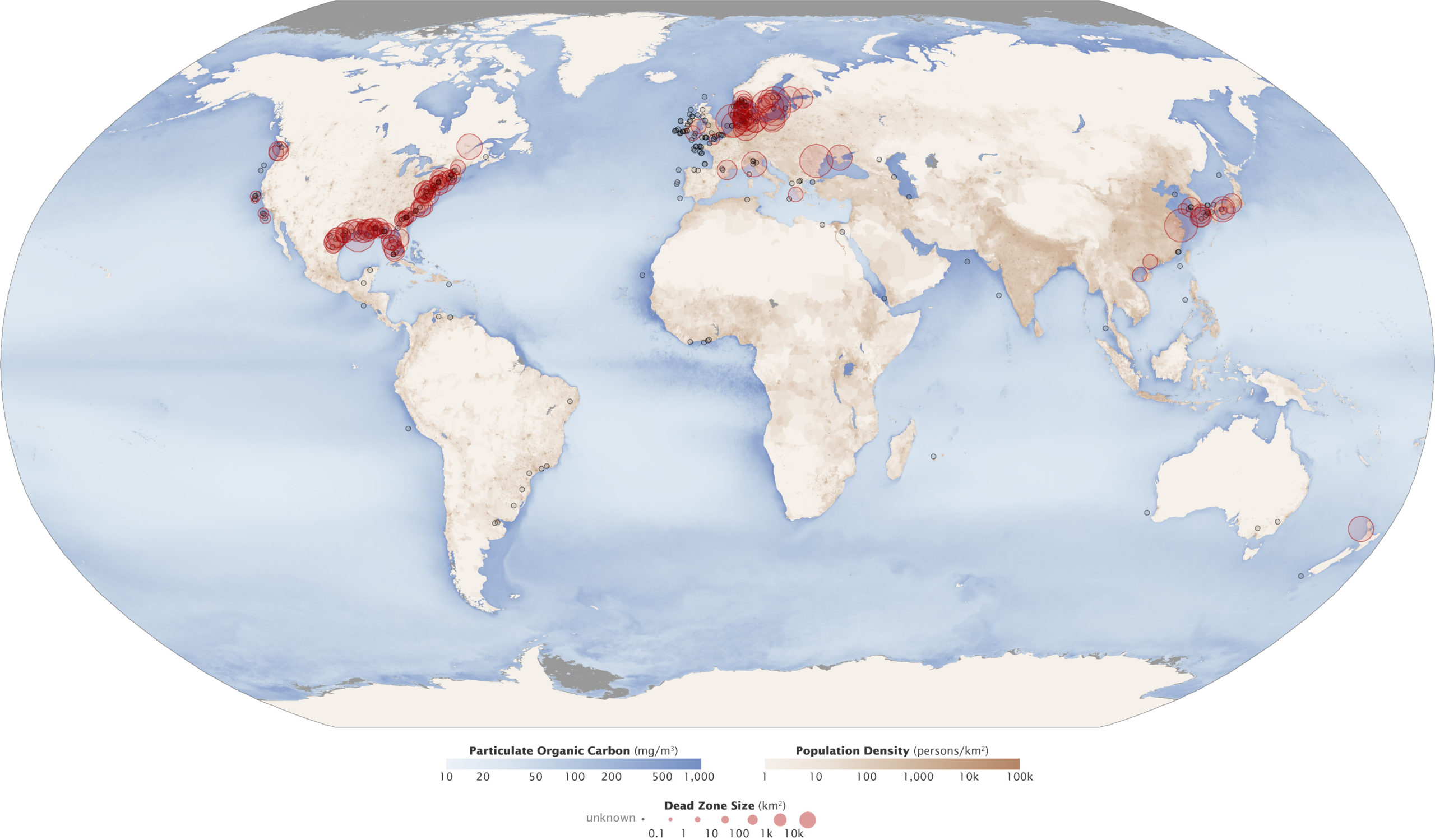 Size and number of marine dead zones —areas where there is so little dissolved oxygen in the deep water that sea creatures cannot survive — have grown sharply over the past half century. The red circles on this map show the location and size of many of our planet's dead zones. The black dots show where dead zones were observed, but their size is unknown. Credit: NASA Earth Observatory.
What will happen in warm countries?
Yes.ecosystems around the world will collapse. It will become more difficult to prevent floods, clean water and maintain soil fertility. A temperature increase of 1.5 to 2 degrees will lead to an exponential increase in the number of hot days per year. In some parts of the world there will be much less rain, in others - vice versa. Residents of southern Africa and the Mediterranean coast will be hit hardest, where drought can dramatically change flora and fauna.
What will become of the colder parts of the planet?
With a warming of 1.5 degrees, the planet will lose70–90% of coral reefs that are already dying. This percentage could be catastrophic for millions of ocean creatures, but in the long run there will be a chance to save ecosystems. If the Earth gets 2 degrees warmer, 99% of the reefs will disappear, which will lead to the extinction of thousands of animal species.
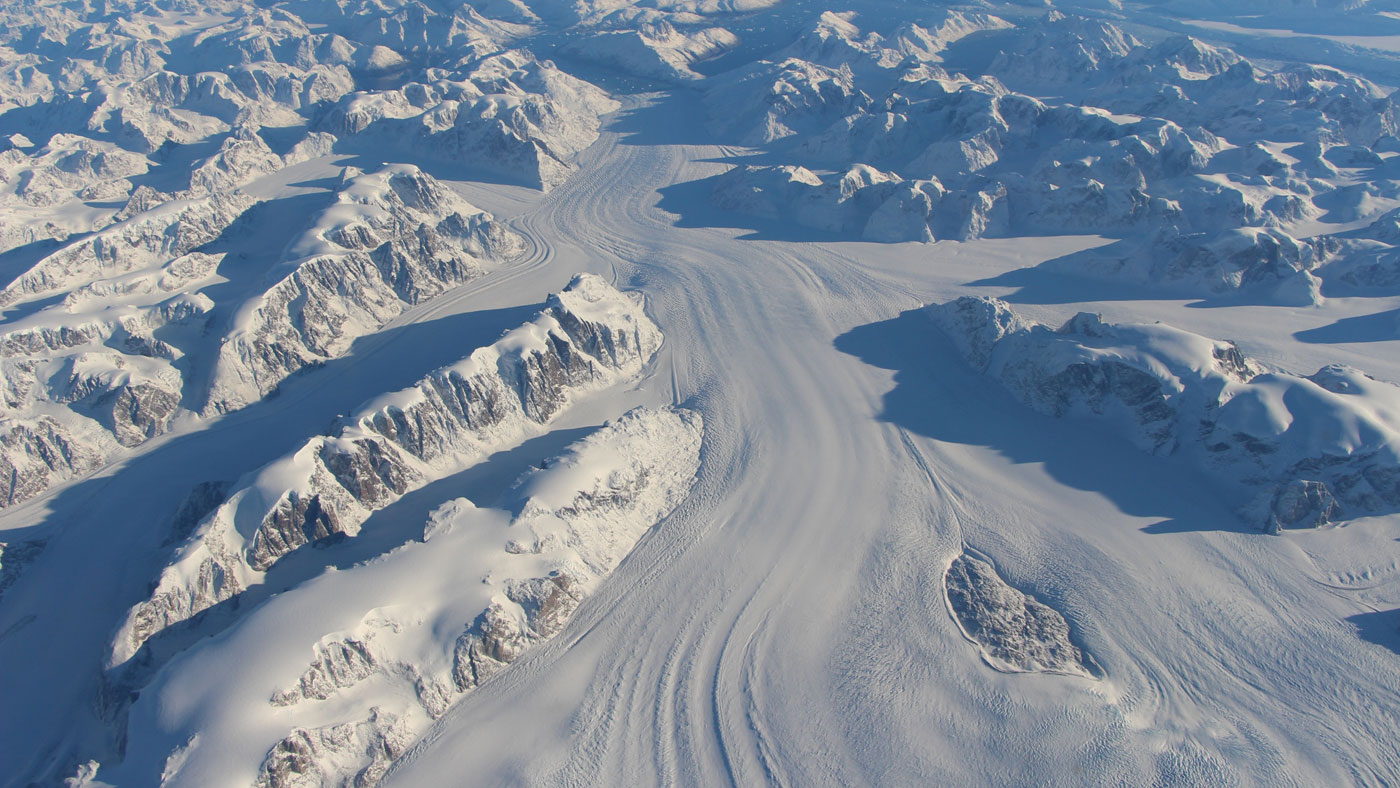 The surface texture of smooth ice, such as the Heimdal Glacier in southern Greenland, allows Landsat 8 to display nearly all of the world's current ice. Photo: NASA
Permafrost existed in separate cornersEarth for hundreds of thousands, perhaps millions of years. If the planet is not allowed to heat above 1.5% degrees, then the probability of glaciers being preserved will be 70%. But at 2 degrees, the ice will melt even in the Arctic. Polar bears and other species of northern animals will be forced to struggle to survive in unnatural conditions. Studies have shown that at 1.5 degrees of heating by 2300, the sea level will rise by 1 meter. At the same time, there is a high risk of destruction of the ice surfaces of Greenland and West Antarctica. If the temperature rises faster, this ice will melt and the sea level will rise to 2 meters in 200 years. Millions of people will be faced with annual flooding, and many residents of coastal cities will have to think about moving.
This visualization begins with a demonstrationthe dynamic beauty of Arctic sea ice as it responds to winds and ocean currents. Research into the behavior of Arctic sea ice over the past 30 years has led to a greater understanding of how this ice survives from year to year. The following animation shows the age of the sea ice, with younger ice being darker shades of blue and the oldest ice being a brighter white. This visual representation of ice age clearly shows how the amount of older, thicker ice changed between 1984 and 2016. Photo: NASA Scientific Visualization Studio
Marine ecosystems.According to the report, with warming of 1.5 degreesCelsius, the geographic ranges of many marine species will shift to higher latitudes, new ecosystems will emerge, and greater damage to marine ecosystems will occur. This movement of species will have mostly negative impacts on people, but short-term benefits will be achieved in some areas, such as high-latitude fisheries in the Northern Hemisphere. These risks are higher at 2 degrees Celsius of warming. Fisheries and aquaculture will be less productive.
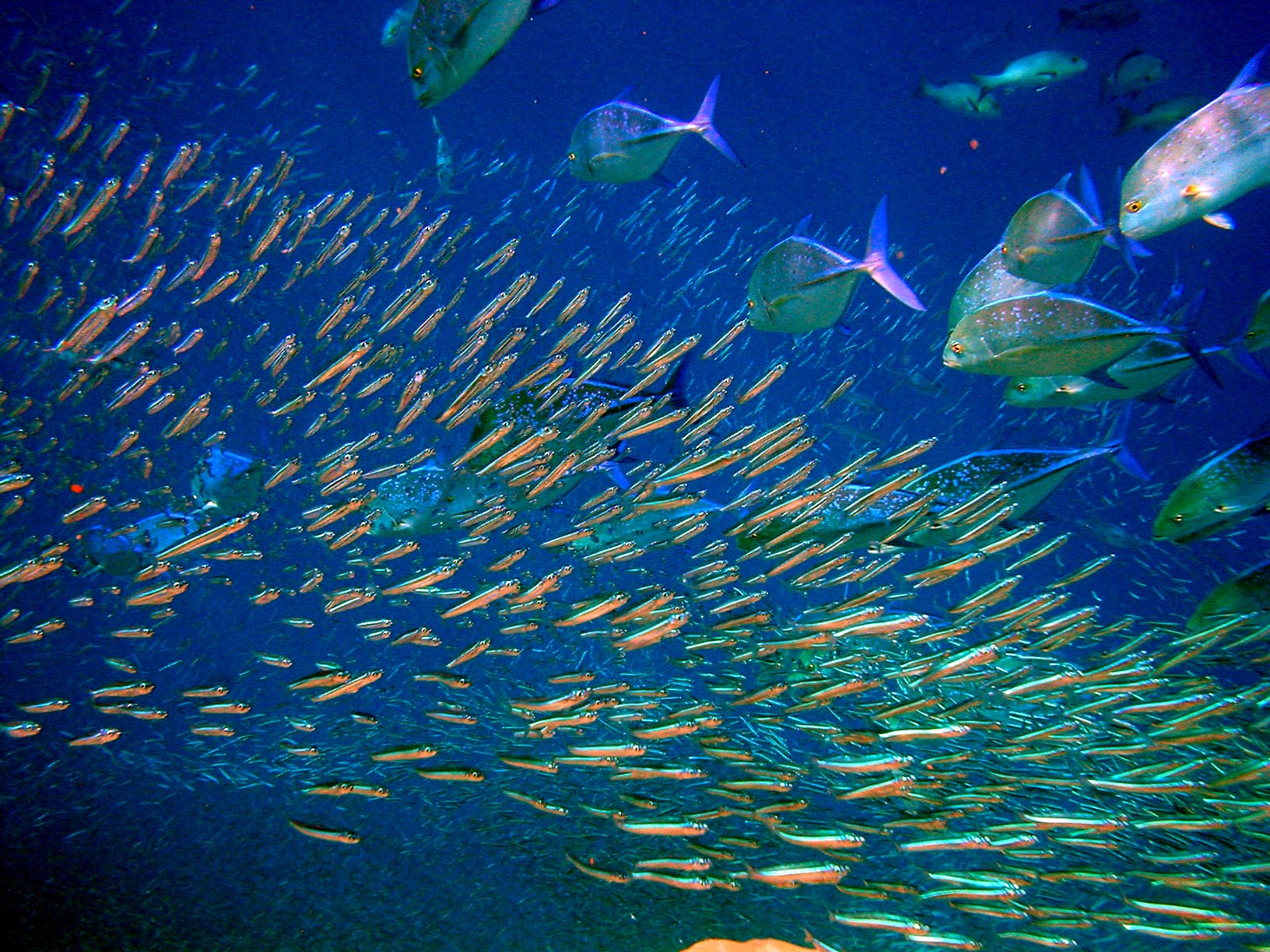 Fish in Mufushiu Kandu, Maldives.With a warming of 1.5 degrees Celsius, according to a special IPCC report, the geographic ranges of many marine species will shift to higher latitudes, new ecosystems will appear, and more damage will be done to marine ecosystems, according to the report. These risks are higher at 2 degrees Celsius warming. Credit: Bruno de Giusti [CC BY-SA 2.5 it (https://creativecommons.org/licenses/by-sa/2.5/it/deed.en)]
Even if the water rises only a meter, what is it?
Over the past 100 years, sea levelrose by about 20 centimeters, which has already led to flooding of many coastal areas. But what happens if the waters of the world's oceans become one more meter higher? In short, a huge part of the world's population will suffer.
 Tavarua Island, Fiji CC BY-SA 3.0
The rise in global sea levels comes firstthreatens countries with low-lying coastlines, as well as numerous island states that may be completely or partially submerged. According to experts, the risk zone includes many islands of the Indian and Atlantic oceans, small atolls of Oceania, a significant part of the coast of the USA, Great Britain, the Netherlands, Denmark, Italy, Spain, Germany, Poland, Ukraine, Russia, as well as some countries in Southeast Asia.
Maldives
Pessimistic forecasts suggest that most of the local atolls will disappear under water in the coming decades.
Venice
According to scientists, the city will become uninhabitable by 2028, and by 2100 it will almost completely sink.
Miami
Vulnerable to global warming cityWhat makes it special is its geology: Miami Beach sits on porous limestone that absorbs incoming water, after which it gushes out from all the sewage drains. The region's topography, which does not rise above two meters, only aggravates the situation. Another additional meter threatens to deprive this coastal region of life.
Netherlands
Thanks to data from the European SpaceThe agency found that in parts of the Netherlands, North Sea waters rise at a rate of two centimeters per year. Scientists predict that if the level of coastal waters rises by at least one meter, the largest cities in the country - Amsterdam and The Hague - will be submerged.
Bangkok
Residents of the Samut Prakan area, whose houses were built near the river, are already forced to walk ankle-deep in water. A significant part of Bangkok is already below sea level.
And what awaits Russia?
Russia ranks fourth in terms of emissionsgreenhouse gases. According to Roshydromet, in our country, warming occurs on average 2.5 times faster than the rest of the world. The coastal regions are at risk of perishing from floods, and the middle lane will suffer from droughts and heat waves. If the rate of temperature rise is not stopped, a collapse in agriculture is inevitable due to an increase in the number of pests, as well as the death of representatives of flora and fauna as a result of large-scale fires and melting of glaciers.
In addition, the situation with ticks will worsen.Increasingly more frequent than previously warm winters and springs lead to the fact that a larger percentage of ticks successfully overwinter, their numbers grow, and they spread over an ever larger territory. Climate change forecasts for the coming decades clearly indicate that the trends will not change, which means that the ticks themselves will not crawl away and die, and the problem will only worsen.
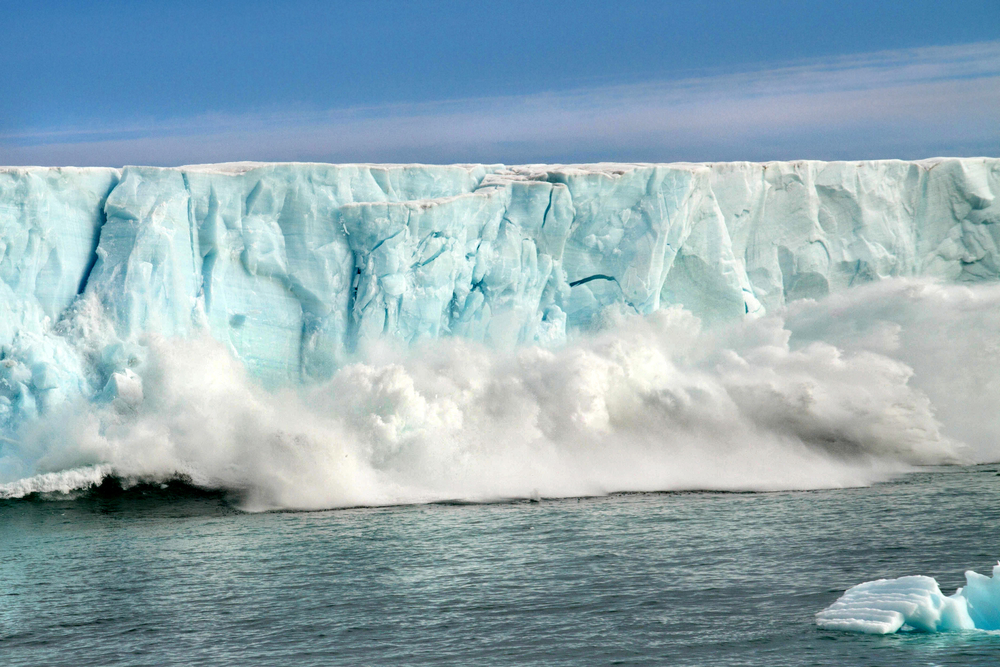
By the way, the climate in Russia has been warming almost twice as fast as in the whole world for a century.
At the same time, climate warming leads to an increase in the amount of snow in Siberia
This is the era of global warming, and asAs the air temperature increases, the moisture content of the air masses also increases, therefore, in cold regions, the amount of snow falling increases. This testifies to the great sensitivity of the snow cover to any changes in the composition of the atmosphere and its circulation, and this must be borne in mind when assessing any anthropogenic impact on the environment.
Fires will occur more and more frequently.
Climate change may lead to water shortage in the southern regions of the Russian Federation
In a number of densely populated regions of Chernozemthe center of Russia (Belgorod, Voronezh, Kursk, Lipetsk, Oryol and Tambov regions), South (Kalmykia, Krasnodar and Stavropol Territories, Rostov Region) and southwestern Siberian (Altai Territory, Kemerovo, Novosibirsk, Omsk and Tomsk regions) federal districts RF, in the coming decades, we should expect a decrease in water resources by 10-20%
Read also
Elon Musk: the first tourists to Mars will die
The first accurate map of the world was created. What's wrong with everyone else?
The first electric motor with 95% efficiency appeared