Engineers from the University of Waterloo have developed a drone-based Wi-Peep device that can monitor
Wi-Peep exploits a loophole that researcherscalled "polite Wi-Fi". Even if the network is password protected, smart devices will automatically respond to contact attempts from any device within range. Wi-Peep sends multiple messages to a device during a flight and then measures the response time for each message, allowing the device to be located within a meter.
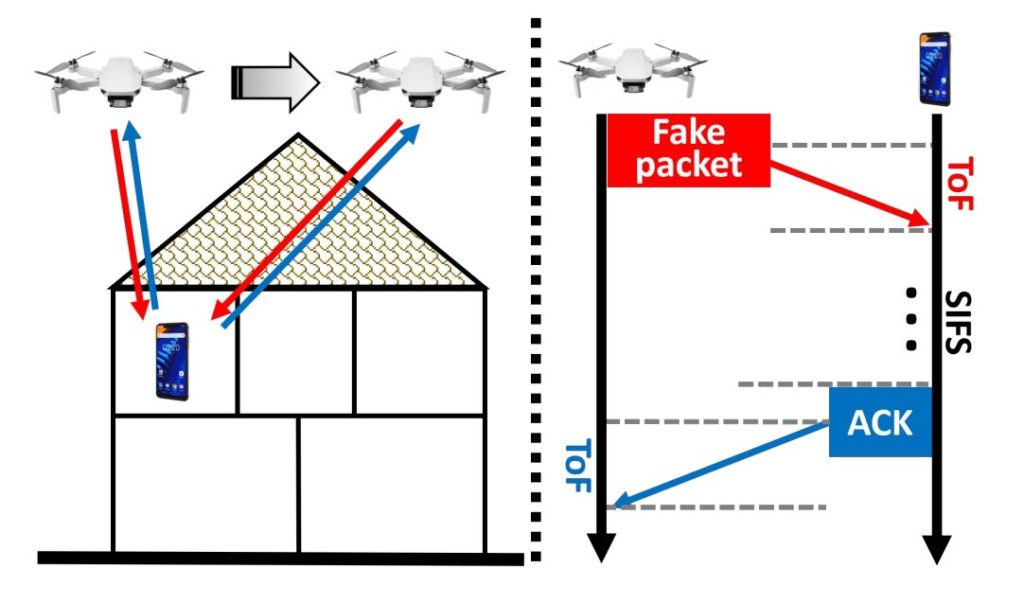 How Wi-Peep works. Image: Ali Abedi, Deepak Vasisht, MobiCom ’22: Proceedings of the 28th Annual International Conference on Mobile Computing And Networking
The ability to use Wi-Fi for surveillance is notnew, scientists say. But previous developments required expensive devices and were not available to the average buyer. Wi-Peep engineers assembled using a regular drone bought from a store and additional equipment for $20.
The researchers created Wi-Peep to test for the vulnerability and availability of the technology. The results showed that anyone with the right experience could easily create such a device.
Using similar technology, you cantrack the movements of security guards inside the bank by monitoring the location of their phones or smart watches. Similarly, a thief can determine the location and type of smart devices in a home, including CCTV cameras, laptops and smart TVs, to find a suitable candidate for hacking.
Ali Abedi, study co-author
Scientists are calling on wireless network equipment manufacturers to randomize response times until the vulnerability is fixed globally.
Read more:
Chinese reusable spacecraft launched a mysterious object into orbit
An ancient stone from a cemetery, which is 1,500 years old, “broke” the history of the Celts
Scientists have seen what is on the territory of the Mayan capital. The find surprised them.