Iranian drones have been talked about for more than a month, but they have only just begun to be used. What did Russia get in the end?
Table of contents
- Iran has a UAV .. what? - Yes!
- Iranian drones for Russia
- Shahed-136
- Mohajer-6
- Shahed-129
- Why?
When our president went on a visit to Iran, the eviltongues began to speak maliciously - they say, he goes shopping, buy Iranian drones. Then it seemed strange: Iran, although not the poorest and most backward country, is under a bunch of sanctions, with the wildest social gap between rich and poor (much more serious than in the Russian Federation, no matter what anyone says), and infinitely far from high technologies - well, what kind of UAVs are there?
But it turned out to be no laughing matter - Iran hasnot only the notorious copy of the American Predator, but a very serious line of drones for various purposes: reconnaissance, reconnaissance-strike, loitering (kamikaze drones), etc. At the same time, the volumes are amazing - many models of rather heavy vehicles exceed hundreds, while in this they have already been successfully tested in battles in Syria and actions against Israel.
How did it happen? What will Russia get or has already got from this? Are there any results? Let's talk...
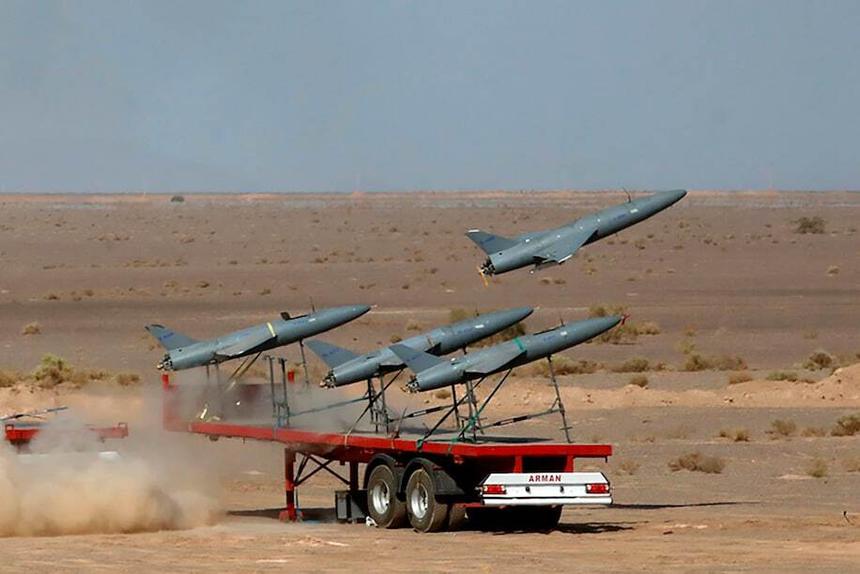
Launching Iranian drones from a civilian trailer - well, where to go?
Iran has a UAV .. what? - Yes!
In reality, the Iranians took up drones back in the yearsthe Iran-Iraq war in the 1980s, based on the experience of the USA and the USSR available to them. And the first drone was HESA Ababil - something in the spirit of the Soviet Pchela-1T, which was used for reconnaissance, guidance and adjustment of artillery and MLRS.
Yes, imagine - Iran has its ownaircraft industry, it is capable of producing 3/4 generation fighters based on the American Northrop F-5 fighter. Not Allah knows what, but for Iranian military tasks it will fit, although against the background of the Israeli park it, of course, looks very weak - but these are their own planes.
Thus, it is not surprising that there isUAV. However, we do understand that such devices are just the tip of the iceberg, behind which stands the radio engineering, instrument-making and chemical industries, capable of producing a composite case that meets modern standards and stuffing / weapons for it. And, finally, an industrial base capable of mass-producing this.
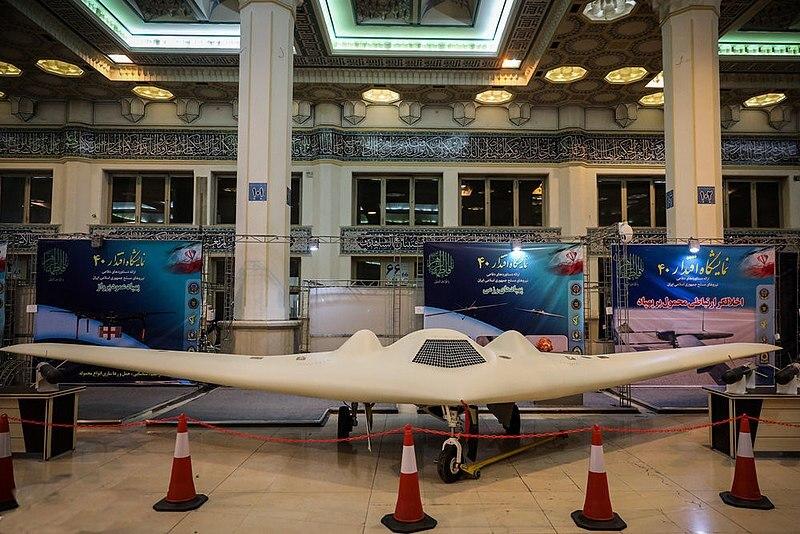
A promising Iranian heavy stealth UAV Shahed-171, licked from the American RQ-170 a pretty penny
Of course, the blockade of Iran is not total - finally, there is smuggling and trophies. But after all, you need to have a scientific and engineering base in order to copy this - as it turned out, the country also has it.
Today, Iran has a couple of dozenvarious UAV complexes - both in serial and design or test status. Of course, we will not fool our heads with a review of them, these are devices of similar classes from Israel or the USA (well, or Turkey). We are interested in what could or can get into the Russian army.
Iranian drones for Russia
Of course, this is supposedly classified information, so don't take it for granted. But you can see for yourself - sooner or later there is a lot of food for thought, and we have something to write about.
More or less, you can specifically talk about the three types of Iranian drones that are now fighting you know where.
Shahed-136
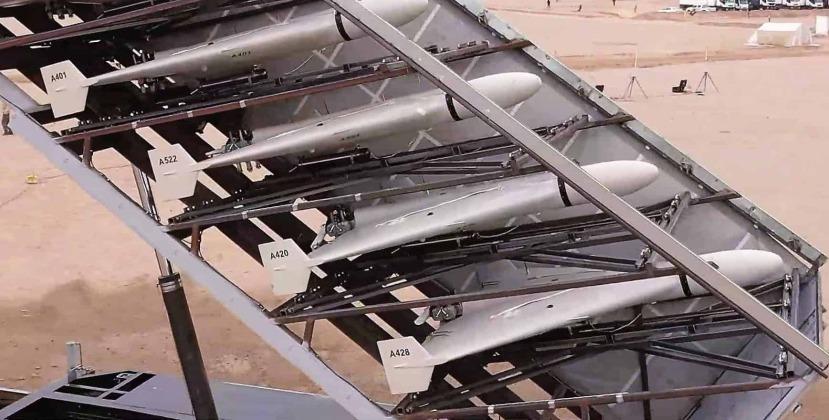
Shaheds in a launcher "clip" for 5 pieces
This car is the most talked about right now.This is a classic kamikaze drone or loitering ammunition. Relatively modern "swarm" type UAVs, they are launched from an installation designed for five pieces. Shooting and climbing due to a small rocket engine, after which the rocket is separated, and the drone flies due to a simple two-bladed propeller.
The length of the glider is 3.5 m, and the span is 2.5 m, take-offthe mass is about 200 kg, and the warhead is estimated by experts at 15-22 kg, based on the capabilities of analogues, but adjusted for a probably more backward power plant.
The capabilities of the drone are also a subject of discussion:some military experts are confident that it is capable of active target designation by radar radiation, which makes it an air defense breakthrough weapon. Only now there are doubts that Iran today has access to such technologies and components for them.
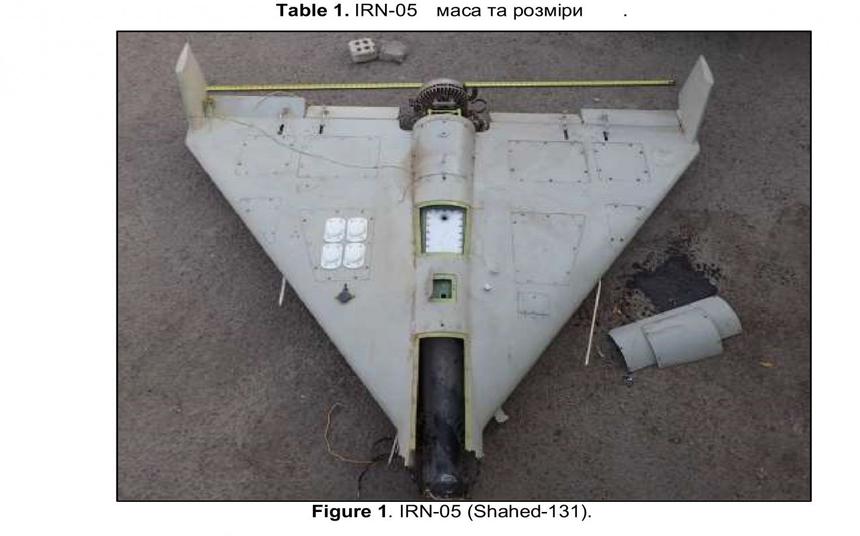
Downed Shahed 131
After the news about the downed "Shaheds" appearedinformation that a significant part of the electronic components in it are of civilian origin (recall, Iran has been under sanctions for many decades), and only a simple GPS receiver has been installed from the guidance systems, and it is also civilian. The control unit consists of the same processors from Texas Instruments, openly sold.
Information about the resistance of these drones to electronic warfare is alsonot confirmed - there is a simple inertial system, in case of distortion of GPS signals by enemy electronic warfare, it allows you to maintain an approximate course and height. However, unreliable wind corrections and calculation errors by the inertial system make deviations critical - up to 250 meters at a distance of 5 km.
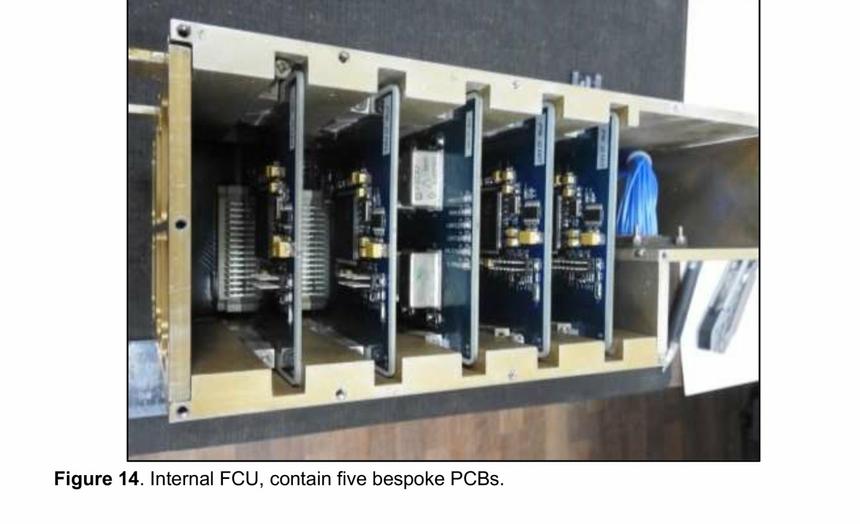
Civil processors
As a result, this is a rather primitive drone,low resistance to interference, capable of attacking only stationary targets. In addition to it, Shahed-131 was also seen in Ukraine, a little smaller in size and dimensions (by about 30%), on similar components - probably either a predecessor, or a cheaper and mass version.
They started talking about them after they were used in Yemen(a cassette for 5 Shaheds can be put on any truck), and in Ukraine, these drones attacked objects in Odessa, Dnipro and Nikolaev, as well as the object of the Ukrainian Navy in the Odessa port. Apparently, their range is about 900 km.
Mohajer-6
Not to beat around the bush - this is Iranianan analogue of Bayraktar, or, to be precise, Bayraktar TB-2. In general, this is an ordinary reconnaissance and strike drone, all of which are descended from the American MQ-1 Predator.
Mohajer is somewhat larger than "bayraktar" - length7.5 meters, but the wingspan is narrower, 10 meters (Bayraktar 12m). The take-off weight is also standard for the class - 650 kg, of which 100 kg is the payload (Bayraktar has 150 kg), of which 55 kg is the guidance and target designation module. According to experts, it is Mohajer's weapons that are limited to 40 kg.
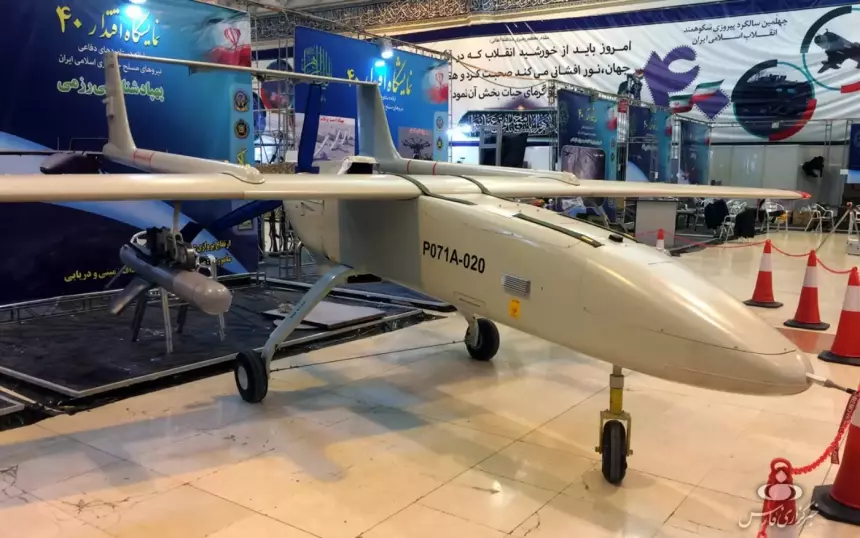
Mohajer-6
Mohajer is inferior in terms of ceiling, in speed (but thisnot so critical), and the weakest point is the flight time, only 12 hours, while all analogues of advanced countries can last about a day or more (Bayraktar - 27 hours).
Presumably, such "subsidence" of characteristicsrelated to the same problem - the dominance of civilian components, and in general, this is a typical strike and reconnaissance drone of the 1990s. For today's standards, the model is already very compromise.
Mohajer-6 was used by the IRGC (Guardian CorpsIslamic Revolution) against the active opposition in the south of the country, as well as against various militants. In Ukraine, its use has also been recorded today.
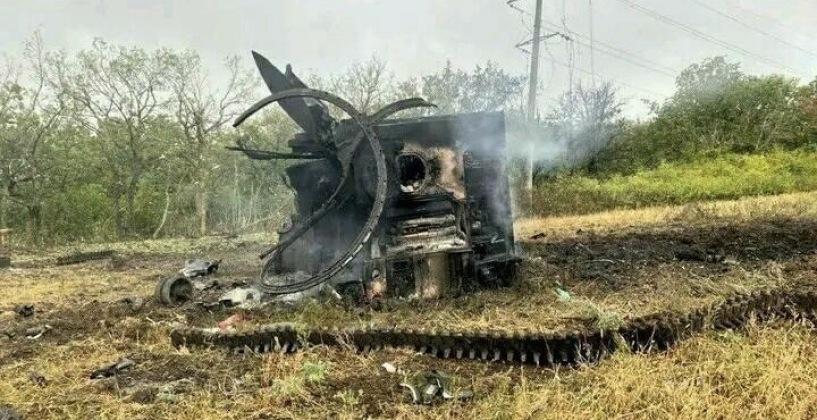
According to Military Watch Magazine, this is a destroyed self-propelled gun of the Armed Forces of Ukraine, found by Mohajer and destroyed by Shahed
Its shock functions are still in question, but there areinformation that they were used as jammers. It is unlikely that the Iranians have such technologies, but it cannot be ruled out that it could have been “modernized” by the forces of the Russian Federation itself.
At the same time, it is known for sure that these machines serveas a flying "command post" for Shahed-136|131, because their own ammunition load is small. Despite the fact that it was produced by Qods, their competitor, the state-owned company HESA, is mass-producing, which is why it was probably possible to synchronize the operation of the drones.
Mohajer finds targets and transmits data about them to the "shaheeds" swarming somewhere nearby. It can also serve as a classic reconnaissance and guidance UAV for artillery.
Shahed-129
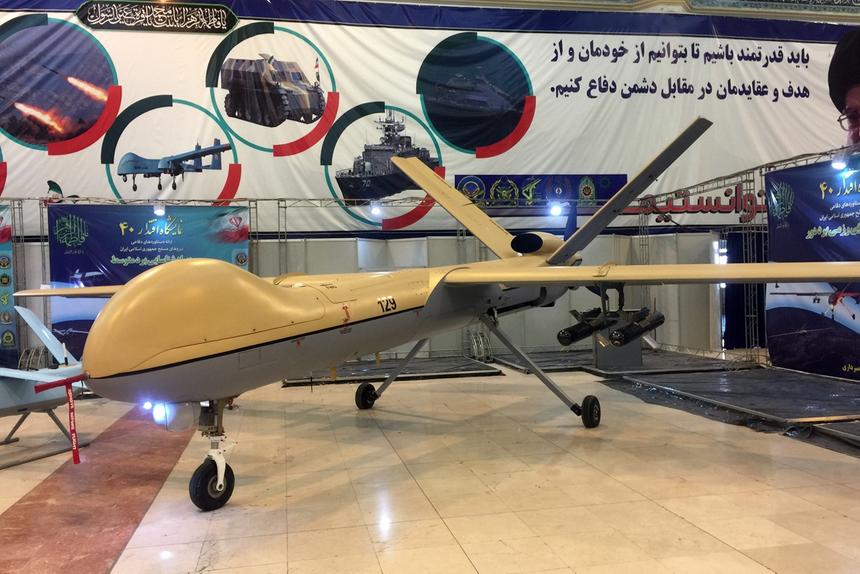
An early example of the 129th
This car was the most talked about in thethe beginning of the epic with Iranian drones. It is considered a detailed copy of the MQ-1 Predator, which crashed in Iran, and all its stuffing went almost intact, which made it possible to allegedly copy to zero.
Other sources say the similaritiesend in appearance, and the hardware complex and other components are licked from the Israeli Hermes 450, which the Iranians got in the same way. Data about the capabilities of this UAV is the most mysterious, but they talk about a payload of 400 kg and flight autonomy of 24 hours - like in the best houses of Paris Istanbul.
At the moment, it is not known whether the Russian Federation succeededget at least some cars of this type. Iran itself is armed with them, according to some sources, about 30-40 pieces, and they are released only for the IRGC formations, which are an "army in the army", that is, directly subordinate to the country's leaders.
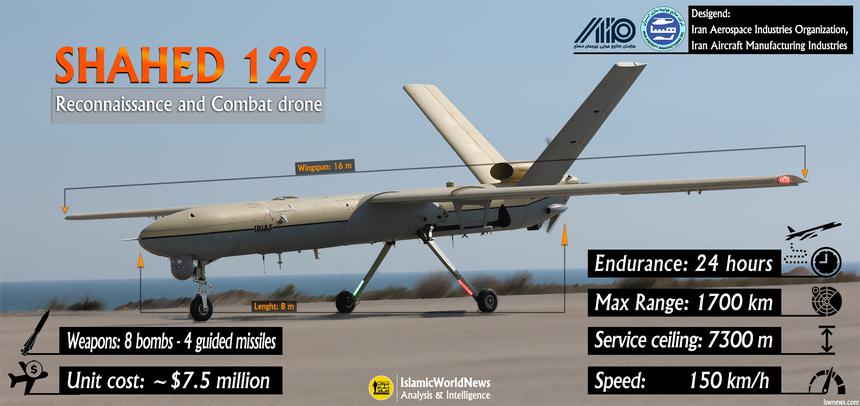
Late one looks more like Hermes 450
Why?
In general, the design of Iranian UAVs is quite logicaland predictable - sanctions prevent the research and production complex from gaining access to a modern component base, which is why they have to be assembled almost on orders from Aliexpress, and apparently they are 90% filled with imported civilian spare parts.
So this is not an answer to the Turks, who could notonly to copy, but also to start their own development of the industry, which is why Turkish drones are a separate and promoted brand, although the Americans and Israelis make cars cooler.
The production capacity is also questionable.Iran: will they be able to completely meet the needs of the Russian troops in Ukraine? Will Iranian drones made of civilian components with limited capabilities achieve parity with the Armed Forces of Ukraine and other formations stuffed with modern Western equipment?
Only one thing is obvious - the Russian military-industrial complex has not yetcan offer more successful replacements for drones of this class. Why was Iran, a country impoverished under sanctions, able not only to assess the importance of UAVs in time, but also to develop and mass-produce under sanctions that the Russian Federation did not have until recently? Yes, from "shit and sticks", but their army is tightly covered by UAVs, including strike-type and loitering, as befits a modern army.
Russia, with its radically more powerfulscientific and technical potential, to be honest, is still lagging behind in this direction: for now, the army has to be content with copies of light Israeli reconnaissance drones and Orlan-10 multifunctional reconnaissance aircraft, which, however, are in short supply. Let's hope that the conclusions have already been made and it will be better in the future.