What is the problem?
Technologies - from steam engines to robotic welding machines and ATMs
Many types of labor have become easier to replace with machines.The prosperity of companies increases with less labor costs. However, it may happen that people want to work, but they will not have such an opportunity, experts from MIT warn.
Automation threatens all types of jobs, from drivers to waiters and paramedics.
From machines to algorithms
Even earlier, when the machines came into production,and the Luddites protested and destroyed them, the mechanisms (which were still far from robots) took away the rough physical work from people. The British government had to brutally suppress the uprising of the dissenters, which grew into a real war with the machines.
Be that as it may, now the conveyorproduction is no longer complete without machines. The next step is intellectual work, for which algorithms are already undertaking. They find application in processing large amounts of information. They are ready to perform the most routine, monotonous, hard work without rest, from which a person quickly gets tired and his efficiency drops. At the same time, the performance of a robot or AI is stable.
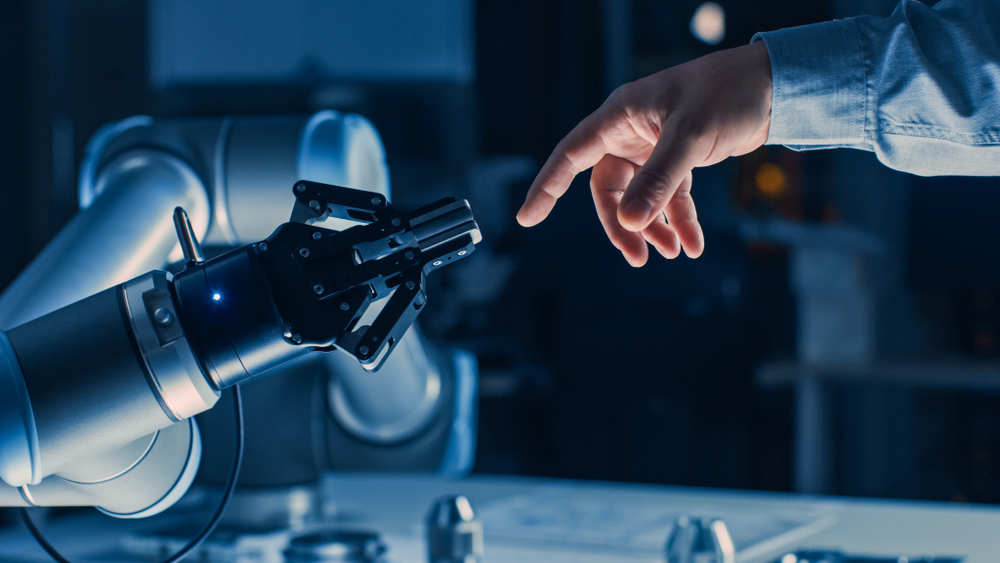
Here is the right place for employees to worryelectronic media. The Los Angeles Times, Associated Press, Forbes and other well-known media are already introducing algorithms to quickly generate financial reports, sports scores or weather information.
Google and Tesla are actively working to improve the functionality of their self-driving cars.
And, if now algorithms are only part of the overall working ecosystem, then robots, whose functionality is improving every day, are becoming a real problem and are ready to completely replace people. How?
Which companies are replacing humans with robots?
When talking about work for robots, oftenuse the "4D" formula: Dull, Dirty, Dangerous, Dear - routine, dirty, dangerous and expensive work. It was these types of activities that robots "mastered" in the first place. Today robotic couriers, loaders, and stackers are working successfully. For example, in Innopolis food and various goods are actively delivered by Yandex.Rovers.
In the USA they are used for washing dishes, making hamburgers and pizza. China already has robot police officers.
In Amazon warehouses, robots are massively replacing ordinary workers:
And in Wallmart supermarkets - merchandisers:
In the next ten years, they can replace more than 7 million employees in retail.
But today robots have come close to thoseprofessions that were considered exclusively human. For example, robotic surgeons, which work much more accurately and accurately, penetrating even thin vessels and leaving almost no holes. Or the robot lawyer from this Vice video, who found an error in the contract, while an experienced human lawyer missed it.
- Mining giantRio Tintouses self-driving trucks and drills, notrequiring the presence of human operators in iron ore deposits. Automatic trains there will soon deliver ore to a port some 480 km away. And the Port of Los Angeles is installing equipment that will cut the number of longshoremen in half.
- Back in 2017 Bank of americaopened three fully automateddepartments. Their area is 4 times smaller than usual, and there are no employees there. Customers use ATMs and have video consultations with employees from other branches. The bank's new offices mainly deal with mortgages, credit cards and car loans. Another American bank, Goldman Sachs, is also experimenting in this direction. If previously there were 600 traders buying and selling shares at the head office, today there are only two of them left. All work is carried out by programs with the support of 200 computer engineers.
- Automation has also affected the restaurant industry. Three years ago, mini-coffee shops opened in San Francisco and Hong KongCafe Xwhere drinks are prepared and servedvisitors robots. The order can be made in the institution or outside it using the mobile application. The robot prepares an espresso in less than a minute and can pour 120 coffee drinks in an hour. However, people clean and refuel the coffee machines, and also do the maintenance of the computer and software at Cafe X. For now.
- Amazon again raised the most questions with its idea to open grocery stores.Amazon Gowithout cash registers or cashiers.Two years ago, the company opened its first store without salespeople in a mini-format in its office. Already in March of this year, the first Amazon store outside the United States opened without cash registers and sales associates - in London. Customers scan a smartphone app when entering the store, take products, add them to the cart, and are automatically billed when leaving. Amazon now employs 45,000 robots, 15,000 more than a year earlier.
- Director of Information TechnologyX5 Retail GroupFabricio Granja announced a possible launch inRussia of “smart” stores based on the Amazon Go model. “I’m considering this with one company that worked with Amazon, but this is still in the discussion phase,” he was quoted as saying by Inc. Russia. Currently, Russian supermarkets actively use automatic checkout counters, which are monitored by one person. Not so long ago they were rare, but now they are found in Pyaterochka and Magnit. One of the first companies in Russia to introduce automatic checkouts was IKEA, founded in Sweden.
- For three years nowSberbank a robot lawyer is involved. With its help, over 2.5 million legal opinions were prepared over eight months of operation. The robot allows you to significantly speed up business processes and avoid errors when manually processing large amounts of data and checking information about counterparties. The process of analyzing one legal entity takes an average of seven minutes, reports the Sber press service.
- CompaniesKnightscopeAndGamma 2 Roboticsare developing security robots that are alreadymonitor the observance of order in office and shopping centers. And the startup Nightingale Security uses robotic drones that allow clients to constantly monitor an object.
How do people work with robots?
In large corporations - including Amazon -Robots and AI not only work side by side with people, but also monitor their performance. Special algorithms evaluate how well a particular employee works and even calculate his salary based on the results. The company saves up to $22 million a year at each warehouse, but the employees themselves are unhappy and even go on strike against replacing them with robots.
While Amazon employees are on strike with the slogan "We are not robots," machines are actively replacing humans, not only on the production line.
At the same time, in October 2020, it turned out that the robotization of Amazon warehouses led to an increase in injuries by 50% and increased stress on people.
At a time when robots were supposed to simplifyemployees' lives, but instead people are forced to work four times faster. According to the authors of Reveal, Amazon hides data on injuries and makes money to the detriment of workers. The publication analyzed injury data from Amazon warehouses in the US from 2016 to 2019. A serious injury is one that prevents an employee from working for several days.
According to Reveal, in 2019 Amazonregistered 14 thousand such injuries in 150 warehouses. This is a third more than it was in 2016 and is almost double the industry standard. The injury rate per 100 workers has been increasing annually since 2016. Amazon's executive director for consumer business in 2019 pointed out that robots "make people work safer," writes vc.ru. But from 2016 to 2019, the most common types of warehouses handling small and medium-sized goods, the injury rate was half that.
What's the bottom line?
Scientists are carefully studying the question of how soonthere will be a breakthrough that will allow robots to completely replace people when performing complex tasks. According to one group of scientists at MIT, the only barrier is the power of computers, but it will soon be overcome. Others believe that researchers are still far from translating common sense, thinking, and dexterity into a line of code. And without this, the power of computers will not help.
Nevertheless, the arrival of robots in the workplace,which have traditionally been assigned to a person does not mean that it will not leave vacancies in the employment market for people. Traditionally, with the arrival of machines in the place of man, absolutely new niches of employment, new professions appeared. The main thing is to be able to adapt to the spirit of the new time and progress, which can no longer be stopped.
Read more
It became clear why scientists call the wrong planets suitable for life
The first accurate map of the world was created. What's wrong with everyone else?
They support the universe: how the four main forces of nature work
Luddites - ardent opponents of the progress of the early 19th century