The wreckage of the Japanese transport ship SS Montevideo Maru, which sank during World War II
The ship was sunk in 1942 by torpedoesfrom an American submarine that did not know that the Montevideo Maru was transporting prisoners. Many of the dead were Australians, making the sinking the deadliest maritime event in the country's history.
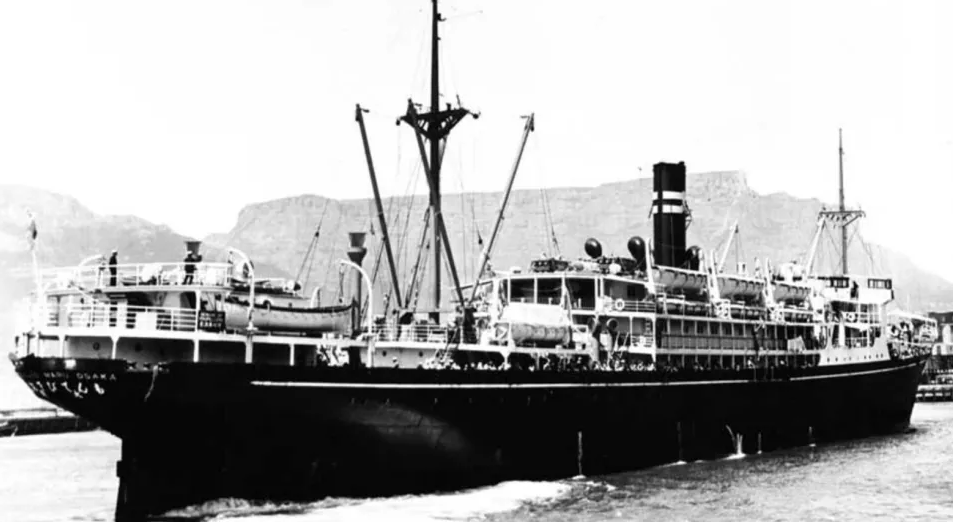 SS Montevideo Maru. Image courtesy of the Australian War Memorial
The discovery was the culmination of decadesresearch work and is very important - some of the people on the search vessel were descendants of those who drowned during the tragic sinking. “This has been their life’s work,” said John Mullen, founder and director of the nonprofit maritime archeology foundation Silentworld Foundation.
Silentworld coordinated the latest expeditionwith support from the Australian Department of Defense; Fugro, a Dutch deep-sea exploration company, provided a vessel and equipment for the search. In particular, they used multi-beam sonar to scan the seafloor (it creates a detailed map of the seafloor from the echoes of thousands of sound pulses sent at different frequencies). The likely crash sites were then examined using higher-resolution sonar on an autonomous underwater vehicle.
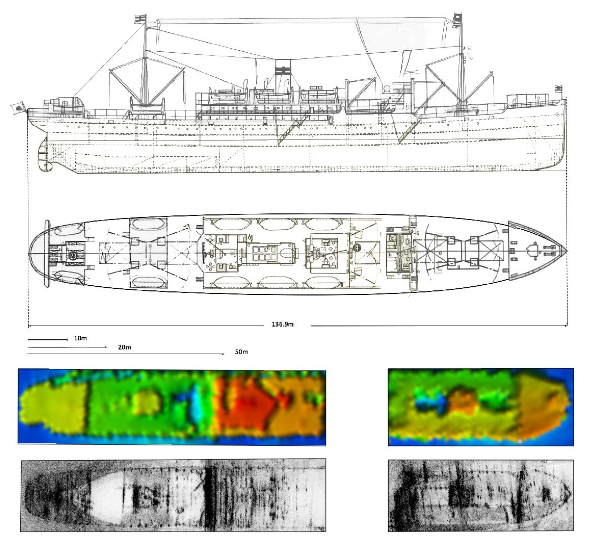 Image courtesy of the Silentworld/Fugro Foundation
As a result, the sunken ship was found at a depth of about 4,000 m in the part of the South China Sea controlled by the Philippines, about 60 nautical miles northwest of Luzon.
Read more:
A photo appeared inside the second deepest underwater sinkhole in the world
See what happened to Mercury when it got as close as possible to the Sun
Scientists have figured out the nature of the mysterious ancient "monster"
Cover image courtesy of the Silentworld/Fugro Foundation
</ p>