Vaccines against the new coronavirus are raising hopes that the pandemic can be stopped. But the level
Scientists studying the atomic structure of SARS-CoV-2 recently made a significant discovery.
"Understanding enzymes goes hand in hand withunderstanding their atomic structures - and the higher the resolution, the better. We wanted to get the best data possible,” said Natalie Strinadka from the University of British Columbia (UBC).
Using a powerful X-ray beam to studySARS-CoV-2 proteins in crystallized form, the UBC team observed for the first time the virus's main protease, an important enzyme. It allows the virus to break down large proteins - polyproteins - into smaller functional units. This process is necessary for the virus to replicate and infect other human cells.
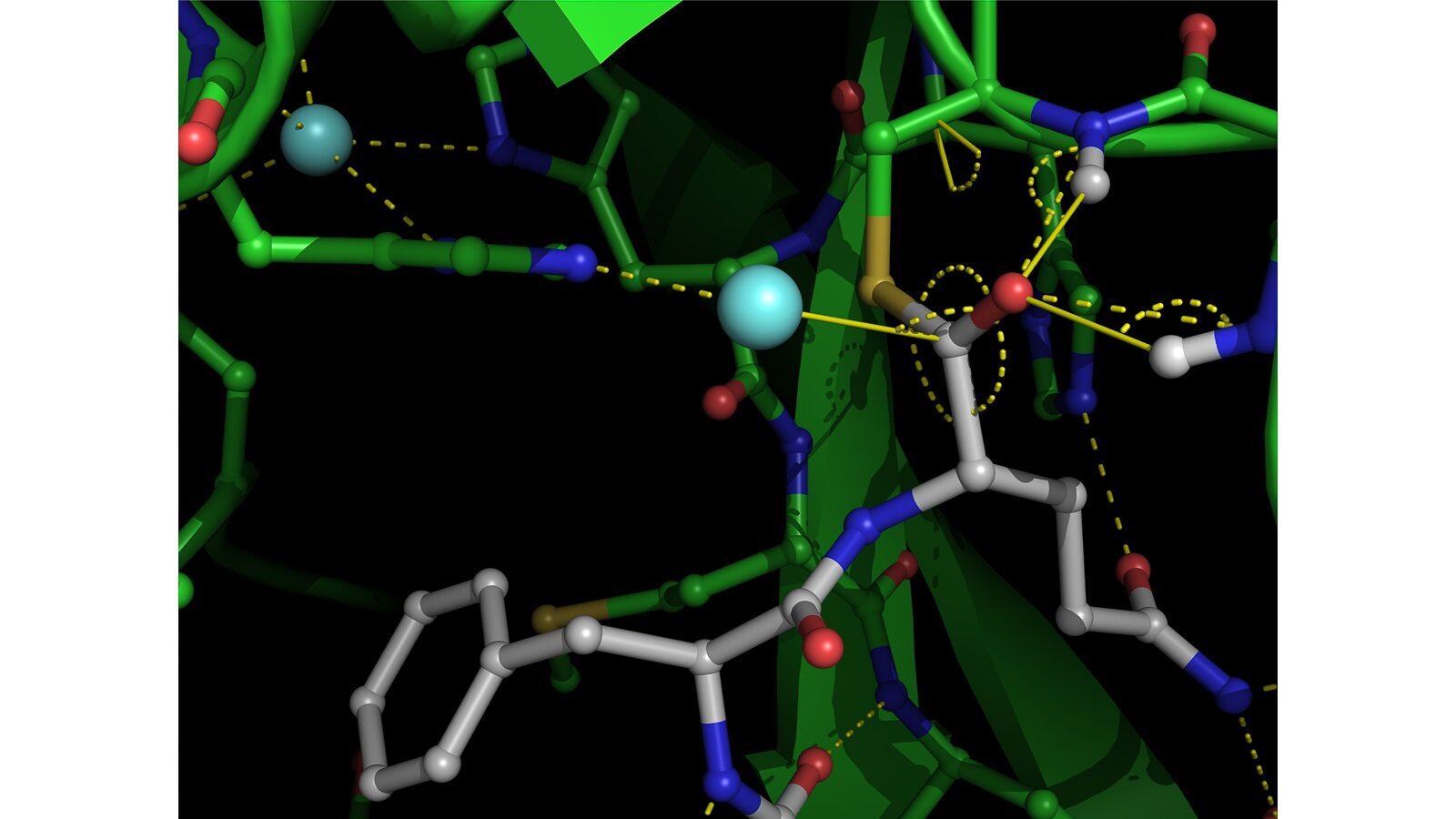 X-ray structure of the main protease SARS-CoV-2. Credit: University of British Columbia
Breakthrough made possible thanks toAdvanced Photon Source (APS) of the US Department of Energy's Argonne National Laboratory. APS produces X-rays that are about a billion times brighter than those used by doctors and dentists. This allows researchers to study in detail the structure of the coronavirus protease at the atomic level.
Recently discovered information representsof particular interest to scientists around the world seeking to develop antiviral drugs for the treatment of COVID-19. If the main protease is inhibited by a small molecule drug, the polyproteins will not be separated into functional parts, effectively blocking viral replication and subsequent transmission.
Read more
Researchers plunged for the first time to the deepest sunken ship
The first accurate map of the world was created. What's wrong with everyone else?
A wireless system has appeared that helps paralyzed