Less than a day has passed since the announcement of the flagship Xiaomi 13 and 13 Pro, and Chinese bloggers are already sharing a video with the full
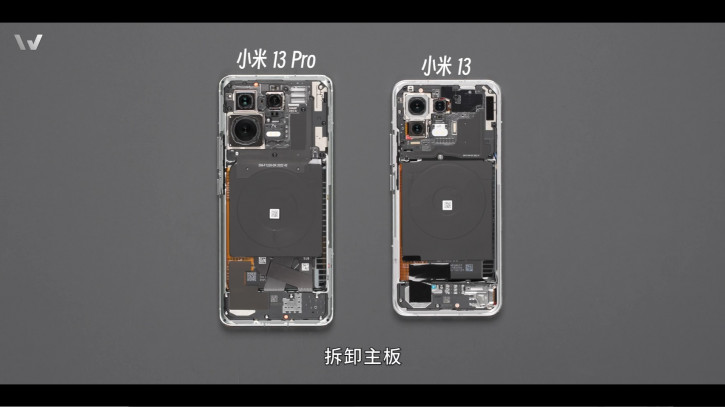

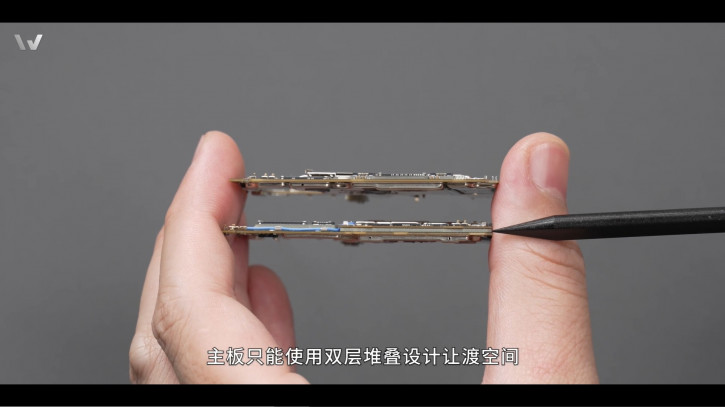
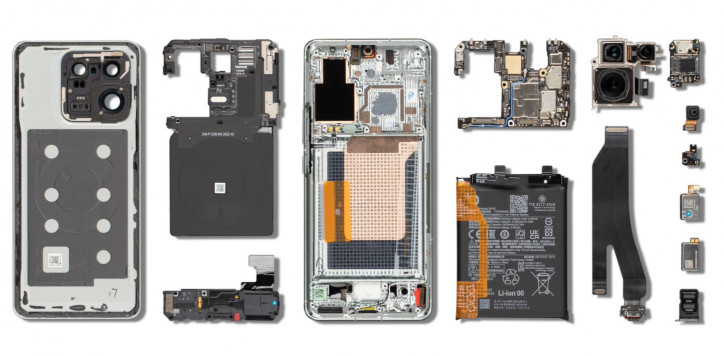
The Xiaomi 13 motherboard is single-layer, which, according toAccording to the authors of the video, it allows you to more effectively remove heat from the chip. The Xiaomi 13 Pro has a two-layer one, the reason for which is a more massive camera unit. At first glance, both devices are equipped with the same copper foil on top of the chipset, but the base model also had a thermal pad underneath, which the firmware lacks. The good news is that the upper speakers are a copy of the lower ones, which means there is hope for high-quality stereo sound. The USB-C connectors have rubber seals that protect the device from moisture and dust (IP68).
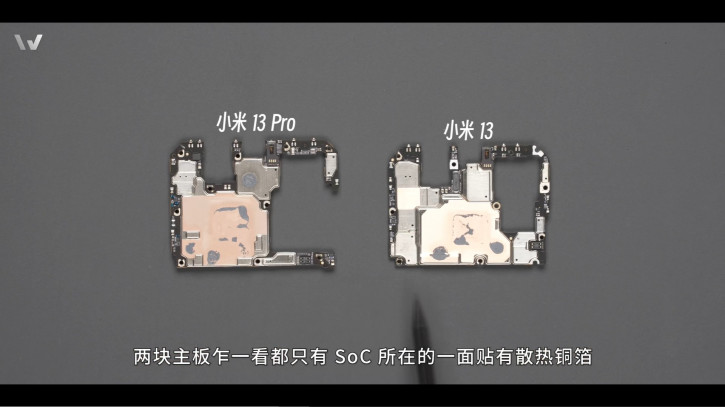
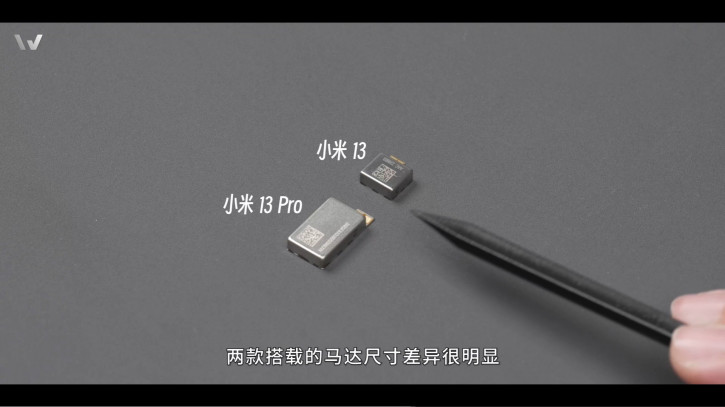
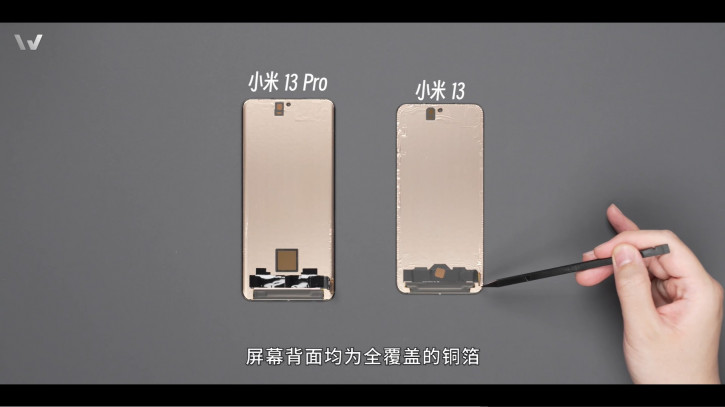
But the difference in vibration motors is colossal:at “proshka” it's twice as big. The display modules of both models are almost entirely covered with copper foil, but differ in the position of the finger scanner: in the base model it is located lower and has a smaller size. Moreover, the Xiaomi 13 scanner itself is implemented on a cheap short-focus camera, while the “firmware” a different, although also optical, sensor is used.
Another cooling advantage of the younger modelis an evaporation chamber with an area of 4642 mm² versus 3600 mm² for Xiaomi 13 Pro. This is confirmed by tests: the base model turned out to be cooler and therefore was able to produce a more stable frame rate in games.
© Vladimir Kovalev.
Sourced from weibo.com