What is the difference between national parks and nature reserves
About a quarter of our country's land area
Human activity in other areaslimited, but not completely prohibited, educational and scientific events can be held here, and there are special tourist areas. In Russia, more than 60 such territories—national parks—have currently been created. Now more attention is being paid to environmental problems than in previous years; the need to preserve natural areas and develop national parks is one of the priority government tasks.
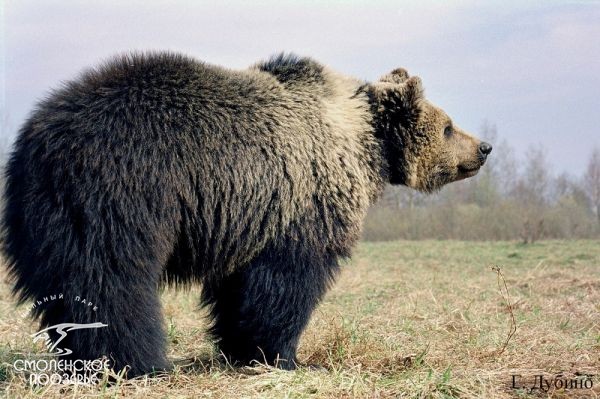 Smolensk Lakeland
Based on world practice, it can be notedseveral trends in the creation of such territories. A national park can be created around a reserve for educational purposes and to draw attention to environmental problems. The status of a national park can be assigned to a territory with existing tourist routes for environmental purposes. The basis for opening a national park can be tourism and recreation.
National parks around the worldactively used as recreational and tourist areas. For example, Yellowstone National Park is not only known worldwide as a UNESCO World Heritage Site, but it is also the most visited national park in the US. It has a developed infrastructure for receiving visitors: in addition to hotels and shops, dozens of information centers and museums are open here. Hunting is prohibited in the park, but tourists can obtain a license to fish.
Development of ecotourism in Russia
Domestic national parks have a largepotential in areas of domestic tourism. Educational activities and improvement of environmental education are gaining importance. For national parks, making a profit is not an end in itself, but has a beneficial effect on the financial situation of these territories without disturbing their ecological balance.
In some regions, it is the national parksbecome structures capable of carrying out the functions of planning, managing and monitoring tourism activities. Thus, they are a source of new jobs and a growth factor for the region. For example, the Kenozero National Park attracts local residents to the restoration of historical monuments of Kenozero, the organization of craft workshops, and the management of guest houses.
Every year, eco-tourism is gaining more and moregreat popularity, and at the stage of creating new areas of active recreation, it is important to observe certain principles: to observe the basics of conservation; regulate the flow of tourists; develop tour programs based on the characteristics of the natural area.
There are also certain difficulties thatto be overcome. So, now there is no single legal framework in the field of ecological tourism, respectively, financial mechanisms for the distribution of funds and uniform pricing standards for services have not been developed. Attention should be paid to the creation of a comfortable infrastructure, the training of national park personnel in the field of organizing and monitoring tourism. There is a need for information support, in particular, the preparation of high-quality promotional materials. Despite all the difficulties, interest in this type of recreation is growing, for example, in 2022, ecotourism has grown by 40%, the number of visitors to protected areas has exceeded 13 million.
Eco tours of national parks
Examples of the successful development of ecotourism in Russia are only multiplying, positive experience is of interest.
Smolensk Poozerie - national park,founded in 1992 to preserve the natural identity of this forest region. There are several dozen lakes here, where not only many species of fish are found, but also rare shellfish. Fishing is allowed in the territory of the national park in compliance with seasonal rules approved by the Order of the Ministry of Agriculture of the Russian Federation dated 13.10.22.
Many plants found here are noted inRed Book of the Russian Federation. Hiking trails, paid excursions and master classes are organized here for visitors, there is an equipped campsite and guest houses on the territory of the park.
The Bashkiria National Park was opened in 1986,located on the southwestern slopes of the Southern Urals. This place is unique not only for its flora and fauna, but also for the presence of a special route for speleologists in the Kutuk tract: 36 karst caves, a tunnel, funnels of various sizes, wells and springs. On the territory of the park there are hiking and horseback trails to the main attractions: the Kuperlinsky karst bridge, the speleological museum-laboratory in the Sumgan-Kutuk tract, the Bear meadow. Ecotourists are attracted by forests of fruit trees, apiaries and medicinal herbs, photography workshops; You can stay in special campsites or in guest houses.
 Land of the leopard
In 2012, in the southwest of Primorsky Krai, aNational Park "Land of the Leopard" in order to preserve the Far Eastern leopard - the rarest large cat on the planet. The largest photo monitoring network in Russia is deployed here: more than 400 camera traps automatically record leopards, Amur tigers and other animals. The registration of spotted and striped predators is carried out by color - it is unique for each animal. These are very important observations of the population of endangered species. Educational tourism is developed on the territory of the park: there are many excursions and routes where you can touch the unique nature of the region. The trails are laid in safe places and partially treated for ticks. Park staff give recommendations on how to behave when meeting with a spotted cat, but the predators themselves are very careful and do not attack people.
The “Save the Forest” project works with a dozennational parks throughout Russia. Often the territories contain real pearls, which can only be reached with the help of guides - workers of the reserve. Year after year, the parks are developing: they are opening new areas of eco-volunteering, creating their own branded products, for example, herbal teas and teas, working on their own brands and creating eco-hotels. This is largely due to the activities of the “Save the Forest” project: attracting large businesses to sponsor reforestation helps nature reserves and national parks not only receive new forest resources, but also promptly purchase equipment, train employees, and finance their own environmental projects.
Today, spend your holidays ina national park is not just about going out into nature, it is an opportunity to gain new knowledge, participate in research work, discover unique protected areas and at the same time use a developed infrastructure, where everything is done for the safety of people and nature.
Read more:
Bears separated in childhood reunited: the zoo told how it all went
Light in the early universe: a new theory changes the way it was
See what happened to Mercury when it got as close as possible to the Sun