Researchers from Washington State University, Texas A&M University and the Zoo
In their work, scientists offered giantpandas to choose from carbohydrate-rich bamboo stems and leaves with a large amount of protein content. It turned out that pandas prefer wood carbohydrates to leaves. At some points in time, the proportion of carbohydrates reached 98%. Similar data were obtained in the analysis of the nutrition of pandas in five Chinese zoos: the animals preferred a diet high in carbohydrates and low in proteins.
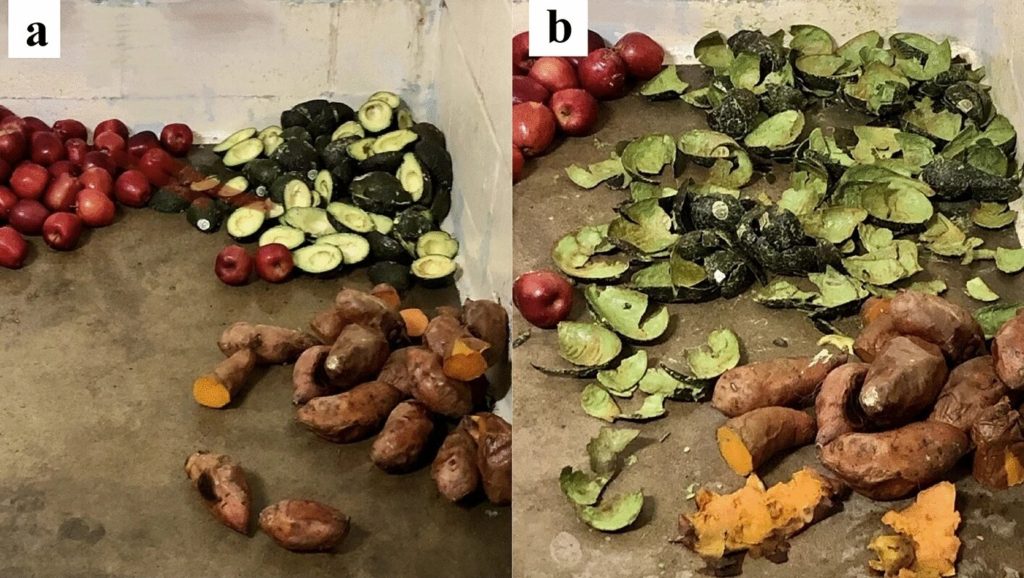 Feeding study of sloth bears. Animals preferred avocados. Image: Charles T. Robbins et al., Scientific Reports
Researchers have obtained similar results withstudying the feeding of six sloth bears at the Cleveland, Little Rock, and San Diego zoos. They were given unlimited amounts of avocados, baked yams, whey, and apples. They chose almost exclusively high-fat avocados, eating roughly 88% avocados and 12% sweet potatoes—and ignoring apples entirely. This showed that sloth bears prefer a high-fat, low-carbohydrate diet that resembles the natural diet of termites and ants, as well as their eggs and larvae.
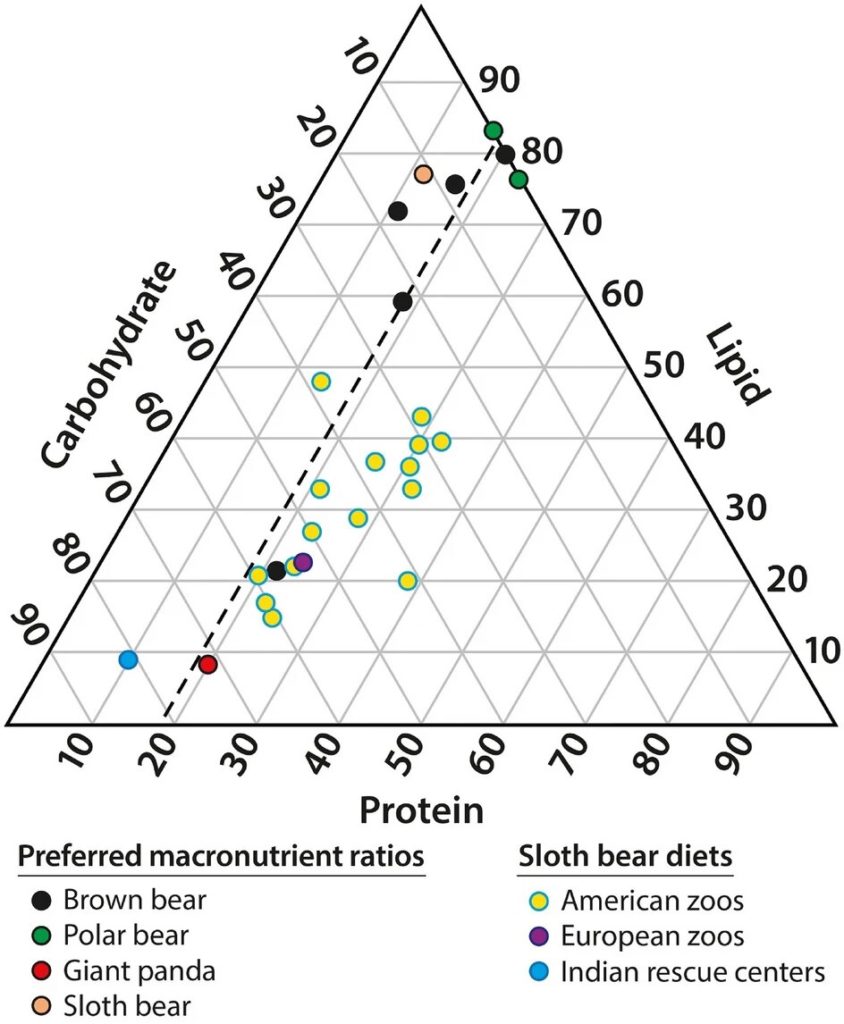 Distribution of food preferences of different groups of bears. Image: Charles T. Robbins et al., Scientific Reports
Scientists note that a similar pictureresearchers have observed previously when studying polar bears. These animals, given a choice, prefer a high-fat diet over the protein food they are traditionally fed.
The researchers note that poor nutrition can be the cause of reduced life expectancy of animals in captivity and the development of kidney and liver disease.
Read more:
An asteroid with a diameter of half a kilometer approaches the Earth
Giant 'scar' on Earth's surface shown from space
It turned out what happens to the human brain after one hour in the forest